


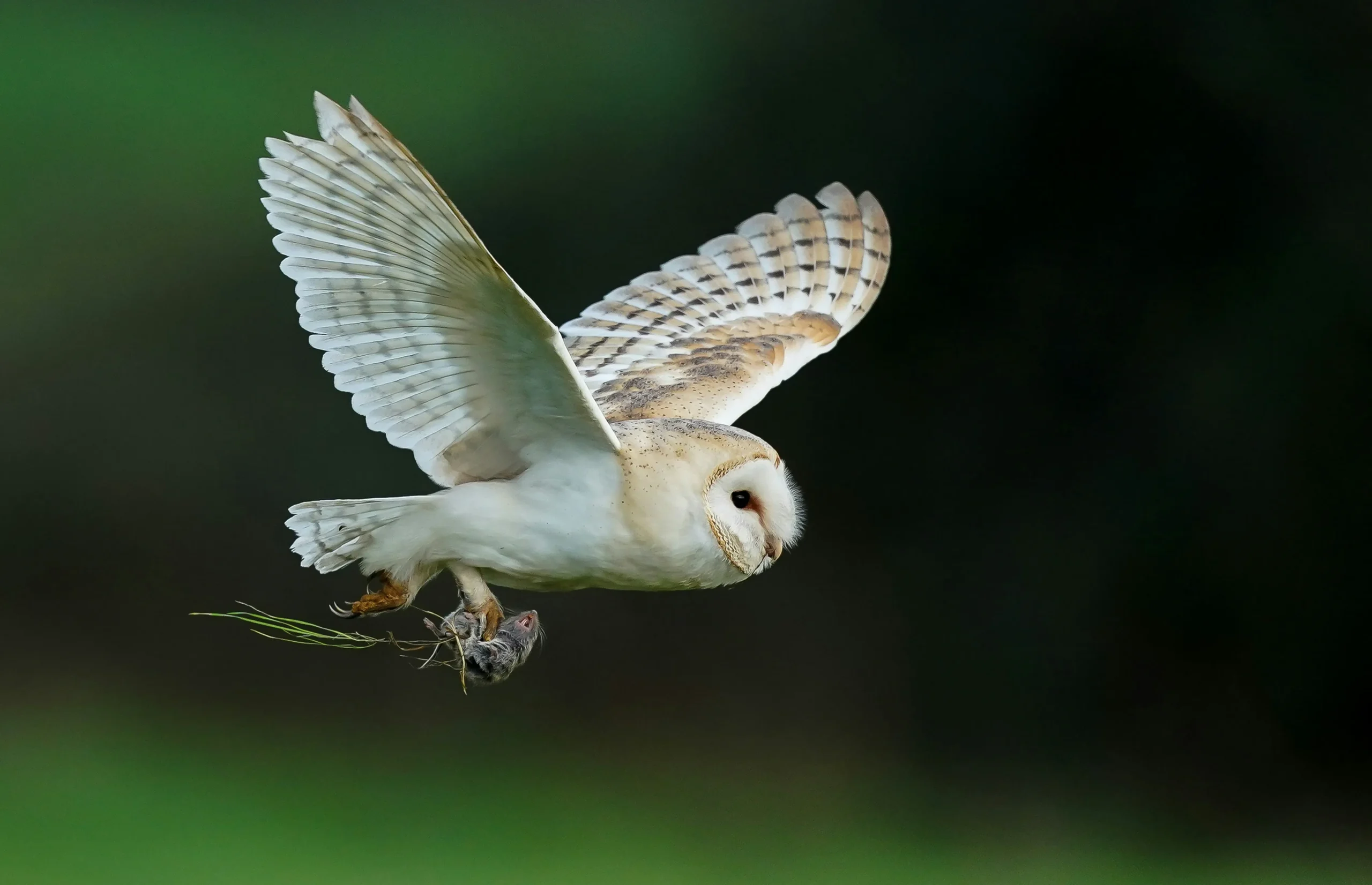
A bird opens its wings. A bat does the same.
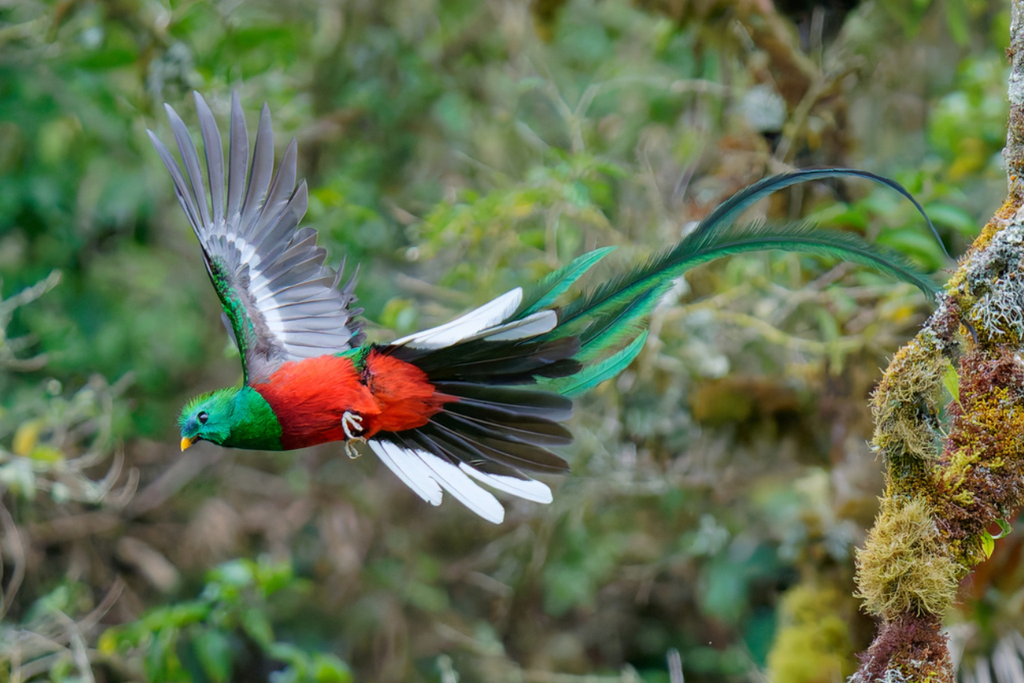
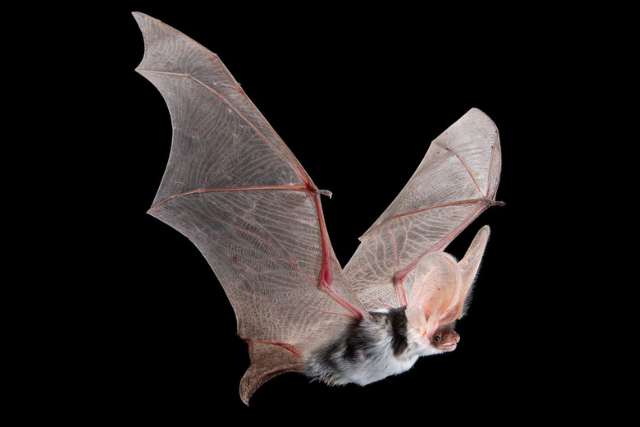
Look more closely, however, and different structures come into view: the bird spreads feathers, while the bat stretches a thin membrane supported by remarkably long fingers. They achieve the same broad result—powered flight—with different wing surfaces.
Bats, like humans, are mammals. Birds belong to another branch of the animal family tree. When similar features evolve independently in different branches, or lineages, biologists call the pattern convergent evolution.
 シロフクロウ職員
Why do similar features appear in such diverse living things? And if two organisms share one feature, how much does that tell us about the rest of them?
We will explore those questions through wings, water-storing plants and fish that generate electricity. Along the way, we will separate three questions that are easily confused:
- What does a feature do?
- How is it built?
- Where did it come from?

Birds and Bats: Two Ways to Build a Wing
Source: iNaturalist – カザリキヌバネドリ Pharomachrus mocinno(rekursiv)
Bird and bat wings are both modified forelimbs: the front pair of limbs, corresponding to our arms and hands. Start with their outer surfaces, then follow the bones underneath. Each view reveals a different part of their evolutionary history.
Feathers on one wing, a membrane on the other
Source: iNaturalist – マダラコウモリ Euderma maculatum(svaldvard)
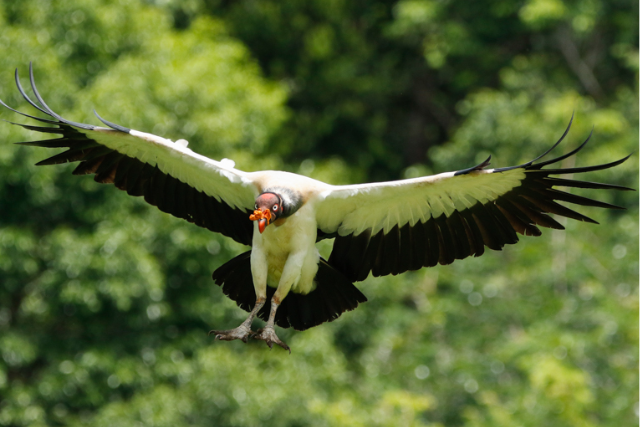
A bird’s long flight feathers extend from its forearm and hand. They overlap to form much of the broad surface that acts on the air during flight.
A bat forms this surface differently. Its elongated fingers support a thin membrane of skin, which also extends between the forelimb and the side of the body. Fine muscles and elastic fibres help make the membrane flexible and adjustable. It is much more than a loose sheet stretched over a frame.
Place photographs of outstretched wings side by side. On the bird, look for the rows of feathers. On the bat, look for the fingers supporting the membrane.
Watch the animals flying, and you notice their shared ability. Examine the parts that make flight possible, and you notice different ways of achieving it.
Both observations matter. They answer different questions.
Inherited forelimbs, independently evolved wings
Source: iNaturalist – トキイロコンドル Sarcoramphus papa(heuvelyoup)
Beneath feathers and skin lies a recognisable arrangement of bones. Both animals have:
- a humerus, the upper-arm bone;
- a radius and ulna, the forearm bones;
- the bones of the wrist and hand.
You have corresponding bones too. Your own arm provides a useful starting point for reading a wing skeleton.
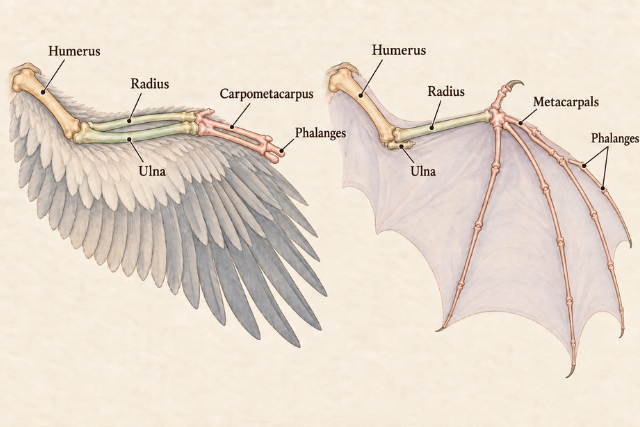
The bones differ in length and shape. Some have become reduced or fused. Yet we can identify corresponding bones because birds and bats inherited their forelimbs from a common ancestor.
Biologists call this relationship homology. Homologous structures share an evolutionary origin. The word describes a shared inheritance, rather than simply a resemblance.
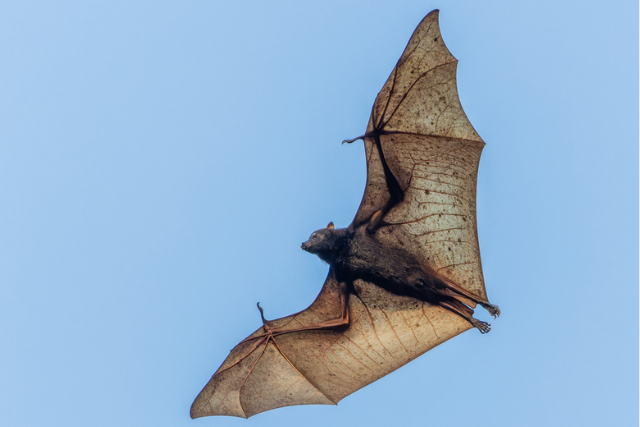
Source: iNaturalist – フィリピンオオコウモリ Acerodon jubatus(joachimbertrands_ornis_birding)
シロフクロウ職員But did birds and bats inherit wings from that ancestor?
 タヌ山先生
No. Their last common ancestor had forelimbs, but not wings for powered flight. Wings evolved independently in the two lineages. As wings, they are therefore analogous: independently evolved features with a similar function.
| What are we comparing? | Relationship | What does it tell us? |
|---|---|---|
| The underlying forelimbs | Homology | They were inherited from a common ancestor. |
| The forelimbs as wings for powered flight | Analogy | Their transformation into wings occurred independently. |
These descriptions apply to different aspects of the same structures.
シロフクロウ職員So we can describe the same limb in two ways, depending on which feature we are comparing?
 ミミズク先生
Exactly. Choosing the feature is the key. Trace the bones from shoulder to hand, then return to the feathers or membrane. You are looking at an inherited forelimb and its separate transformation into a wing.
When a “Cactus” Is Not a Cactus
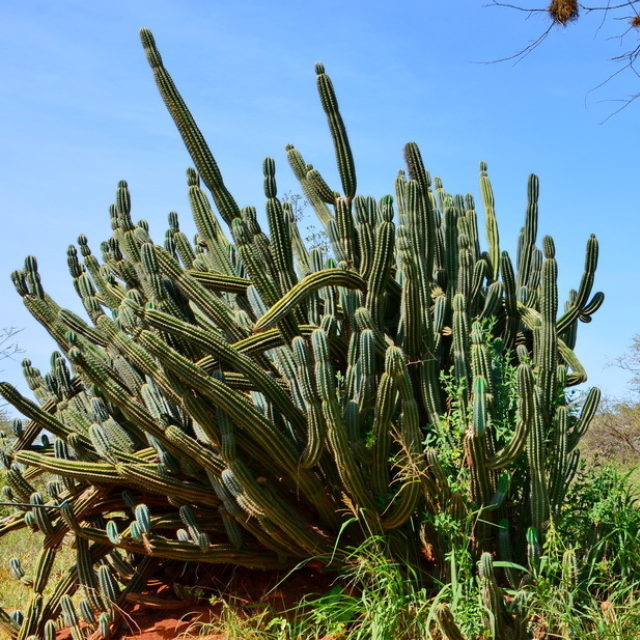
Source: iNaturalist – Cereus repandus(stefanelena)
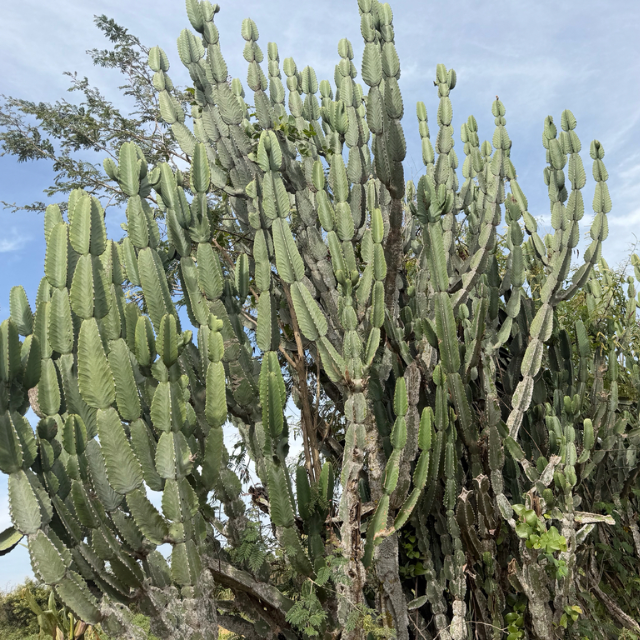
Source: iNaturalist – チュウテンカク Euphorbia ingens(sulaimaninuwa)
Imagine walking through the succulent collection of a botanic garden. You pass round green plants and tall, ribbed columns. Several look unmistakably cactus-like.
Then you read a label.
Euphorbia. Family Euphorbiaceae—the spurge family.
Not a cactus after all.
Some members of the genus Euphorbia have thick, fleshy stems that resemble those of cacti, which belong to the Family Cactaceae. These separate lineages have independently evolved similar succulent growth forms.
Reading the stem
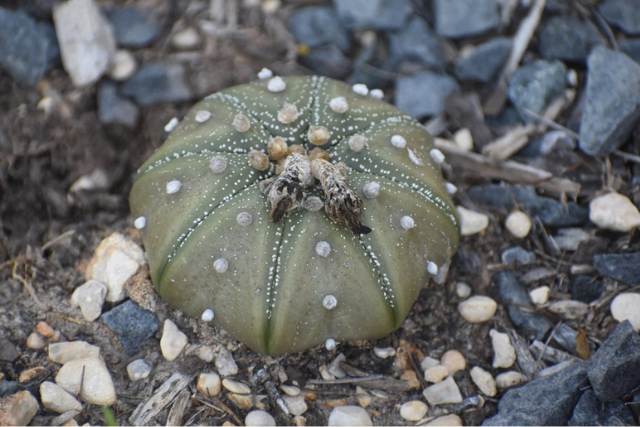
Source: iNaturalist – Astrophytum asterias(christopherbentley04)
A succulent plant has thickened tissues specialised for storing water. In the cactus-like plants we are comparing here, that storage tissue is in the stem.
Not every Euphorbia resembles a cactus. The comparison concerns particular features in particular species: a rounded stem, a column-shaped body, or raised lengthways ridges called ribs.
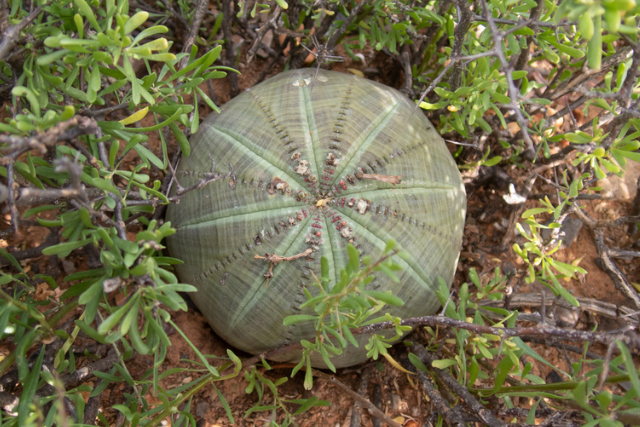
Source: iNaturalist – Euphorbia obesa ssp. symmetrica(andrew_hankey)
A little geometry helps explain why rounded forms interest researchers. For a given volume, a sphere has the smallest possible surface area. A roughly spherical plant body can therefore contain a substantial volume of water-storing tissue while exposing relatively little surface through which water might be lost. Researchers have discussed this relationship as a possible factor in the evolution of rounded succulents.
Once the overall resemblance has caught your attention, shift your gaze to the details. Where do the ribs run? Where are the spines or leaves attached? What do the flowers look like?
 メンフクロウ職員
“These look alike” becomes a more informative observation when you can point to the feature you mean.
Different Bodies, Shared Electrical Abilities
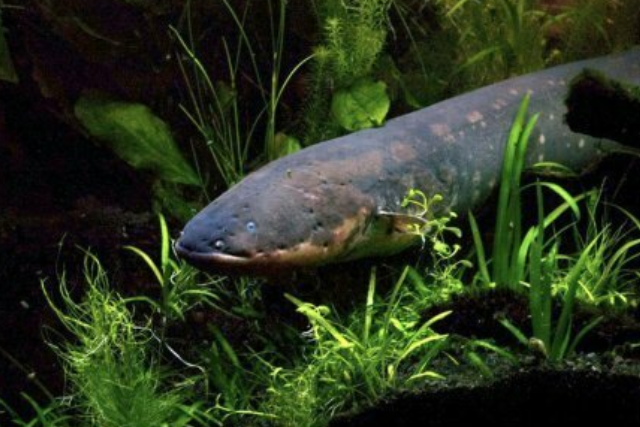
Source: iNaturalist – デンキウナギ Electrophorus electricus(park10108)
You can begin comparing wings and succulent stems in photographs. Other similarities are hidden inside the body.
Electric fish provide a striking example. Their electric organs produce discharges used, depending on the species, in sensing their surroundings, communication, prey capture or defence. Electric organs have evolved independently in several fish lineages.
シロフクロウ職員Could these independently evolved organs share some of the same underlying biological machinery?
Five species, three independent origins
In a 2014 study, Jason Gallant and colleagues compared electric organs with ordinary skeletal muscle in five fish species. These represented three lineages in which electric organs had evolved independently: South American knifefishes, African mormyrids and African electric catfish.
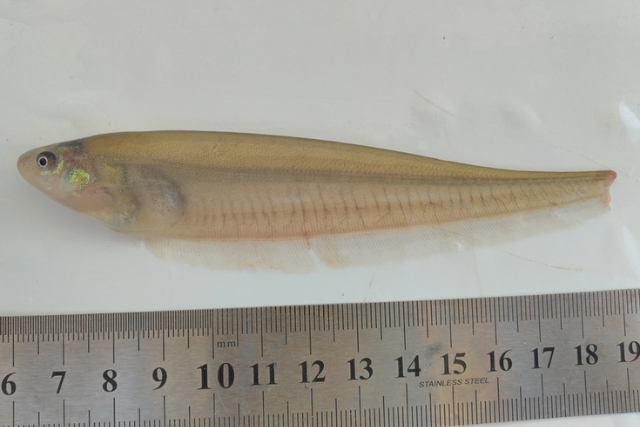
Source: iNaturalist – Eigenmannia virescens(jev_1874)
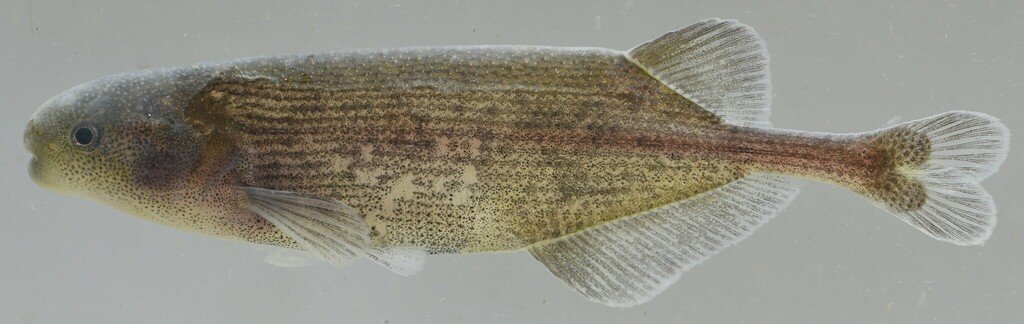
Source: iNaturalist – Brienomyrus brachyistius(rob_palmer)
In the species examined, the electricity-producing cells develop from muscle-forming precursor cells—early cells from which muscle can develop. These specialised electric cells, called electrocytes, retain electrical properties but do not contract like ordinary skeletal muscle fibres.
That shared starting material gave the researchers a question to investigate: had different lineages modified muscle-related systems in similar ways?
Comparing how genes are used
The team examined gene expression: how information in genes is used within cells. By measuring RNA—the molecular copies made when genes are transcribed—they compared which genes were active, and how strongly, in electric organs and skeletal muscle.
Think of genes as a collection of instructions. Different cell types use different parts of that collection. Comparing gene expression helps researchers investigate how those cells develop and function.
The electrocytes differed considerably in shape. Nevertheless, the researchers found shared patterns of gene expression associated with:
- increased cell size;
- increased electrical excitability—the ability to respond electrically;
- reduced muscle contraction.
The patterns varied among species. Even so, the results suggested that some of the same genes and biological pathways may have been repeatedly involved in the evolution of electric organs.
Independent evolution can therefore involve shared biological ingredients. In these fish, similarities in how cells use genetic information emerged through laboratory comparisons—revealing a part of the story that photographs alone could not show.
Finding a Similarity Is Not the Same as Explaining It
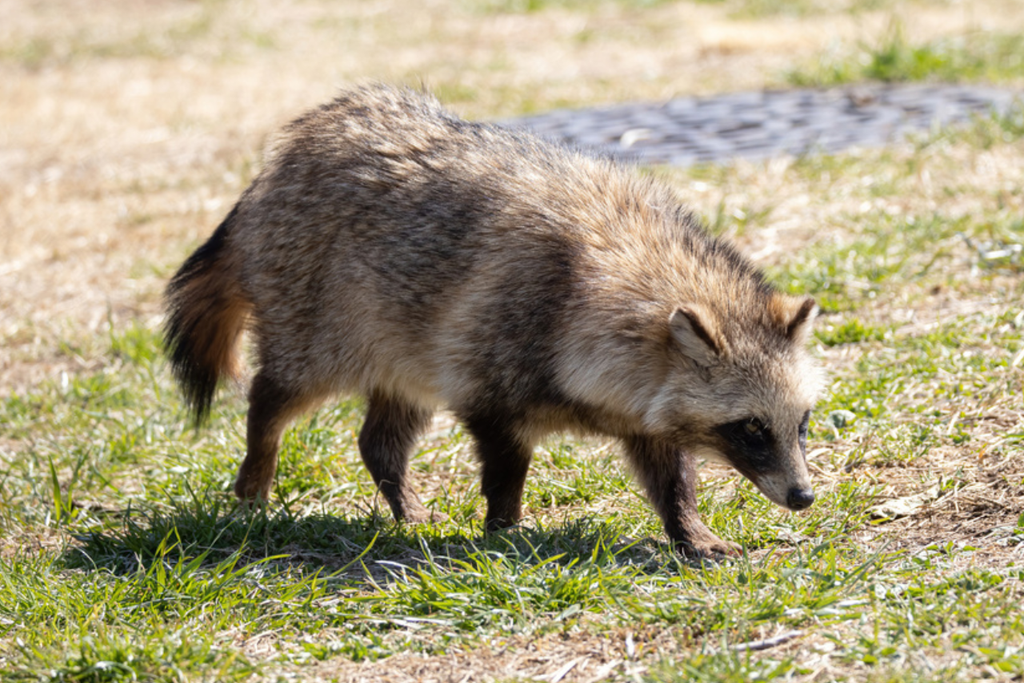
Source: iNaturalist – Japanese raccoon dog Nyctereutes viverrinus subsp. viverrinus(poikljd)
We have now encountered similarities in flight, succulent growth forms and electricity production.
Recognising these patterns leads to another question: how did they arise? Researchers distinguish the pattern of convergence from the evolutionary processes that produced it.
How natural selection can favour similar features
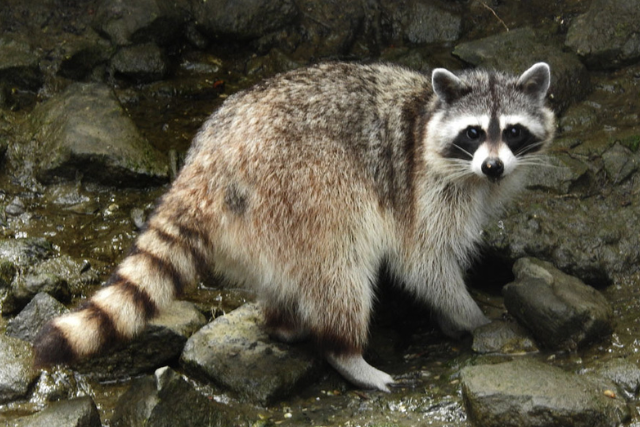
Source: iNaturalist – Raccoon Procyon lotor(yetikat)
One possible explanation is natural selection acting under similar conditions.
Consider a simplified plant example:
- Individuals differ in how readily they lose water.
- Some of those differences are inherited.
- Under dry conditions, individuals with certain water-conserving features leave more offspring.
- Over generations, those features become more common.
The essential connection is between inherited variation and differences in reproductive success. The environment does not directly create the feature a population “needs”; inherited differences affect which individuals contribute most to future generations.
Similar selective pressures can favour similar features in separate lineages. To explain a particular resemblance, researchers investigate which pressures mattered and how the organisms responded.
“Both live in dry places” is only a beginning
A 2013 study by Leonardo Alvarado-Cárdenas and colleagues examined an assumption often made about rounded succulents: that their similar shapes occur in similar climates.
The researchers compared five regions rich in these plants—two in Mexico and three in South Africa. The plants included members of the cactus, spurge, dogbane and ice-plant families. Some had swollen stems; in others, the rounded water-storing structures were leaves.
Most analyses revealed substantial climatic differences among the regions, including differences in rainfall and temperature patterns. Some comparisons did show similarity, depending on the test used, but the overall result was more complicated than “same shape, same climate”.
The findings invite a closer look at how water storage, plant shape and local climate fit together.
“Both places are dry” is one observation. “They have matching rainfall seasons and temperature patterns” is another.
Just as we must specify which features of organisms are similar, we must specify which aspects of their environments we are comparing.
Evolution works with an inheritance
Ancestry also helps shape the possibilities. Birds and bats inherited forelimbs, which were modified independently into wings with different flying surfaces. Electric fish illustrate how separate evolutionary changes can draw on shared cellular systems.
Explaining convergence therefore brings several kinds of evidence together: a feature’s structure, its function, the conditions in which it operates, and its evolutionary history.
A plausible explanation gives us a question worth testing. Evidence helps us discover how well it fits.
One Shared Feature, Many Differences
Convergent evolution fits within the wider story of biodiversity. Organisms can share one feature while differing in many others.
Our three examples illustrate different levels of comparison:
| Comparison | What is similar? | What a closer look reveals |
|---|---|---|
| Birds and bats | Wings used for powered flight | Different wing surfaces, built around forelimbs inherited from a common ancestor. |
| Cacti and some Euphorbia species | Particular succulent stem shapes, such as rounded or ribbed forms | Different evolutionary lineages, other structural differences and varied climatic conditions. |
| Electric fish in the 2014 study | Electricity production and some gene-expression patterns | Differences in electrocyte shape alongside shared aspects of cellular regulation. |
These comparisons draw on anatomy and evolutionary relationships for wings, plant form and climate comparisons for succulents, and anatomy and gene-expression data for electric fish.
 ミミズク先生
“Does it do the same job?”, “Is it built the same way?” and “Did it come from the same ancestral feature?” are separate questions.
The more precisely we describe the similarity, the more clearly we can see the differences around it.
Three Questions for Your Next Museum or Garden Visit
The next time two organisms strike you as look-alikes, turn that first impression into three questions.
1. What exactly is similar?
Is it the whole outline, a particular body part, a movement or a function?
Try replacing “These are the same” with a more specific observation:
- “Both wings form broad surfaces.”
- “Both plants have rounded, ribbed stems.”
- “Both fish generate electric discharges.”
A precise observation gives you a clearer question to pursue.
2. What is different?
Shift your attention.
Move from the outline of a wing to its feathers or supporting fingers. Move from the whole plant to its flowers or the position of its spines. At a skeleton display, follow the limb from shoulder to hand.
Each difference helps you understand the resemblance more clearly.
3. What evidence would tell me more?
A photograph can show an outline or surface detail. A specimen or anatomical diagram can reveal structures hidden from view.
To investigate evolutionary origins, you also need evidence about relationships and about which other organisms possess the feature. Different family names or distant locations do not, by themselves, establish that a feature evolved independently.
At a botanic garden, photograph the label as well as the plant. In a museum, compare the whole specimen with its smaller details. Later, use those observations to guide your reading.
A diagram may send you back to a photograph with a new question. A detail in a specimen may give you a reason to open a book.
“They look alike” is a fine place to begin.
Keep that first surprise. Then find one similarity you can describe precisely—and one difference you had not noticed before.
メンフクロウ職員If two specimens look alike, stay with them long enough to find one difference. With wing skeletons, I would start at the shoulder and work towards the fingers. It would be a pity to stop at the labels.

Explore More from the Museum of the Forest
ミミズク先生Please do explore the books from eco-life-planet as well. I hope they will offer you many more rewarding encounters with the living world.
Families of One: The Narrowest Branches of the Tree of Life
Kindle Books Currently Available in Japanese
The Japanese-language Museum of the Forest series includes expanded introductions to taxonomy, nature observation and unusual branches of the tree of life.
- An Introduction to Taxonomy: The Basic Science of Organising the World, Level 1 — Japanese-language edition
- Spring Nature Observation Handbook — Japanese-language edition
- Animals from Families of One: The Narrowest Branches of the Tree of Life — Japanese-language edition

Reference
Birds and Bats: Two Ways to Build a Wing
University of Michigan, Animal Diversity Web — Bat Wings and Tails (no update date listed)
Beyond Wings: Similar Shapes, Shared Functions and Their Evolution
NCBI PMC — Genomic basis for the convergent evolution of electric organs (June 2014)
Looking Closely: Similarities, Differences and Evidence
NCBI PMC — Genomic basis for the convergent evolution of electric organs (June 2014)
コメント