


What is taxonomy, and why does it matter? Taxonomy is the science of naming, describing and classifying organisms. It helps scientists organise the vast diversity of life by comparing shared features and investigating evolutionary relationships.
Modern biological classification looks beyond appearance alone. Researchers draw on evidence from anatomy, DNA, fossils and other sources to propose how organisms are related. These relationships can be shown in a phylogenetic tree—a branching diagram that represents a scientific hypothesis about the history of life.
 ミミズク先生
From fossils of the distant past to the wildlife we notice on an ordinary walk, taxonomy gives us a shared framework for understanding the living world. In this beginner’s guide, we will explore how scientific names, classification groups and evolutionary trees help us make sense of life’s remarkable diversity.
Meet Your Museum Guides
Before we begin, let us meet the team who will guide us through the world of taxonomy.
ミミズク先生Good day, I’m Prof. Horned. I will bring the wider historical view, from Linnaeus and early systems of classification to Darwin and today’s understanding of evolutionary relationships.
 タヌ山先生
タヌ山先生Hi, I’m Dr Tanuyama! I handle the hard evidence—anatomy, DNA, fossils and field data—to map out how organisms are related. Think of it as meticulous detective work with more beetles, led by a top-tier taxonomist (myself, naturally). The science is precise; my desk-tidying system is still strictly under review.
 シロフクロウ職員
Bonjour, I’m Registrar Snowy. I keep the records in order: scientific names, taxonomic ranks and changes in classification. I will also explain why shared naming conventions matter when scientists need to know exactly which organism they are discussing.
 メンフクロウ職員
Piacere, I’m Curator Barn! I care for museum specimens and work in the field. I will help connect the names and classifications on a specimen label with the organisms you may encounter on your next walk.

Why Does Classification Matter? The Real Purpose of Taxonomy

A small flower beside the pavement. A bird in the park. Fish on a supermarket counter. Every day, we encounter more kinds of living things than we can easily keep track of.
Without realising it, we are always sorting: noticing similarities, separating differences and giving things names. We do it when we choose food, find a book or look up an unfamiliar animal online. Classification does not make the world less varied. It gives us a way to make sense of that variety.
メンフクロウ職員In a museum, a name on a specimen label is never just a label. It connects one preserved organism with field observations, published research and other collections around the world.
Taxonomy may sound highly specialised, but its basic purpose is familiar. It helps us recognise organisms, communicate clearly about them and explore how they are related.
Classification in Everyday Life

Classification is one of the quiet systems that makes complex information usable. Search engines organise and rank pages; shops group products so that people can find what they need; libraries arrange books by subject.
For many English-language readers, the Dewey Decimal Classification offers a familiar library example. It divides recorded knowledge into ten main classes and then into progressively more specific subjects. In this system, 500 covers science, with 570 for biology and 590 for animals. It does not tell us how organisms evolved, but it helps libraries organise materials and helps readers find information.
ミミズク先生Classification is not about forcing the world into one perfect set of boxes. It is about choosing a useful framework for a particular question—and being clear about what that framework can, and cannot, tell us.
Biological taxonomy has a different task. Rather than arranging books or groceries, it seeks to identify organisms, describe their diversity and communicate their relationships as accurately as the available evidence allows.
A Shared Scientific Language
Common names are useful, local and often full of history. Yet they can also be ambiguous: one species may have several common names, while one common name may refer to several different organisms.
Scientific names provide a more precise shared reference. Our own species, for example, is Homo sapiens. This two-part name consists of a capitalised genus name, Homo, followed by the lower-case specific epithet, sapiens. Together, they form a binomial name. In ordinary printed text, both words are italicised.
シロフクロウ職員A scientific name does not tell you everything about an organism. It does, however, give researchers a reliable starting point: we can check that we are discussing the same taxon before we compare observations, specimens or data.
The Swedish naturalist Carl Linnaeus helped establish the binomial system that remains central to biological nomenclature. Today, international nomenclatural codes set rules for how names are formed and used. The ICZN covers animal names, while the ICN covers algae, fungi and plants. These rules aim to support stability and clarity—but they govern names, not the scientific evidence used to decide how organisms should be classified. iczn
A Name with a Place
Scientific names can preserve a small piece of history. Consider the Japanese theropod dinosaur Fukuiraptor kitadaniensis. Its genus name, Fukuiraptor, refers to Fukui, while its specific epithet, kitadaniensis, refers to Kitadani, where its fossils were discovered. Such names may refer to a place, a person or a distinctive feature—but the name is only the beginning of the scientific story.
From Similarity to Ancestry
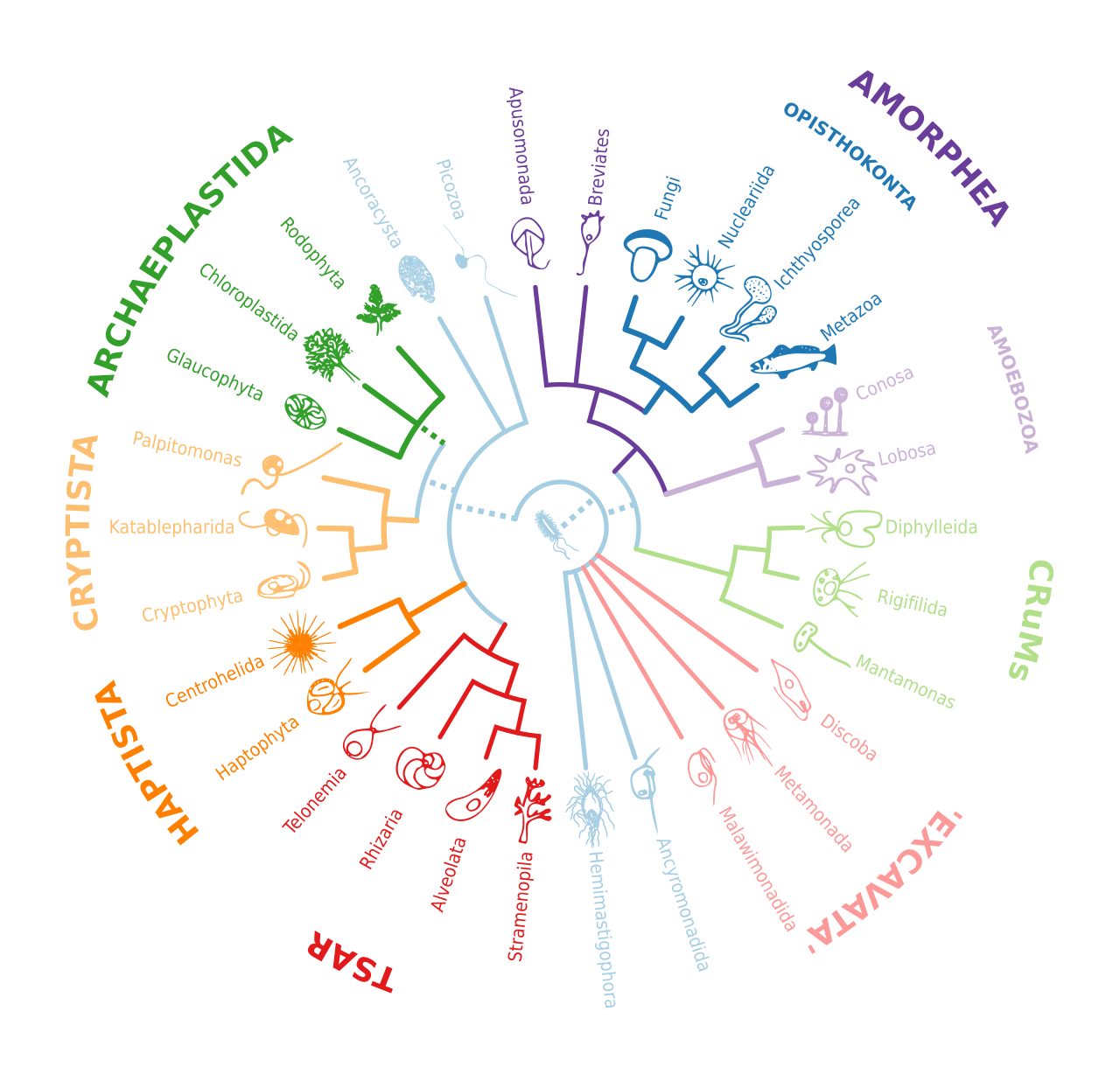
Source:WIKIMEDIA COMMONS – Eukaryote Tree of Life 2020

It is easy to sort organisms by visible similarities. Birds, bats and butterflies all have wings, for example. But they are not close relatives simply because they can fly: wings evolved independently in these very different lineages.
Modern taxonomy therefore considers evolutionary history as well as appearance. Researchers compare anatomy, DNA, fossils, behaviour, development and other evidence to test hypotheses about relationships.
A clade is a group consisting of an ancestor and all of its descendants. In other words, it is a monophyletic group. A phylogenetic tree is a branching diagram that represents a scientific hypothesis about these evolutionary relationships.
タヌ山先生DNA can reveal relationships that are difficult to see from external appearance alone—but it is not a magic answer key. Good taxonomy tests several kinds of evidence and remains open to revision when better evidence appears.
Birds provide a useful example. They are living dinosaurs in evolutionary terms, because they belong within the dinosaur lineage. A definition of “dinosaurs” that excludes birds leaves out some descendants of the group’s ancestor, so it does not describe a complete clade.
Taxonomy is therefore not a finished catalogue. New specimens, fossil discoveries and genetic data can all change how scientists understand a group and where its boundaries lie.
Names, Rules and Better Questions
Taxonomy and nomenclature are closely connected, but they are not identical.
メンフクロウ職員These terms are closely connected, but they describe different parts of the work.
- Taxonomy is the work of identifying, describing and classifying organisms, while also investigating how they are related.
- Nomenclature concerns the rules and conventions used to form and apply scientific names.
- Phylogenetics involves reconstructing and testing hypotheses about evolutionary relationships.
For animal names, the ICZN includes the Principle of Priority: when competing available names apply to the same taxon, the oldest normally takes precedence. This is not an automatic “first name always wins” rule; the Code includes provisions and decisions intended to protect stability and universal use.
The periodic table offers a helpful parallel—but not an evolutionary one. It arranges elements by atomic number and recurring chemical properties, not by descent from common ancestors. Its historical importance lies in the way Mendeleev’s arrangement revealed gaps and supported predictions about elements that had not yet been discovered. There are currently 118 officially named chemical elements; IUPAC formally approved the names of elements 113, 115, 117 and 118 in 2016.
ミミズク先生Once you know the name of something, you can begin to look for it. Once you know where it fits, you can ask better questions: What is it related to? How did it evolve? What can it tell us about the living world?
Classification gives us order, but taxonomy gives that order a deeper purpose. It helps us move from simply noticing an organism to investigating its identity, relationships and place in life’s long history.
The Basic Principles of Classification
At its simplest, classification means grouping things that share meaningful features and separating things that differ. We do this almost instinctively in everyday life: we sort objects, recognise patterns and decide which things belong together.
Biological classification applies this familiar habit to the diversity of life—but with greater care. The challenge is to decide which similarities matter, how groups should be organised and whether those groups reflect evolutionary history.
ミミズク先生Classification begins with a deceptively simple question: “What belongs together—and why?” The answer becomes much more interesting once we look beyond appearances.
Shared Characteristics
The first step is to compare characters—features that can be observed or measured. These may include body structures, developmental patterns, behaviour, DNA sequences or chemical traits.
The feature chosen can create very different, yet useful, groups. If we sort animals by whether they have a backbone, lions and penguins are vertebrates, while butterflies and octopuses are invertebrates. If we consider how they obtain heat, lions and penguins are endotherms: they produce much of their body heat internally. Butterflies and octopuses are ectotherms, relying much more on external sources of heat.
Neither grouping is automatically “wrong”. They simply answer different questions. In taxonomy, researchers compare many characters and ask which ones provide the best evidence of shared ancestry.
タヌ山先生Here’s the thing. One flashy trait doesn’t give you the verdict.
A wing, a colour pattern, or a neat DNA result can point you the right way—or send you straight into a hedge.
That’s why we check the whole set of evidence.
Nested Taxonomic Ranks
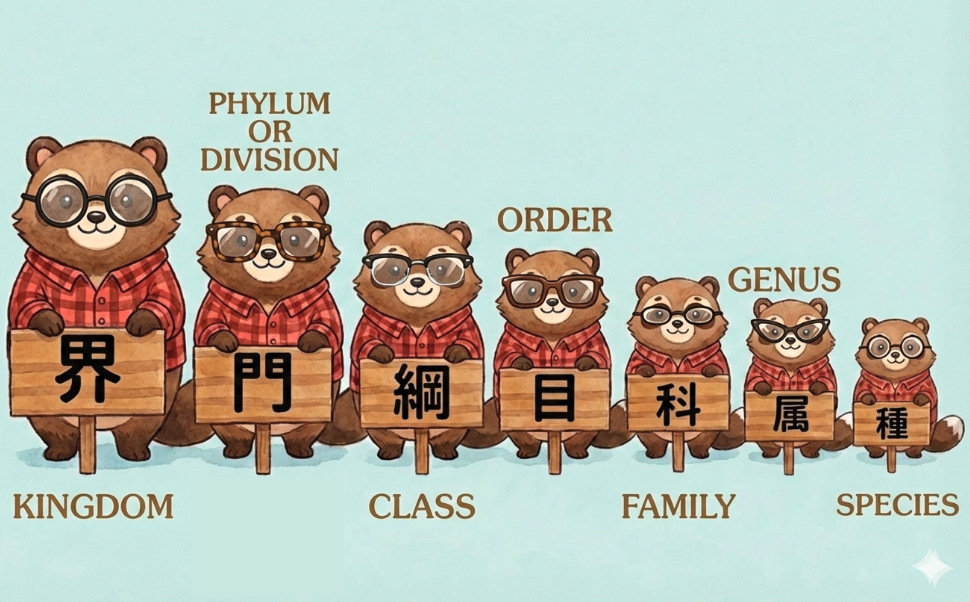
Biological classification is often arranged as a hierarchy. Broad groups contain smaller groups, which contain still smaller groups—rather like nested boxes, or an address that becomes more precise at each step.
A familiar set of ranks is:
Kingdom → Phylum → Class → Order → Family → Genus → Species
Many modern classifications also place Domain above Kingdom. Intermediate ranks, such as superfamily, subfamily, tribe, suborder and subspecies, may be used where they help describe a group clearly.
These ranks are useful labels, not a single fixed ladder that every group must follow in exactly the same way. Some classifications use additional ranks; others use unranked clades. Nature, rather inconveniently for tidy diagrams, did not arrive pre-filed in seven identical boxes.
シロフクロウ職員A rank tells us the level at which a name is used. It does not tell us how “advanced”, important or successful an organism is. No rank comes with a trophy, I am afraid.
A Human Example
Our own species can be placed within the following familiar ranks:
- Domain: Eukaryota
- Kingdom: Animalia
- Phylum: Chordata
- Class: Mammalia
- Order: Primates
- Family: Hominidae
- Genus: Homo
- Species: Homo sapiens
Each step places humans in a narrower group. At the broadest level listed here, we are eukaryotes; within that group, animals; then chordates, mammals and primates, until we reach the species Homo sapiens.
メンフクロウ職員Think of a museum collection. “Mammals” points to a very large part of the collection. “Primates” narrows the search. “Homo” narrows it further. By the time you reach Homo sapiens, you have arrived at a very specific taxon.
From Similarity to Ancestry
Modern taxonomy does more than group organisms by visible similarities. It also asks whether a group reflects common ancestry.
Birds, bats and butterflies all have wings, but they are not close relatives simply because they fly. Their wings evolved independently in different lineages. This is called convergent evolution: distantly related organisms evolve similar features because they face similar functional challenges.
A clade is a group made up of an ancestor and all of its descendants. It is also called a monophyletic group. Mammals form a clade: the group includes the common ancestor of mammals and all of its descendants, including humans, whales, bats, cats and many other species.
Birds offer another useful example. In evolutionary terms, birds belong within the dinosaur lineage. A definition of “dinosaurs” that excludes birds leaves out some descendants of the group’s ancestor, so “dinosaurs” would not be a monophyletic group under that definition.
タヌ山先生DNA can reveal relationships you’d never catch from looks alone. But it’s not a magic answer key.
Fossils, anatomy, development, field notes—every one of them has something to say. And we listen to the whole chorus, not just the loudest solo.
A phylogenetic tree represents a scientific hypothesis about evolutionary relationships. As new fossils are discovered and new data are studied, hypotheses can change—and classifications may be revised. That is not a failure of taxonomy. It is science doing its job.
Naming Rules
Classification tells us which organisms and groups scientists recognise. Nomenclature provides rules for naming them.
At the species level, a scientific name normally combines a capitalised genus name with a lower-case specific epithet—for example, Homo sapiens. Together, these two parts form a binomial name. International codes set standards for how these names are formed and used.
The ICZN governs animal names, while the ICN covers algae, fungi and plants. These codes do not decide which organisms belong in a group. That is a matter of taxonomic evidence and scientific judgement. The codes instead help names remain clear and as stable as possible when classifications change.
For animal names, the Principle of Priority generally gives precedence to the oldest available name when competing names apply to the same taxon. However, exceptions and formal decisions can preserve widely used names where strict priority would create confusion.
シロフクロウ職員There are two related questions: “What is this group?” and “What should we call it?” Taxonomy investigates the first. Nomenclature keeps the second from becoming chaos.
Four Ideas to Remember
- Compare several informative characteristics, rather than relying on appearance alone
- Use hierarchical ranks to move from broad groups to more specific ones
- Test whether groups reflect common ancestry and form complete clades
- Use agreed naming rules so scientific communication remains consistent and clear
Together, these principles turn the immense diversity of life into something we can observe, investigate and discuss—without pretending that nature itself is ever simple.
Tracing the History of Taxonomy
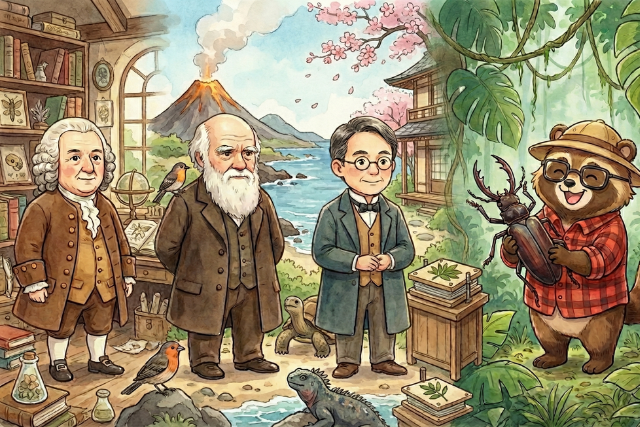
Taxonomy has changed as people have found better ways to observe, compare and communicate about the living world. What began as practical knowledge—recognising useful plants, crops, animals and medicines—gradually developed into a scientific effort to describe life’s diversity and understand its history.
This is not a story with one clear starting point. Many cultures developed detailed traditions for naming and recording living things long before modern taxonomy. The milestones below follow several developments that have strongly shaped the science practised today.
ミミズク先生Every classification system reflects the questions of its time. Before formal scientific names, people still needed to know which plants could heal, which foods could nourish and which creatures required caution.
Before Modern Taxonomy

Source:WIKIMEDIA COMMONS – Teofrasto Orto botanico detail

In the ancient Mediterranean world, Theophrastus (c. 371–c. 287 BCE) described plants in works that influenced European botany for centuries. He discussed their structures, habitats and uses, and distinguished broad forms such as trees, shrubs, undershrubs and herbs.
Other traditions developed around materia medica: the study and recording of substances used in medicine. In the first century CE, the Greek physician Dioscorides compiled De Materia Medica, a work describing medicinal substances from plants, animals and minerals. In China, long traditions of bencao, or materia medica, recorded natural substances and their uses. Li Shizhen’s Compendium of Materia Medica, published in 1596, contains 1,892 medicinal entries.
Japan likewise developed traditions for recording medicinal plants and natural materials. The Nihon Shoki records an imperial medicinal gathering in 611 CE, associated with the Uda region of present-day Nara Prefecture. The Shōsōin’s Shuju Yakuchō, from the eighth century, lists medicinal materials, while the early tenth-century Honzō Wamyō linked Chinese materia medica names with Japanese names and notes on origin.
These works were not taxonomy in the modern evolutionary sense. They nevertheless preserved observations, names, uses and comparisons—the foundations from which later natural history and systematic classification could grow.
シロフクロウ職員An old name can be difficult to interpret, but it is rarely useless. If we can connect it to a place, a specimen or a later description, it may still tell us something valuable about past knowledge and environments.
Linnaeus and Two-Part Names
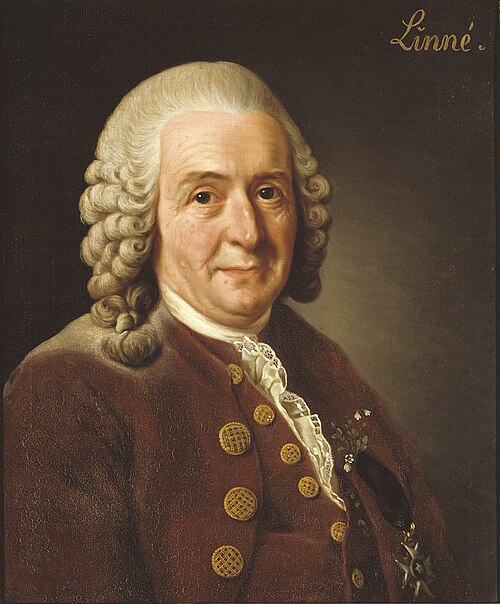
Source:WIKIMEDIA COMMONS – Carl von Linné

By the eighteenth century, European naturalists were trying to describe a rapidly growing number of species and specimens. Earlier names could take the form of long Latin diagnostic phrases: useful descriptions, perhaps, but awkward to remember, write on labels or use consistently.
The Swedish naturalist Carl Linnaeus (1707–1778) helped make a simpler approach widely usable. Two-part names existed before him, but in Species Plantarum (1753) he applied them consistently to plants. For botanical nomenclature, this book became a key starting point for the names of many plant groups.
For example, the plant now known as Physalis angulata was once described by the phrase:
Physalis annua ramosissima, ramis angulosis glabris, foliis dentato-serratis
The phrase describes an annual Physalis with highly branched, angular, hairless stems and toothed leaves. It was informative, but not an efficient reference name.
メンフクロウ職員Imagine fitting that onto a specimen label—along with the locality, date, collector and collection number. A short scientific name leaves room for the information that lets another person trace the specimen properly.
Linnaeus did not create a perfect or final classification. His importance lies in helping to establish a practical framework for naming and organising organisms. The two-part scientific name remains central to biological communication.
Darwin Adds History
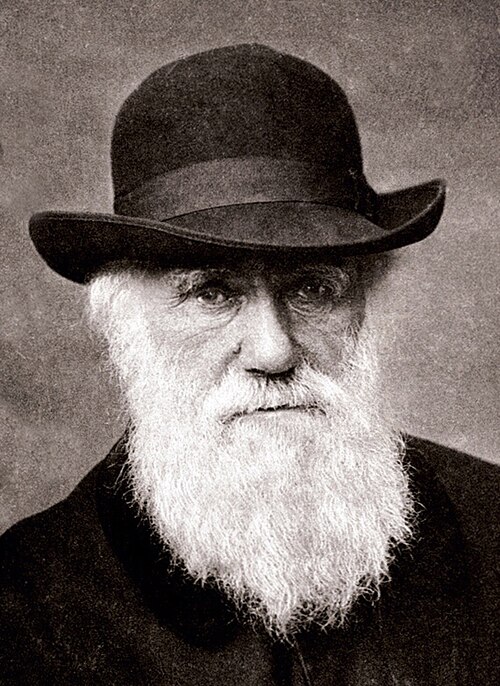
Source:WIKIMEDIA COMMONS – Charles Darwin 1880

In 1859, Charles Darwin published On the Origin of Species. He argued that species change through time and that similarities among organisms can reflect descent from common ancestors.
This changed the question behind classification. Instead of asking only, “Which organisms are most alike?”, naturalists could also ask, “Which organisms share an evolutionary history?” Darwin described the natural system of classification as one based on “descent with modification”.
ミミズク先生Darwin did not make earlier observations irrelevant. He gave them a new meaning. Similarities in a bone, a flower or a fossil could now be read as clues to a much longer history.
This was not an instant solution to every classificatory problem. It did, however, establish a principle that remains central to modern systematics: classifications should aim to reflect evolutionary relationships.
From Clades to Phylogenies
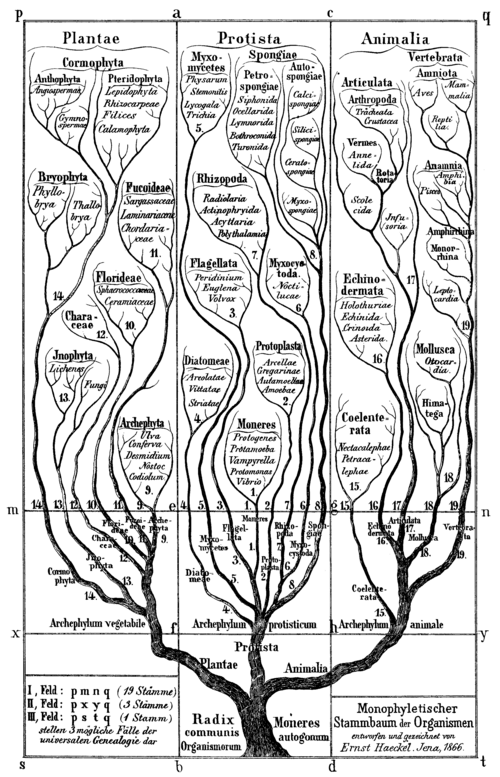
Source:WIKIMEDIA COMMONS – File:Haeckel arbol bn.png

During the twentieth century, systematists developed more formal ways to reconstruct evolutionary relationships. One influential approach, cladistics, emphasised the branching pattern of descent and the recognition of clades—groups consisting of an ancestor and all of its descendants.
This helped clarify why some familiar groupings need careful thought. Birds, bats and butterflies all have wings, but they do not form one close evolutionary group; their wings evolved independently. Birds provide an even more striking example. In evolutionary terms, birds belong within the dinosaur lineage.
タヌ山先生Here is the important part: a classification should not group organisms together just because they look convenient on a chart. We need evidence for shared ancestry. Shape, fossils, DNA—bring all of it. That is how you avoid confidently filing a bird next to the wrong relatives.
A phylogenetic tree is a hypothesis about those relationships. It is not a permanent family tree carved in stone. As new evidence appears, scientists may revise their hypotheses and classifications.
The Molecular Turn
During the second half of the twentieth century, DNA gave researchers a new kind of evidence to compare. Sequencing technologies made it possible to study genetic similarities and differences directly, alongside evidence from anatomy, fossils, development and field observations.
Molecular data helped clarify many relationships that are not obvious from outward appearance. Dolphins and sharks both have streamlined bodies because they are adapted to moving through water, but dolphins are mammals, not fishes. Whales are much more closely related to hippos than to sharks.
タヌ山先生DNA can reveal a relationship that a quick glance misses. But it is not a magic answer key. A computer can calculate a tree; researchers still have to test whether the evidence actually supports it. Excellent science, admittedly. The folders of sequence files, less so.
Modern sequencing can examine anything from selected DNA regions to whole genomes. It has expanded the scale of phylogenetic research, but it has not replaced specimens, morphology or fieldwork.
The APG IV system is an influential example in flowering-plant classification. Published in 2016, it combines evidence from phylogenetic research, especially molecular data, and recognises 64 orders and 416 families of angiosperms. It remains the latest numbered APG system as of 2026.
From Specimens to Sequences
Modern taxonomy may involve DNA, computers and statistical methods, but it has not left the museum specimen behind. Researchers still need to know what organism was sampled, where it came from, when it was collected and which specimen provides the physical reference for its name.
A well-documented specimen can connect a scientific name with an organism, a place, a date and a piece of evidence. Its associated tissue or DNA may later support new research, while its labels, photographs and publications preserve the history of how that knowledge was built.
メンフクロウ職員A museum collection is not simply a room full of old specimens. Each well-recorded specimen can link a name, a living organism, a place, a date and a scientific question—sometimes for centuries.
A History Still Being Written
The history of taxonomy is not a simple journey from old-fashioned observation to high-tech DNA analysis. It is a history of increasingly powerful questions:
- What is this organism?
- How is it different from similar organisms?
- What should we call it?
- How is it related to other organisms?
- What evidence supports that relationship?
From herbal knowledge and natural-history records to Linnaean names, Darwinian evolution and molecular phylogenetics, the central purpose has remained remarkably consistent: to make sense of life’s diversity through careful observation, comparison, record-keeping and testing.
Putting Taxonomy into Practice
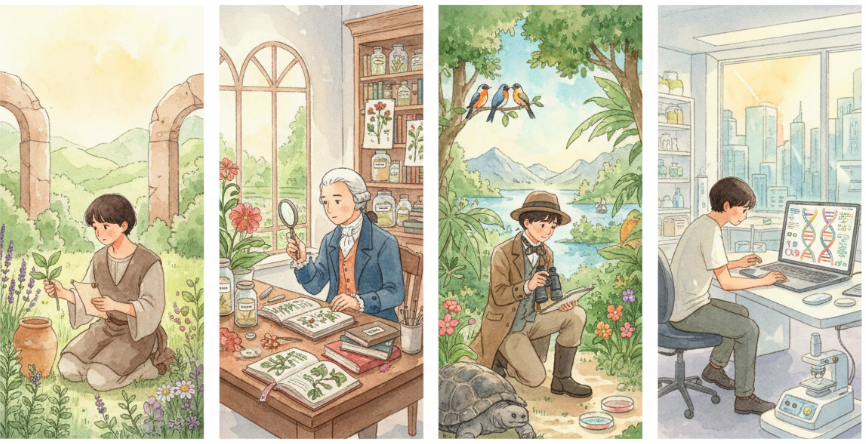
Taxonomy does not begin with memorising long lists of names. It begins with looking carefully, comparing what you find and keeping a record that someone else could understand.
You can practise this almost anywhere. A garden, park, riverside path or museum collection can become a small exercise in classification. The aim is not to identify every organism as quickly as possible. It is to learn how to ask better questions.
メンフクロウ職員You do not need a laboratory to begin. Sometimes all you need is a leaf, an insect and five minutes of proper attention.
Start with What You Can Observe
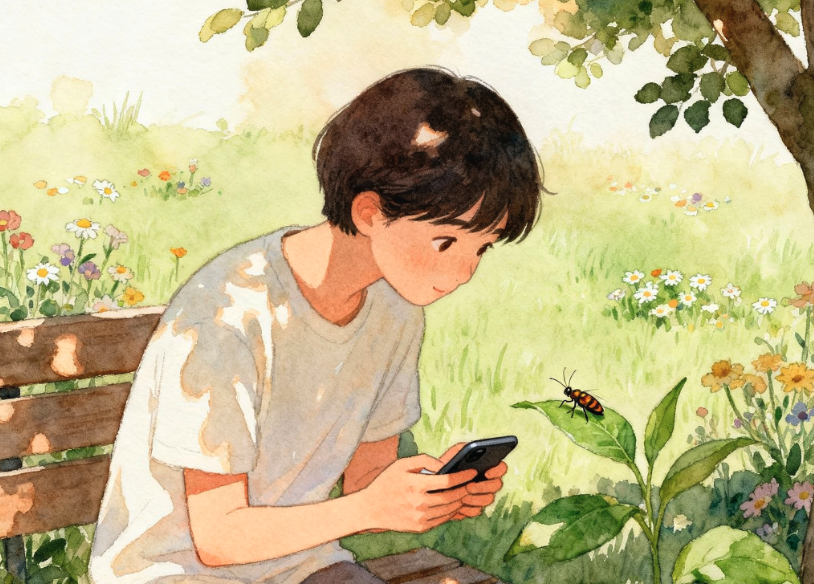
Choose one plant, insect, bird or fungus. Begin with the features you can see, then add the details that give your observation context.
For plants, compare leaf shape, leaf edge, veins and arrangement on the stem. With trees, make a first guess from a distance, then move closer to inspect bark, buds, flowers, fruit or leaves.
For insects, notice the number of legs, the shape of the body, wings, antennae and where the animal was found. A beetle beneath loose bark, a butterfly on flowers and a dragonfly beside water may all require different questions.
- Structure: What shapes, parts or patterns can you see?
- Place: Was it on a leaf, in soil, under bark, in water or on a flower?
- Time: What was the date, season and time of day?
- Habitat: Was the area sunny, shaded, dry, wet, open or wooded?
- Behaviour: Was it feeding, resting, flying, digging, calling or caring for young?
シロフクロウ職員Record what you actually observed. “It looked like the one in the picture” is not much help to someone trying to check your observation later.
A photograph is useful, but it becomes much more informative when paired with the date, general location and a short note about the habitat.
Let Technology Help—But Not Decide
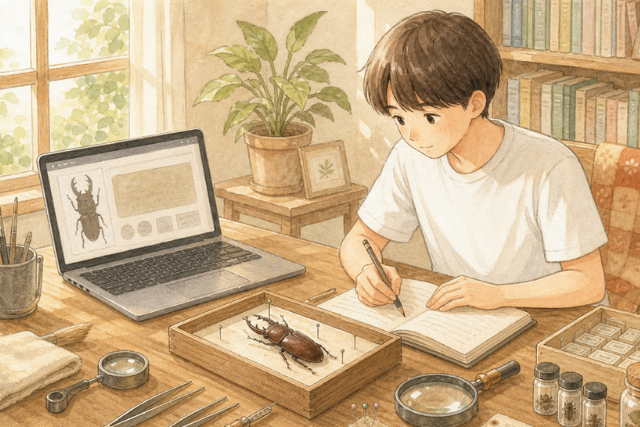
Tools such as iNaturalist, Seek, Biome, LINNÉ LENS and Google Lens can suggest possible identifications from photographs.
These tools are especially helpful when you do not know where to begin. A suggested name can lead you to field guides, museum databases, identification communities and reliable publications.
But an app’s answer is a clue to check, not a final verdict. Image quality, angle, season, life stage and the available reference images can all affect the result. Some species can only be identified using details that a photograph cannot show.
タヌ山先生An identification app gives you a very good first question: “Could this be X?” It does not always give you a very good final answer: “Therefore, it is definitely X.” That difference matters. Quite a lot, actually.
When possible, compare the suggestion with a regional field guide or a trusted museum or biodiversity database. For important records—particularly unusual species, conservation records or difficult groups—ask an experienced identifier to check the evidence.
Classification Beyond Biology
The habit of grouping and comparing can be useful outside biology, too. You might organise a shopping list by food type, sort digital files by project or arrange a work plan by urgency and importance.
In business planning, MECE means Mutually Exclusive, Collectively Exhaustive: categories should avoid unnecessary overlap while still covering the relevant possibilities. It can be a useful way to organise information.
However, this is not the same as biological taxonomy. Everyday categories are often chosen for convenience. Taxonomy aims to recognise organisms and represent their evolutionary relationships using scientific evidence.
ミミズク先生A filing cabinet may be arranged by colour because that is convenient. Nature has rather different ideas about our filing systems. The important thing is to choose your criterion deliberately.
A Taxonomy Exercise: Reading a Beetle Through Its Classification
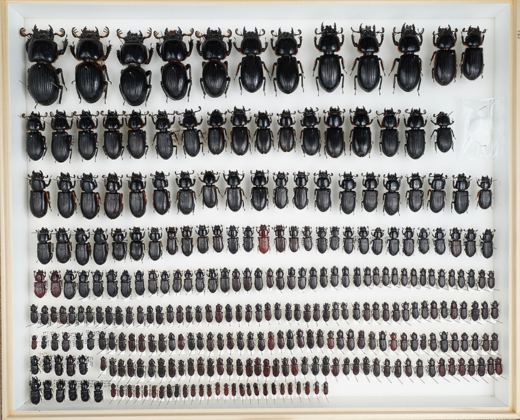
Source:九州大学総合研究博物館 ‐ 烏山邦夫甲虫類コレクション KCB0157 クロツヤムシ
A classification does not tell us everything about an organism. It can, however, give us useful clues about its body plan, relatives and the questions worth asking next.
 ミミズク先生
Let us try this with Cylindrocaulus patalis, a species of bess beetle endemic to Japan, known in Japanese as tsunokuro-tsuyamushi.
A Closer Look at Cylindrocaulus patalis
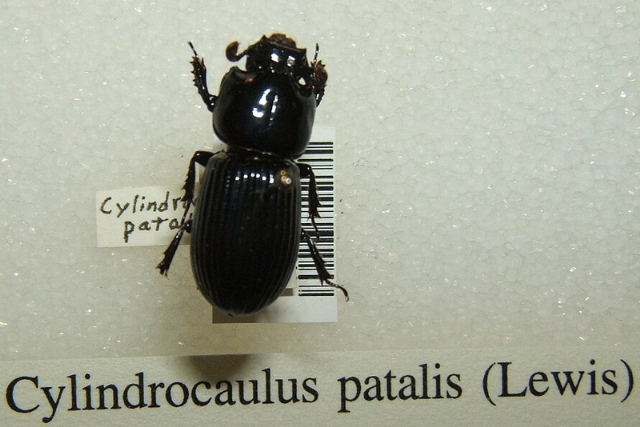
Photo: Shawn Hanrahan, Texas A&M University Insect Collection. CC BY-SA 2.5. Source:WIKIMEDIA COMMONS –

File:Cylindrocaulus patalis sjh.jpg
Its familiar classification can be written as follows:
- Kingdom: Animalia
- Phylum: Arthropoda
- Class: Insecta
- Order: Coleoptera
- Superfamily: Scarabaeoidea
- Family: Passalidae
- Genus: Cylindrocaulus
- Species: Cylindrocaulus patalis
Each level gives us a different kind of clue.
As an arthropod, it has an external skeleton and jointed limbs. As an insect, it has the typical insect body plan, including six legs. As a beetle, it belongs to Coleoptera, whose hardened forewings are called elytra.
Its placement in the family Passalidae gives us a useful lead as well. Many passalid beetles live in decaying wood, and adults in some species care for their young. This is a hypothesis to explore, not a guarantee that every species will behave in exactly the same way.
タヌ山先生This is where classification becomes useful instead of decorative. Once you know the family, you know where to start looking—for relatives, habitats, body features and behaviour. It is not fortune-telling. It is a rather good map.
Family Life in Rotten Wood
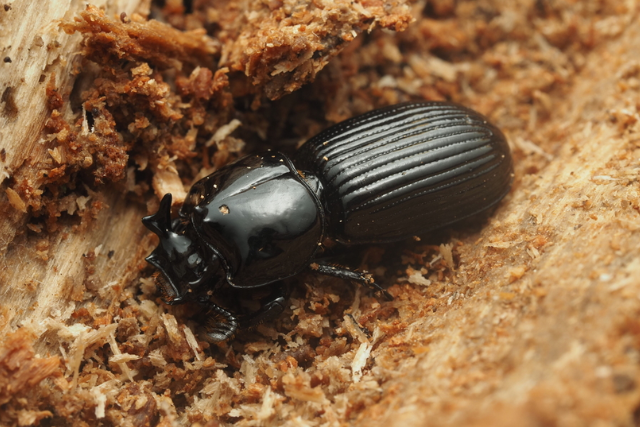
Source:iNaturalist – ツノクロツヤムシ Cylindrocaulus patalis(rockfish17)
Cylindrocaulus patalis is endemic to Japan and is known from montane forests in parts of Shikoku and Kyushu, where it depends on suitable decaying wood. It lives in rotten wood as a family group. Studies have documented extensive parental care: adults excavate galleries, provide larvae with chewed and partly processed wood, and care for their developing offspring.
This beetle shows why taxonomy and natural history belong together. Classification tells us where an organism sits among its relatives; observation and research reveal how it lives.
メンフクロウ職員A specimen gives us a name and a point of comparison. Field records tell us where it was found. Research then helps us understand its life in the log, not just its place in a drawer.
A Note on Conservation
Avoid describing Cylindrocaulus patalis simply as “Near Threatened” without naming the assessment. Conservation categories can differ by region.
For example, the species is listed as Near Threatened in Ehime Prefecture. Other regions assess it differently, and the Ministry of the Environment category is not listed in the Ehime Red Data Book entry. It is therefore safer to say that the species has been assessed as threatened at prefectural level in parts of its range.
Complete Metamorphosis
As a beetle, Cylindrocaulus patalis undergoes complete metamorphosis:
egg → larva → pupa → adult
The pupal stage lies between the feeding larva and the reproductive adult. Beetles, butterflies, moths, flies, bees and wasps all develop in this way.
More than 80% of described insect species are holometabolous, meaning that they undergo complete metamorphosis. The different life stages can use different resources or habitats, which may reduce competition between larvae and adults. This is likely to be an important advantage, but it is too simple to say that complete metamorphosis alone explains insect diversity.
ミミズク先生Evolution rarely offers one reason for success. A useful feature usually becomes important because it works alongside many others.
What Taxonomy Teaches Us
A simple classification exercise can take us from a name to a much wider set of questions:
- What body features should we expect to see?
- Which organisms are likely to be close relatives?
- Where might this species live?
- How does it develop?
- What evidence supports what we think we know?
シロフクロウ職員And if an answer remains uncertain, record the uncertainty. “A beetle, probably in this family” is far more useful than a confident species name that cannot be supported.
Taxonomy is not simply the art of memorising difficult names. It is a way of turning observations into evidence, and evidence into a clearer understanding of life’s diversity and relationships.
Cutting-Edge Taxonomy

Taxonomy is no longer confined to museum drawers, field notebooks and microscope slides. Today, researchers can combine specimens with high-resolution images, DNA data, artificial intelligence and biodiversity records from around the world.
These tools are changing how scientists find patterns, test identifications and investigate evolutionary relationships. They also make it easier for museums, researchers and members of the public to contribute useful biodiversity information.
But one principle remains unchanged: new technology does not replace taxonomic expertise. It gives researchers new ways to examine evidence.
ミミズク先生The tools have changed dramatically. The fundamental question has not: what evidence tells us what an organism is, and how it is related to others?
When AI Recognises Patterns
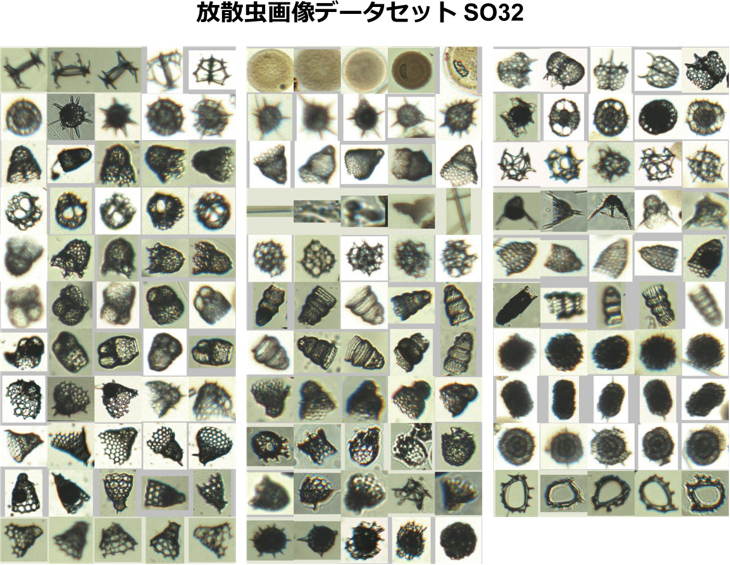
Source:国立研究開発法人産業技術総合研究所 ‐ AI研究の最新知見、ミクロな化石の鑑定で成果
Artificial intelligence is increasingly used to sort and compare large numbers of biological images. It can be especially useful for microscope photographs, digitised specimens and other image-rich collections.
In 2025, Japan’s National Institute of Advanced Industrial Science and Technology used a Vision Transformer model to classify images of radiolarian microfossils. With a pre-training method designed to work with limited training data, the model reached an average classification accuracy of 86%, with performance approaching that of the experts evaluated in the study.
AI may help researchers:
- Sort large collections of images into likely groups
- Flag unusual specimens for closer inspection
- Suggest possible identifications
- Highlight visual patterns that deserve further study
タヌ山先生Think of AI as an extremely fast pattern-recognition assistant. It can examine an enormous number of images without needing a coffee break. The difficult part is still deciding what the pattern actually means.
An AI system can recognise patterns in photographs. It cannot, by itself, examine every diagnostic feature, interpret a damaged specimen or make a formal taxonomic decision. The strongest results come from combining computer analysis with specimens, specialist knowledge and transparent evidence.
A Global Biodiversity Network
Modern taxonomy also depends on shared biodiversity data. The Global Biodiversity Information Facility, or GBIF, is an international infrastructure that provides open access to records from natural-history collections, biological surveys and biodiversity observations.
A record may include useful details such as:
- What organism was recorded
- Where and when it was found
- Whether it represents an observation, a specimen record or another type of occurrence record
- Which institution or project supplied the information
- Identification information, where provided
To make records easier to share, many publishers use Darwin Core, an international set of terms for describing biodiversity data. It helps a museum record in Japan and a field observation in another country use compatible information fields.
GBIF has grown rapidly. By late 2025, its network contained more than 3.5 billion occurrence records, and the total continues to rise. These data support research on species distributions, introduced species, changing habitats and conservation planning.
シロフクロウ職員A name is useful. A name connected to a specimen, place, date and reliable record is much more useful. That is where good data management begins.
Japan contributes through the Japan Biodiversity Information Facility (JBIF), which helps Japanese institutions make biodiversity information available in internationally usable formats. A specimen held in a Japanese museum can therefore become part of a global dataset—provided that its label data have been digitised, checked and published appropriately.
Citizen Science and Data Gaps
Smartphones have made it easier for more people to contribute observations. Platforms such as iNaturalist, Biome and the Ministry of the Environment’s Ikimono Log allow people to photograph organisms, share sightings and explore biodiversity records.
On iNaturalist, computer vision suggests a possible identification, while other users can discuss, confirm or improve it. Observations that meet the platform’s Research Grade criteria and data-licensing requirements may be shared with GBIF.
メンフクロウ職員One observation may look small on its own. A million observations are a different matter. Together, they can help us study distribution, seasonality and environmental change.
Citizen science does not automatically produce a complete picture of biodiversity. Records tend to cluster near cities, roads, popular parks and places that people can reach easily. This is called sampling bias.
A map with many records does not necessarily show the place with the most species. It may simply show the place with the most observers.
タヌ山先生The map with the most dots is not automatically the place with the most species. Sometimes it is just the place with the most people carrying cameras.
Projects can help address these gaps by directing observers towards less-recorded regions. Canada’s Blitz the Gap, for example, uses iNaturalist to encourage observations from areas and species with limited data. The goal is not merely more records, but more useful records for biodiversity knowledge and conservation planning. mcgill
From Observation to New Questions
AI, museum databases and citizen-science apps may seem like separate technologies. In practice, they can form one connected process:
Observation → Identification → Verification → Data sharing → Analysis → New questions
A photograph may provide the first clue. A specialist may verify the identification. The record can then join a larger dataset, where it may be combined with museum specimens, environmental information or genetic research.
This can lead to questions about changing distributions, seasonal activity, introduced species, conservation priorities and evolutionary relationships.
ミミズク先生The remarkable thing is not simply that a computer can recognise a pattern. It is that a single observation can now be connected to evidence gathered by people you may never meet, in places you may never visit.
The Future Is Not Only Digital
The future of taxonomy will involve more data, better imaging, faster analysis and wider collaboration. Yet physical specimens, field notes and careful observation remain essential.
A specimen can serve as evidence for the application of a scientific name. A field observation can reveal behaviour that a preserved specimen cannot show. A photograph can record colour, habitat and seasonal condition. DNA can uncover relationships that morphology alone may not resolve. A database can connect all of these records across institutions and countries.
メンフクロウ職員A digitised specimen is wonderfully useful. But please do not ask the database to replace the specimen. When the question changes ten years from now, someone may need to examine the original evidence again.
Modern taxonomy works best when these forms of evidence are brought together. Technology can make the work faster and more connected, but it cannot remove the need for careful observation, reliable records and scientific judgement.
シロフクロウ職員Technology can help us find patterns. Good records allow us to trust them.
What Taxonomy Can Teach Us
Taxonomy may begin with names, specimens and careful observation, but its significance goes much further. It gives us a way to recognise life’s diversity, compare organisms and investigate their evolutionary relationships.
From practical herbal knowledge to Linnaean names, Darwinian evolution, molecular phylogenetics and digital biodiversity data, the tools have changed greatly. The underlying curiosity has not.
One of taxonomy’s most important lessons is that life is connected—not merely because organisms share the same planet, but because living things are linked through evolutionary history.
ミミズク先生Once you begin looking at life as a history of relationships, the world becomes rather different. A familiar animal is no longer merely an animal. It becomes part of a much larger story.
From Names to Global Challenges
Taxonomy can seem far removed from international policy. In reality, knowing which organisms exist—and being able to distinguish and record them reliably—is fundamental to understanding biodiversity.
A recent example concerns digital sequence information, or DSI, on genetic resources. At the UN Biodiversity Conference, COP16, held in Cali, Colombia, in 2024, governments agreed on a multilateral mechanism for sharing benefits arising from the use of DSI. This mechanism includes a global financial arrangement known as the Cali Fund.
DSI refers broadly to digital genetic sequence information derived from biological resources. It can contribute to research and commercial development in pharmaceuticals, biotechnology, agriculture and other life-science industries.
The question is not only scientific. It is also about fairness: how should benefits from biodiversity-related information be shared, particularly with developing countries and Indigenous Peoples and local communities?
The Cali Fund was formally launched in February 2025. It is intended to receive contributions from major commercial users of DSI and support biodiversity action, including in developing countries. At least half of its resources are intended to support the self-identified needs of Indigenous Peoples and local communities.
シロフクロウ職員A sequence stored on a computer may look very different from a beetle in a museum drawer. But both raise the same basic question: where did this biological information come from, and how should it be used?
Classification, Data and Conservation
Taxonomy is not the same as ecological forecasting or conservation policy. It provides part of the foundation on which both depend.
Before researchers can ask how a biological community is changing, they need reliable information about which organisms are present. Species names, verified identifications, specimen records and long-term observations make it possible to compare a site across seasons, years or decades.
Modern biodiversity research often follows a connected path:
Identification → Classification → Recording → Data analysis → Prediction → Conservation
Taxonomy is not the whole process, but without reliable names and identifications, each later step becomes more difficult.
タヌ山先生Prediction needs data. Data need observations. And observations are much more useful when we know what we are looking at. Taxonomy is part of that foundation. Simple idea. Hard work. Excellent work, obviously.
An Unfinished Catalogue
Taxonomy also teaches humility. We do not yet have a complete catalogue of life.
New species continue to be described, while familiar organisms may be split, combined or reassigned as new evidence changes our understanding of their relationships. The Catalogue of Life is building a global checklist of known species, but it remains an evolving resource rather than a finished inventory. catalogueoflife
The gaps in our knowledge are not evenly distributed. Tropical regions hold exceptionally high biodiversity, and many organisms there remain poorly known or difficult to study. At the same time, expertise, research infrastructure, funding and digitisation capacity are unevenly distributed around the world.
This creates a practical challenge: the places with the greatest biological diversity are not always those with the greatest resources for documenting it.
メンフクロウ職員A species cannot be properly studied if nobody has the opportunity to look for it, describe it and preserve the evidence. Sometimes the first step towards conservation is simply making sure that a species is known.
Long-term progress depends on respectful partnerships: supporting researchers and collections in biodiversity-rich regions, sharing training and technology, recognising Indigenous and local knowledge, and ensuring that the benefits of research are shared fairly.
Add One More Living Thing
You do not need to discover a new species to experience what taxonomy offers. Choose something you encounter regularly: a tree beside your home, a beetle on a wall, a bird in a park or a plant growing through a pavement crack.
Look at it carefully. Ask what it is—then ask how you know.
What features distinguish it from similar organisms? Where does it occur? What is it related to? What does its scientific name mean? What evidence supports the identification?
Perhaps check a field guide. Perhaps take a photograph. Perhaps note the date, general location and habitat. Perhaps compare it with a museum collection or a reliable biodiversity database.
シロフクロウ職員And if you cannot identify it, that is perfectly acceptable. “Unknown” is not the end of an investigation. It is often where the interesting part begins.
Learning the name of an organism changes the way we see the world. A tree that was once simply “a tree” becomes a particular species, belonging to a genus, a family and a much larger evolutionary history. The beetle on a wall becomes part of a lineage with its own anatomy, ecology and past.
The world has not changed. Your map of it has.
ミミズク先生Taxonomy does not add more life to the world. It gives us more ways to notice the life that was already there.
Taxonomy teaches us to look closely, record honestly and remain curious when an answer is not yet clear. It turns observation into evidence, and evidence into a clearer understanding of life’s diversity, relationships and shared future.
シロフクロウ職員Voilà! If you enjoyed exploring how we organise the living world, these curated articles from our museum galleries are well worth a look: 👇️
 ミミズク先生
Please do explore the books from eco-life-planet as well. I hope they will offer you many more rewarding encounters with the living world.
References and Further Reading
化石研究会 - 特集「生き物を分類するってどんなこと?」~分類学の普及と現状~
WHO - International Statistical Classification of Diseases and Related Health Problems (ICD)
日本図書館協会 - 日本十進分類法(NDC)(2025年5月)
筑波大学 ‐ 動物系統分類学 ―私の昔のテキストから―(連載第2回)牧岡 俊樹(元 筑波大学 生物科学系)(2006年)
東京医科歯科大学 ‐ 第3章 生物多様性を整理する(2003年4月)
東京大学 ‐ Carl von Linne(カール・フォン・リンネ)1707-1778
奈良国立博物館 ‐ 『種々薬帳』(しゅじゅやくちょう)(2024年)
iNaturalist ‐ 自然とふれ合おう 自然界からの観察記録を探索し、共有しましょう
RECRUIT ‐ MECEとは? 論理的思考の基本となる考え方やビジネスにおける活用例、注意点(2024年6月)
Nikkei The KNOWLEDGE – 収集した情報の整理方法とは? 効率よく仕事を進めるためのコツを解説(2023年12月)
大阪市立自然史博物館 ‐ ツノクロツヤムシの幼虫への給餌行動(2002年8月)
Wikipedia – Cylindrocaulus patalis
橿原市昆虫館 ‐ 橿原市昆虫館だより GONTA(2007年12月)
GBIF ‐ GBIF | Global Biodiversity Information Facility
熊本大学 ‐ 細胞の骨組みの特徴に基づいたAIによる細胞の自動分類と分析(2022年10月)
熊本大学 ‐ AI で植物細胞構造をバーチャルに染色し、 高精度に解析する新手法を確立(2025年1月)
Blitz the Gap ‐ Help us fill biodiversitydata gaps!
Convention on Biological Diversity ‐ COP 16 in Cali: progress towards making peace with nature
日本経済団体連合会 ‐ 生物多様性分野を巡る最近の動向と環境省の2025年度主要施策(2025年6月)
ipbes – The global assessment report on BIODIVERSITY AND ECOSYSTEM SERVICES
国立環境研究所 ‐ 生物群集はエネルギー地形の高低に従い変化する—データ駆動型の生物多様性の変化予測を実現—(2025年4月)
コメント