


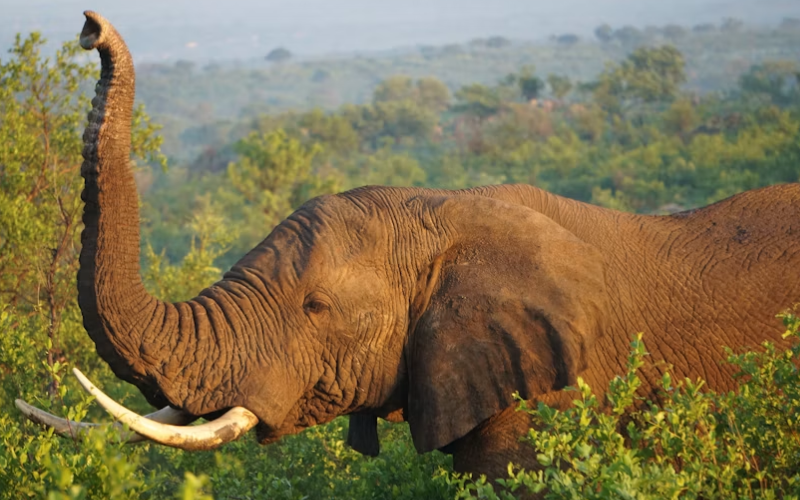
Cover photograph: Peter Schmidt
How does a koala spend its day? Curled into the fork of a tree, it may remain almost motionless for hours. It looks asleep, but some of that time may be spent resting while awake.
At the other extreme, a study of two wild African bush elephant matriarchs estimated about two hours of sleep per day, using the stillness of their trunks as the main clue. Rankings of “the longest-sleeping animals” and “the shortest sleepers” are easy to read and easy to share. Yet the numbers often hide as much as they reveal.
Was the animal studied in the wild or in captivity? Did researchers record brain activity, or infer sleep from movement? Was it breeding, travelling or feeding far from shore? An elephant crossing grassland, a seal diving into the deep ocean and a bird flying over open water each faces different demands on its time.
Field studies of koalas, elephants, seals, dolphins and birds reveal how animals fit sleep around feeding, movement, breathing and breeding. Look beyond the hours, and a richer picture of their lives begins to emerge.
 メンフクロウ職員
Piano piano. The number alone does not tell us how an animal lives. Before drawing conclusions, we need to look at the whole picture.
 タヌ山先生
タヌ山先生Exactly. A ranking is only the headline. The biology is in the field records, the measurements and the conditions behind it.

Why the Numbers Alone Are Not Enough
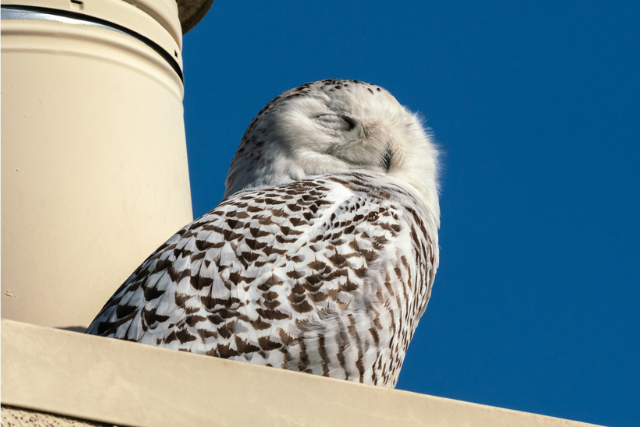
Source: iNaturalist – シロフクロウ Bubo scandiacus(tempetoon)
An animal lying still may be asleep, resting while awake or simply waiting. In wild animals, these states can be difficult to distinguish from the outside.
Researchers therefore need ways to identify sleep. In some species, they can use electroencephalography, usually shortened to EEG, to record patterns of electrical activity in the brain. In others, direct brain recording is impractical or impossible, so researchers use behaviour, posture and body movement as indirect clues.
These methods are all valuable. However, they do not answer exactly the same question. A study that records EEG can identify particular sleep stages. A study that records movement may identify inactivity, rest or sleep-like behaviour, without proving that every still minute was sleep.
 シロフクロウ職員
Before comparing two figures, I would check the method beside each one. A number without its conditions is rather like a specimen label without a locality.
Koalas: Stillness Is Not Always Sleep
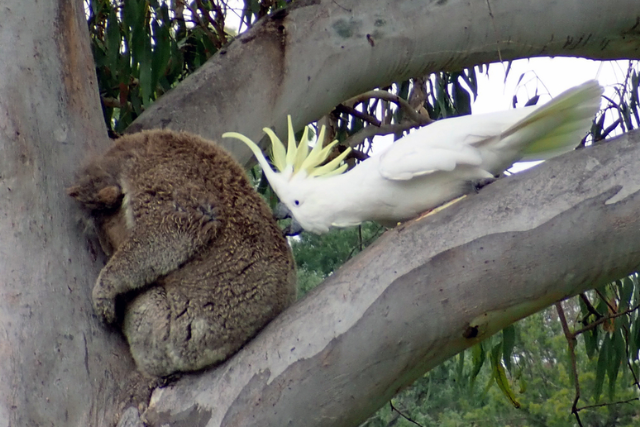
Source: iNaturalist – コアラ Phascolarctos cinereus(jeannie_bartram)
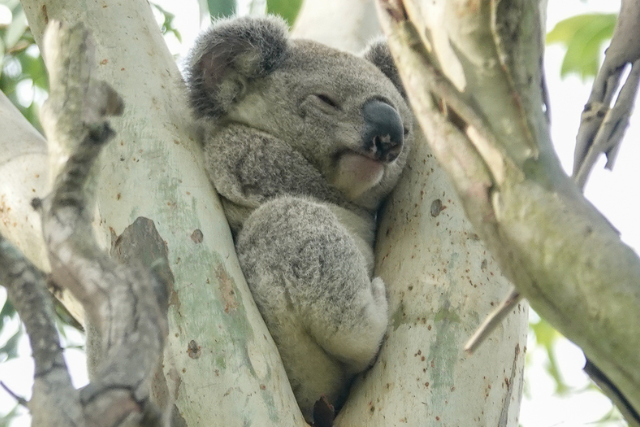
The koala, Phascolarctos cinereus, is often described as one of the animal kingdom’s longest sleepers. Resting against a eucalyptus branch, it can remain almost motionless for long periods. Yet stillness is not the same thing as sleep.
A 2013 study of free-ranging koalas combined accelerometers with direct behavioural observations. The movement records helped researchers distinguish active periods from inactivity. Direct observation showed that the inactive category included both sleep and rest-alert behaviour, when a koala was awake but relatively still. The accelerometers did not provide a separate total for time spent asleep.
The study found that the koalas were most active from the afternoon into the early morning, while long inactive periods occurred mainly during the day. This gives a valuable picture of their daily rhythm. It does not provide a direct total of time spent asleep.
A photograph of a koala with closed eyes, curled in a fork of a tree, cannot by itself tell us whether it is asleep or quietly resting.
メンフクロウ職員If you watch a koala in a zoo enclosure, try looking at the clock as well as the animal. What happens afterwards? Does it begin feeding, or does it simply shift its weight? The timing may tell you more than the posture.
The koala is a useful reminder that, before calling a species a long sleeper, we need to ask what researchers actually measured.
Elephants: Reading the Fine Print
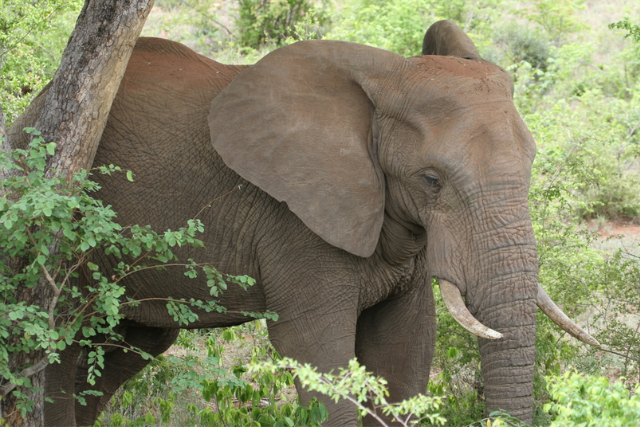
Source: iNaturalist – ソウゲンゾウ Loxodonta africana(wsweet321)
At the other end of many sleep rankings stands the African bush elephant, Loxodonta africana. In a 2017 study in Botswana, researchers followed two wild female herd leaders for 35 days. Using prolonged trunk immobility as the principal clue, they estimated that the elephants spent about two hours per day asleep or in sleep-like inactivity.
The study combined a device that recorded trunk movement with GPS collars and gyroscopes that tracked body position and movement. Most presumed sleep occurred between about 02:00 and 06:00. It was divided into several short bouts rather than one uninterrupted stretch.
Both elephants had periods of presumed sleep while standing and while lying down. For each elephant, sleep while lying down was recorded on 10 of the 35 study days, rather than every night.
No EEG was recorded. The two-hour figure is therefore an estimate based chiefly on trunk inactivity in two particular wild elephants. It is an extraordinary glimpse of their nights, rather than a fixed daily allowance for every African elephant.
シロフクロウ職員A striking number tends to travel far. I would like the field notes to travel with it.
Sea and Sky: Where Sleeping Becomes a Problem
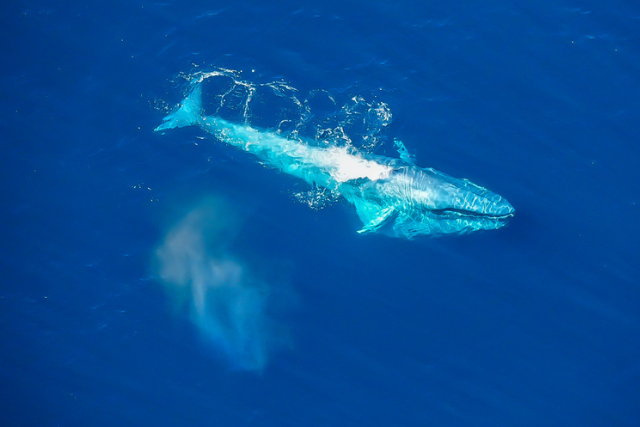
Source: iNaturalist – シロナガスクジラ Balaenoptera musculus(harrymurphy28)
On land, many animals can stop moving and settle in a reasonably safe place to rest. At sea, marine mammals must continue to manage their breathing. A bird travelling far over open water may have nowhere to land when it becomes tired.
In these environments, sleep cannot always be a long, motionless interval in a sheltered place. It may have to be fitted into a dive, alongside swimming or even during flight.
Northern Elephant Seals: Napping During Deep Dives
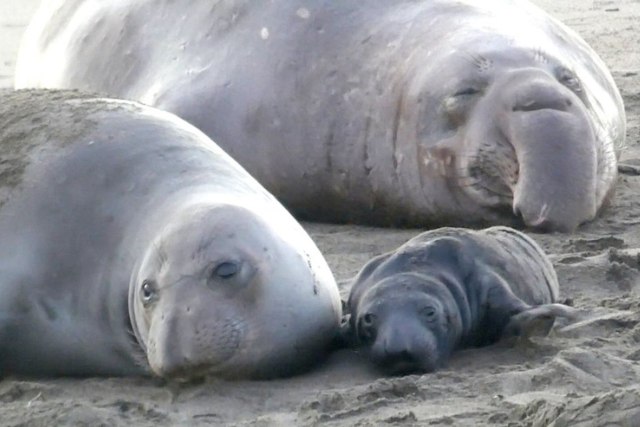
Source: iNaturalist – キタゾウアザラシ Mirounga angustirostris(naturesdawn)
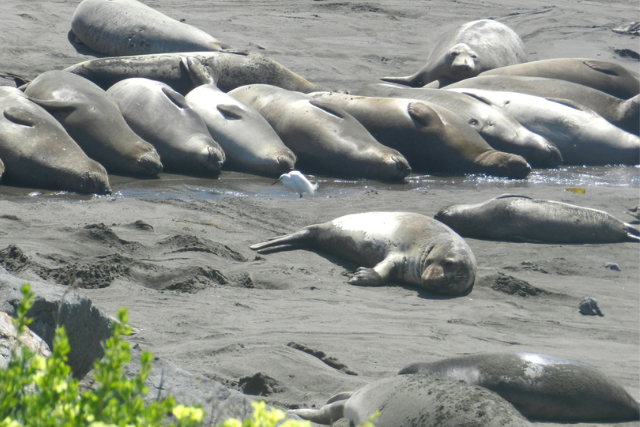
Northern elephant seals, Mirounga angustirostris, spend months at sea during foraging trips across the North Pacific. A 2023 study near Monterey Bay, California, recorded EEG signals, dive depth and body movement from wild seals simultaneously. The researchers recorded 104 dives in which EEG data confirmed sleep. Each sleep episode lasted less than 20 minutes, and the deepest sleeping dive reached 377 metres.
During approximately seven months of offshore foraging, the seals were estimated to sleep for about two hours per day. Reports of much longer sleep on land provide a striking contrast, although the offshore and onshore figures come from different measurements and should not be treated as a like-for-like comparison.
The important point is that the seals were not taking long surface naps. They were sleeping during deep dives.
タヌ山先生That is the key result. Deep diving did not stop while the seal slept. The dive itself became the setting in which sleep occurred. That is a much more interesting answer than simply calling the animal a short sleeper.
By matching EEG-confirmed sleep with depth and acceleration patterns, the researchers extended their analysis to tracking records from 334 free-ranging seals. During approximately seven months of offshore foraging, the seals were estimated to sleep for about two hours per day. During the breeding season, when they returned to land, they slept for around ten hours per day.
The same species can therefore have very different sleep schedules at sea and on land, because the demands of each phase of life are different.
シロフクロウ職員Two hours at sea and around ten hours on land are not contradictory figures. They belong to different parts of the same animal’s annual record. Voilà.
Dolphins: One Cerebral Hemisphere at a Time
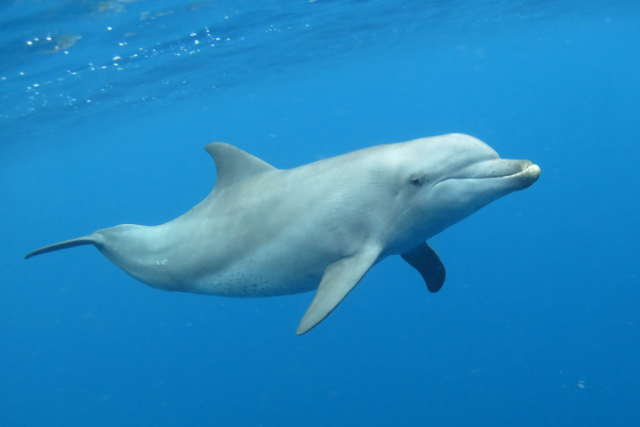
Source: iNaturalist – ハンドウイルカ Tursiops truncatus(keiranwilliams)
Cetaceans organise sleep differently from northern elephant seals. In common bottlenose dolphins, Tursiops truncatus, and other studied cetaceans, EEG recordings have revealed unihemispheric slow-wave sleep. In this form of sleep, slow-wave activity appears in one cerebral hemisphere, while the other remains in a more wake-like state. The hemisphere showing slow-wave activity can alternate over time.
This pattern is connected with the ability to continue swimming, reach the surface to breathe and remain responsive to the surroundings. However, it should not be treated as a simple solution to breathing alone. Researchers also discuss possible links with vigilance, sensory monitoring and thermoregulation.
タヌ山先生”Half the brain sleeps” is a useful shortcut, but keep it as a shortcut. More precisely, the two cerebral hemispheres show different patterns of activity, and EEG is what lets researchers see that.
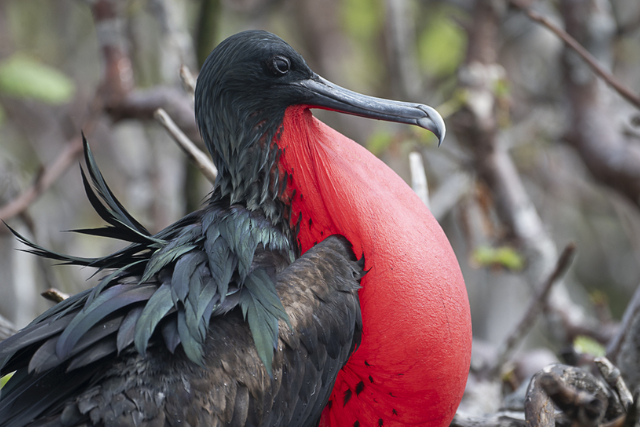
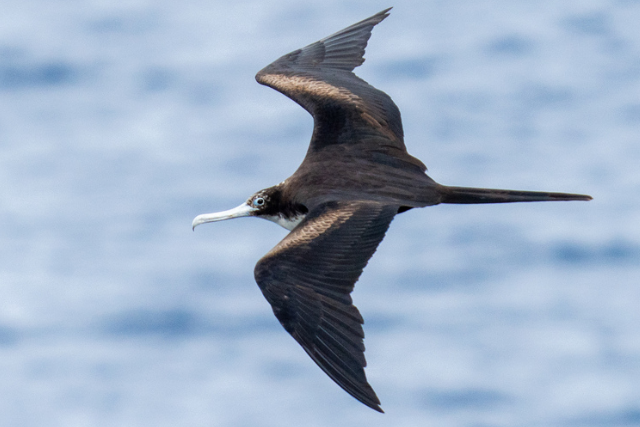
Great Frigatebirds: Sleeping on the Wing
Source: iNaturalist – オオグンカンドリ Fregata minor(mckennagr)
A bird flying above the open ocean faces a different problem. Where can it stop?
A 2016 study attached small EEG recorders to great frigatebirds, Fregata minor, breeding in the Galápagos Islands. The recordings provided direct evidence that sleep occurs during long flights over the sea. In some episodes, slow-wave sleep appeared predominantly in one cerebral hemisphere; in others, it appeared in both hemispheres.
Source: iNaturalist – オオグンカンドリ Fregata minor(capnhector)
The ability to sleep while flying did not mean that the birds slept for long. During flight, they averaged about 0.69 hours of sleep per day, around 42 minutes. That was only about 7.4% of the sleep they obtained on land.
The mechanism was there, but the opportunity was not.
 ミミズク先生
Perhaps the surprising point is that a bird can sleep in flight and yet obtain so little sleep while doing so. Ability and opportunity are not quite the same thing.
Sleep Fits Into an Animal’s Daily Life
Source: iNaturalist – キタゾウアザラシ Mirounga angustirostris(elizabethbettenhausen)
The koala’s long inactive periods, the elephant’s estimated short sleep, the seal’s drifting dives, the dolphin’s unihemispheric sleep and the frigatebird’s brief moments of sleep in flight all point to a larger idea.
Sleep duration is not a fixed ranking attached to a species. It is part of an animal’s time budget.
How long does it take to find food? Can travel be interrupted? Must the animal surface to breathe? Is there a safe place to sleep? Is the breeding season short and intense? These questions shape the time that may be available for sleep.
Ecology does not explain everything. Body size, metabolism, nervous-system function, physiology and evolutionary history also matter. Yet field studies help us see the number of sleeping hours as part of a larger life, rather than as an isolated fact.
Pectoral Sandpipers: Less Sleep During the Breeding Season
Source: iNaturalist – アメリカウズラシギ Calidris melanotos(mlodinow)
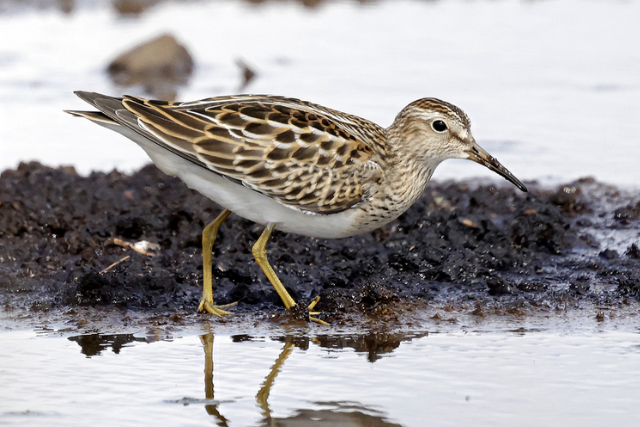
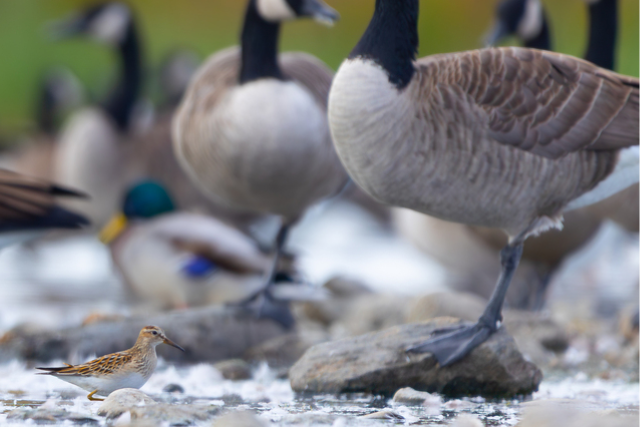
The pectoral sandpiper, Calidris melanotos, breeds in Arctic regions, where summer daylight lasts for much of the day and the breeding season is brief. Males search for females and compete with rival males during a narrow period of opportunity.
A 2012 study followed male pectoral sandpipers through roughly three weeks of this intense breeding period. Sleep duration varied greatly among the males. Some remained highly active while spending much less time asleep. Within the study group, males that slept less sired more offspring.
Source: iNaturalist – アメリカウズラシギ Calidris melanotos(whistlingduck)
タヌ山先生Some males slept much less during those three weeks, and the males that slept least sired the most offspring in this study. That is a striking result from a particular breeding season—not a rule for every bird, or every stage of its life.
This is not a universal rule that less sleep is always advantageous. It shows that, even within one species, the balance between sleep and activity can shift sharply when conditions change.
A Number Is a Beginning, Not the Whole Story
Source: iNaturalist – コアラ Phascolarctos cinereus(bevmill)
The still koala, the travelling elephant, the diving seal, the dolphin surfacing to breathe and the frigatebird flying over the sea all offer different views of sleep.
Their figures become meaningful when we ask three questions:
- Where was the animal studied?
- Which individuals were studied?
- How did the researchers recognise sleep?
That habit also leaves room for discovery. Field studies have shown where elephant seals sleep during dives, that frigatebirds can sleep in flight and that breeding male pectoral sandpipers differ greatly in sleep duration. Researchers are still investigating how feeding, body size, physiology, predation risk and other ecological pressures combine to shape sleep across species.
シロフクロウ職員Give me the number, certainly. Then give me the field notes that explain it. That is when the animal comes properly into view.
The next time you encounter a striking number for an animal’s sleep, pause and ask what was measured, where and under what conditions. The answer is often more interesting than the ranking.
What We Know and What Remains Uncertain
Established Findings
- Animal sleep duration can vary with environment, measurement method, season and behaviour.
- Northern elephant seals take short sleeps during deep dives while foraging offshore.
- Unihemispheric slow-wave sleep has been recorded in studied cetaceans, and sleep during flight has been directly recorded in great frigatebirds.
- Male pectoral sandpipers show marked individual differences in sleep duration during the Arctic breeding season.
Open Questions
- To what extent do diet, predation pressure, body size, metabolism, brain function and physiology each shape sleep duration across species?
- When, where and in which sleep stages do many wild animals sleep in their natural habitats?
- What long-term costs, recovery patterns or physiological adjustments follow periods of reduced sleep during breeding, migration or prolonged foraging trips?
Glossary
- Inactivity or Rest: A period of little movement. An animal may be asleep, quietly awake or waiting.
- Field Study: Research carried out where animals live and behave in their natural environment, rather than only in captivity or a laboratory.
- EEG: Short for electroencephalography, a method of recording electrical activity in the brain. EEG can identify patterns associated with different stages of sleep.
- Slow-Wave Sleep: A stage of sleep characterised by large, slow brain waves. In unihemispheric sleep, slow-wave activity may occur mainly in one cerebral hemisphere.
- Unihemispheric Slow-Wave Sleep: A pattern in which slow-wave sleep appears in one cerebral hemisphere while the other remains in a more wake-like state. It is known in cetaceans and some birds.
- Sleep Plasticity: The capacity for the amount or timing of sleep to change with circumstances such as breeding, migration, feeding and season.
- Time Budget: The way an animal divides available time among feeding, travelling, breeding, rest, sleep and other essential activities.
Next Time: How Do We Recognise Sleep?
Koala inactivity and elephant trunk movement raise an important question. What can researchers do when recording brain activity is difficult or impossible?
In the next article, we will look at fish, insects and even jellyfish. What separates sleep from rest, hibernation and dormancy? By returning to the basic question, “What is sleep?”, we can look again at animal rest in all its varied forms.
Explore More from the Museum of the Forest
 ミミズク先生
Please do explore the books from eco-life-planet as well. I hope they will offer you many more rewarding encounters with the living world.
Families of One: The Narrowest Branches of the Tree of Life
Kindle Books Currently Available in Japanese
The Japanese-language Museum of the Forest series includes expanded introductions to taxonomy, nature observation and unusual branches of the tree of life.
- An Introduction to Taxonomy: The Basic Science of Organising the World, Level 1 — Japanese-language edition
- Spring Nature Observation Handbook — Japanese-language edition
- Animals from Families of One: The Narrowest Branches of the Tree of Life — Japanese-language edition


References
Ryan, M. A., Whisson, D. A., Holland, G. J., & Arnould, J. P. Y. (2013). Activity Patterns of Free-Ranging Koalas (Phascolarctos cinereus) Revealed by Accelerometry. PLOS ONE, 8(11), e80366.[journals.plos]
Gravett, N., Bhagwandin, A., Sutcliffe, R., Landen, K., Chase, M. J., Lyamin, O. I., Siegel, J. M., & Manger, P. R. (2017). Inactivity/sleep in two wild free-roaming African elephant matriarchs: Does large body size make elephants the shortest mammalian sleepers?. PLOS ONE, 12(3), e0171903.[eurekalert]
Kendall-Bar, J. M., Williams, T. M., Mukherji, D., Lozano, J. K., et al. (2023). Brain Activity of Diving Seals Reveals Short Sleep Cycles at Depth. Science, 380(6642), 260–265.[pubmed.ncbi.nlm.nih]
Lyamin, O. I., Manger, P. R., Ridgway, S. H., Mukhametov, L. M., & Siegel, J. M. (2008). Cetacean Sleep: An Unusual Form of Mammalian Sleep. Neuroscience & Biobehavioral Reviews, 32(8), 1451–1484.[pmc.ncbi.nlm.nih]
Lyamin, O. I., Kosenko, P. O., Korneva, S. M., Mukhametov, L. M., & Siegel, J. M. (2019). Sleep in Aquatic Mammals. In Handbook of Behavioral Neuroscience, 30, 375–398.[pmc.ncbi.nlm.nih]
Rattenborg, N. C., Voirin, B., Cruz, S. M., Tisdale, R., Dell’Omo, G., Lipp, H.-P., Wikelski, M., & Vyssotski, A. L. (2016). Evidence That Birds Sleep in Mid-Flight. Nature Communications, 7, 12468.[pmc.ncbi.nlm.nih]
Lesku, J. A., Rattenborg, N. C., Valcu, M., Vyssotski, A. L., Kuhn, S., Kuemmeth, F., Heidrich, W., & Kempenaers, B. (2012). Adaptive Sleep Loss in Polygynous Pectoral Sandpipers. Science, 337(6102), 1654–1658.[pubmed.ncbi.nlm.nih]
コメント