



Cover photograph by Simone Dinoia
Sleep takes time away from finding food, moving about and watching for danger. Yet humans and many other animals regularly make time for it. Sleep—or a state with some of its defining features—has been reported in animals with nervous systems very different from our own.
Sleep is linked with memory, changes in neural connections, and the regulation of many bodily processes. Even so, one large question remains open: why do living things need sleep at all?
One way into that question is to look at the boundary between sleeping and waking.
In 2026, Masashi Yanagisawa and Emmanuel Mignot received the Albert Lasker Basic Medical Research Award for discoveries linking orexin, a neuropeptide that helps maintain wakefulness, to narcolepsy. Their work revealed something easy to overlook: staying awake is not simply the absence of sleep. It is an actively maintained biological state.
Why does a long day make us sleepy? What happens while we sleep? And what can dolphins, flying birds and jellyfish tell us about a question that human research alone cannot answer?
Let us begin with the biology of staying awake.

Orexin Research Revealed How the Brain Sustains Wakefulness

Source: iNaturalist – メンフクロウ Tyto alba(robcorv)
When we think about sleep, we tend to ask what makes us fall asleep. Orexin research approached the other side of the question: how does the brain keep us awake, responsive and able to act?
Wakefulness is more than an absence of sleep. It is a state in which an animal can notice its surroundings, move, and respond to what happens around it. Orexin helps make that state stable.
A discovery that did not begin with sleep
Orexin was not discovered during a search for a molecule that regulates sleep.
In 1998, Masashi Yanagisawa and colleagues were investigating orphan receptors: receptors whose natural signalling molecules had not yet been identified. Their aim was to find brain molecules that could activate these receptors.
They identified two related neuropeptides, orexin-A and orexin-B. These peptides were named after orexis, the Greek word for appetite, because early experiments showed that orexin could increase food intake in rats.
The gene that encodes the common precursor of orexin-A and orexin-B is active in a small group of neurons in the hypothalamus. The hypothalamus is a small brain region involved in many basic functions, including feeding, body temperature and sleep–wake regulation.
At first, orexin seemed most likely to be important in feeding. Later research revealed its equally important role in maintaining stable wakefulness.
 メンフクロウ職員
In a museum, we sometimes keep studying a specimen because one small detail does not fit the first explanation. The orexin story has a little of that spirit: follow what the evidence shows you.
Basic research examines the fundamental workings of life and nature. It does not have to begin with an immediate aim such as producing a medicine or commercial product. Its value is not always predictable at first, but it can later become essential to understanding disease, developing technology, or asking better scientific questions.
The discovery of orexin is a good example. Research that began with an unfamiliar brain-signalling system eventually changed how scientists understand wakefulness and narcolepsy.
What mice, dogs and people revealed together
The importance of orexin became clearer when research using different animals converged on the same biological system: orexin signalling.
In 1999, researchers reported that mice unable to produce orexin had unstable wakefulness and showed features resembling narcolepsy. At around the same time, Emmanuel Mignot and colleagues found that an inherited form of narcolepsy in dogs could result from a mutation affecting orexin receptor 2.
A receptor is the part of a cell that receives a particular chemical signal. Put simply, the mice lacked the orexin signal, whereas the affected dogs had difficulty receiving it.
Studies in people strengthened the connection. In people with narcolepsy type 1, orexin levels in cerebrospinal fluid—the fluid surrounding the brain and spinal cord—are often very low or undetectable.
Narcolepsy type 1 is commonly associated with cataplexy: a sudden loss of muscle tone triggered by strong emotions such as laughter, surprise or excitement. A person remains conscious during an episode, but their muscles may briefly weaken.
 シロフクロウ職員
So the mouse studies examined the signal, the dog studies examined a receptor, and the human studies showed what can happen when the orexin system is disrupted?
 タヌ山先生
タヌ山先生Exactly. Different questions and different methods pointed to the same system. That convergence made the result convincing.
Orexin is not a simple “anti-sleep switch”. It works with other neural networks to help maintain a stable waking state.
Narcolepsy is a neurological sleep disorder marked by repeated, severe daytime sleepiness. Some people also experience cataplexy. Narcolepsy type 1 is strongly associated with a loss of orexin signalling.

Why Sleepiness Builds Up
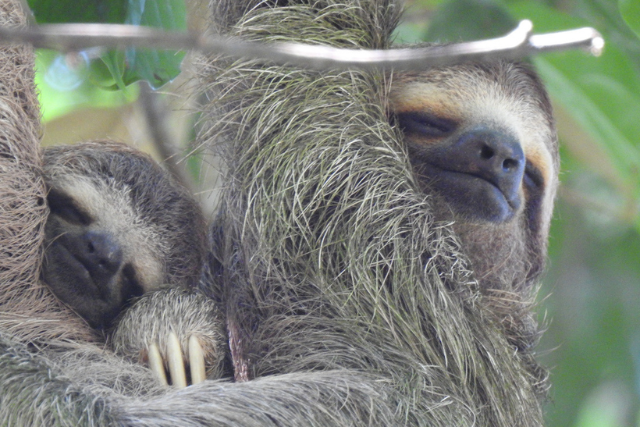
Source: iNaturalist – ノドチャミユビナマケモノ Bradypus variegatus(jauregui)
Orexin helps explain how wakefulness is maintained. A different question follows: why does the need for sleep grow while we are awake?
Most people have experienced the difference between being sleepy because it is late and being sleepy because they have been awake far too long. After a sleepless night, daylight may signal that it is time to be active, yet the accumulated need for sleep can still be difficult to resist.
The body clock and sleep homeostasis
Two broad processes help shape how sleepy we feel.
The first is the circadian rhythm, an internal cycle of approximately 24 hours. It helps organise periods when the body is more ready for alertness and periods when it is more ready for sleep.
The second is sleep homeostasis. This refers to the tendency for sleep need to build during wakefulness and decrease during sleep.
The two-process model of sleep regulation considers both processes together. It helps explain why the same person may feel very different at the same time of day after a normal night’s sleep and after a night without it.
But how does the brain register that it has been awake for a long time?
One important clue is adenosine. This molecule is involved in the effects of prolonged wakefulness, and its activity in the brain is associated with increasing sleep pressure. Caffeine can temporarily reduce the feeling of sleepiness because it blocks adenosine receptors.
That does not mean caffeine removes the biological need for sleep. It affects one part of the signalling system, not the whole process.
メンフクロウ職員Some days, another coffee still seems to accomplish very little.
タヌ山先生Caffeine can affect how sleepy you feel for a while. It cannot erase the need for sleep that has built up.
Adenosine is an important clue, but it is not the complete explanation. Sleep need involves many cells, neural circuits and interactions with the body clock.
What Sleepy mice revealed about sleep need
One way to investigate sleep need is to compare animals that become sleepy for different reasons.
Researchers compared ordinary mice that had been kept awake with a strain known as Sleepy mice. Sleepy mice were identified through a large-scale study of randomly mutagenised mice, in which researchers measured sleep using brain activity and muscle activity.
Sleepy mice have a mutation in the Sik3 gene that alters the activity of an enzyme called SIK3. These mice sleep more than ordinary mice and show an unusually high physiological need for sleep. One sign is elevated slow-wave activity during deep non-rapid-eye-movement sleep, usually shortened to NREM sleep. Slow-wave activity is widely used as a physiological indicator of sleep pressure.
The researchers then compared proteins in the brains of Sleepy mice with those in sleep-deprived ordinary mice. They found a shared pattern: as sleep need rose, the phosphorylation of a group of mostly synaptic proteins increased.
Phosphorylation is a small chemical change in which a phosphate group is added to a protein. It can alter how the protein behaves, where it is located, or how it interacts with other molecules.
The researchers called the group SNIPPs, short for sleep-need-index phosphoproteins. The study identified 80 such proteins, most of them associated with synapses. Their phosphorylation states closely tracked changes in sleep need in the mouse models.
シロフクロウ職員Two different routes to increased sleep need, yet some of the same proteins changed in both. That gives researchers something specific to investigate next.
SNIPPs do not explain everything about sleep need, and they are not a direct measure of the subjective feeling of sleepiness.
Instead, they give researchers measurable signs of how sleep need changes in the brains of mice. The next challenge is to discover what these protein changes do—and how they may relate to the familiar experience of becoming tired after a long day.

What Happens During Sleep?
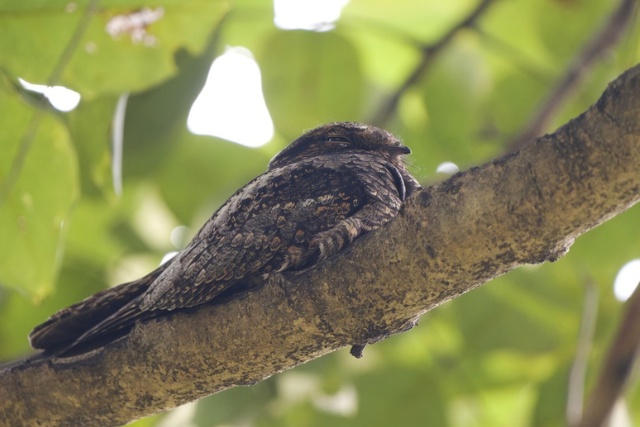
Source: iNaturalist – ヨタカ Caprimulgus jotaka(hamsambly)
A sleeping animal may look quiet. Inside, many processes continue.
Sleep is associated with memory, changes in neural connections, metabolism, immune activity and temperature regulation. These processes are related, but they do not yet add up to one simple answer to the question, “What is sleep for?”
Sleep is not inactive time
Consider something you learned yesterday. Experiences during wakefulness can alter the connections between nerve cells. These junctions are called synapses.
Sleep contributes to the processing and stabilising of some memories. Researchers also investigate how sleep may help regulate changes in synaptic connections that accumulated during waking experience.
Sleep also involves the rest of the body. Metabolism, immune activity and body-temperature regulation all interact with sleep and wakefulness. Sleep may therefore be a period in which many systems are coordinated, rather than a state with only one purpose.
 ミミズク先生
A quiet museum room may still be full of work: a specimen is being prepared, a record checked, a display repaired. Stillness tells us rather little about what is taking place.
How we sleep and why we sleep
It helps to distinguish between two different questions.
The first asks how sleep and wakefulness are regulated. Orexin research helps explain how wakefulness is stabilised. Research on Sleepy mice offers molecular clues to the way sleep need increases during prolonged wakefulness.
The second asks why animals need sleep at all. Studies of memory, neural connections and bodily regulation tell us important things about what changes during sleep. However, they do not fully explain why animals must enter a state in which their response to the outside world is reduced.
For a sleeping animal, the costs are easy to imagine: less time for feeding, less freedom of movement and less opportunity to respond quickly to danger. Yet sleep or sleep-like states have been reported in a remarkable range of animals.
This is why it is useful to look beyond humans.
What we know so far
- Orexin signalling is important for maintaining stable wakefulness.
- Circadian rhythms and sleep homeostasis both shape sleepiness and sleep timing.
- Sleep or sleep-like states have been reported in animals with very different nervous systems.
Questions that remain open
- Why do animals need sleep or sleep-like states at the most fundamental level?
- Why do species differ so greatly in the timing, duration and form of sleep?
- Can one definition of sleep be meaningfully applied across all animals?

Sleep in Sea, Sky and Jellyfish

Source: iNaturalist – マイルカ Delphinus delphis(grahamgerdeman)
Humans often sleep lying down for long periods in one safe place. Other animals must fit sleep around lives spent swimming, flying, feeding, migrating or remaining alert to their surroundings.
Where, when and how an animal sleeps is closely linked to the way it lives.
Marine mammals: sleeping with one hemisphere
Dolphins must continue to surface to breathe. Some marine mammals show unihemispheric sleep, in which the two cerebral hemispheres can display different sleep states.
One hemisphere may show sleep-related activity while the other remains comparatively alert. This arrangement can help an animal continue essential behaviours, such as surfacing to breathe and responding to its environment.
Unihemispheric sleep shows that sleep is not always an all-or-nothing state involving the entire brain at once.
Great Frigatebirds: sleep in flight
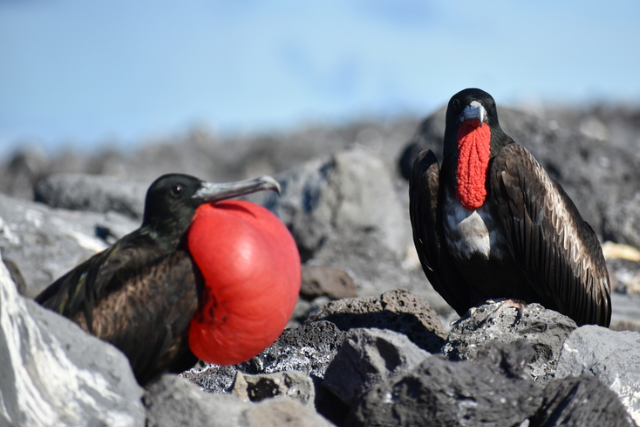
Source: iNaturalist – オオグンカンドリ Fregata minor(diego_valverde)
Great Frigatebirds can remain over the ocean for many days. In a field study using brain recordings, researchers found that they could sleep in flight, sometimes with one hemisphere at a time and sometimes with both hemispheres showing sleep.
However, the birds slept for only about 42 minutes per day while in flight—0.69 hours, or roughly 7.4% of the time they spent asleep on land. The study therefore did not show that birds obtain a normal amount of sleep while flying. Instead, it showed that they can obtain limited sleep under demanding ecological conditions.
Curator Barn: “Sleeping while flying is quite a feat. They manage a little rest without leaving the air.”
Jellyfish: a sleep-like state without a central brain
The upside-down jellyfish genus Cassiopea provides an even more surprising example. These jellyfish do not have a centralised brain like that of mammals or birds.
Nevertheless, researchers observed that Cassiopea became less active at night, responded more slowly to stimulation and showed a rebound effect: after being disturbed, they spent more time in a low-activity state. The researchers described this as a sleep-like state.
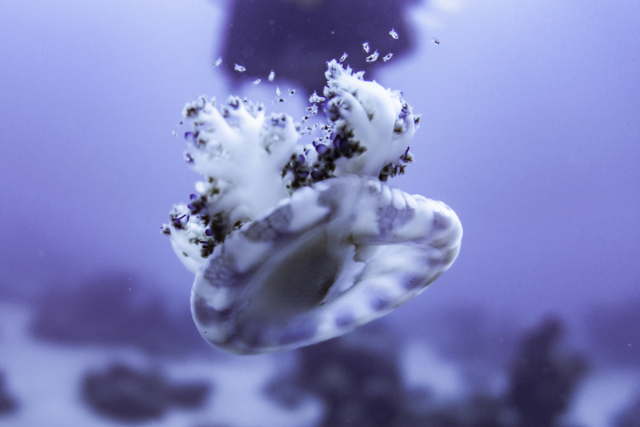
Source: iNaturalist – Cassiopea andromeda(jonigr)
Scientists do not decide that an unfamiliar animal is asleep merely because it is still. They look for several clues:
- A reduction in activity.
- A reduced response to stimulation.
- The ability to return to activity when sufficiently stimulated.
- A rebound effect after rest has been disrupted.
シロフクロウ職員So the useful question is not simply whether an animal looks asleep. It is what changes in its behaviour, how it responds, and what happens when its rest is interrupted.
A dolphin, a frigatebird and a jellyfish make an unusual group. Together, they show that sleep is not a single, uniform behaviour. Its form is shaped by the demands of each animal’s life.
A Short Guide to Terms
Orexin
A neuropeptide produced by a small group of neurons in the hypothalamus. It is important for maintaining stable wakefulness.
Circadian rhythm
An internal cycle of approximately 24 hours that helps organise sleepiness, alertness and other bodily processes.
Sleep homeostasis
The tendency for sleep need to increase during wakefulness and decrease during sleep.
Synapse
A junction between two nerve cells. Signals cross this junction, allowing the cells to communicate.
Phosphorylation
A chemical change in which a phosphate group is added to a protein. This can alter how the protein behaves.
Unihemispheric sleep
A form of sleep in which the two cerebral hemispheres show different sleep states. It is known in some marine mammals and birds.
Sleep-like state
A term used when an animal shows several behavioural features associated with sleep, even though its nervous system and the available methods for studying it differ from those used in humans.

Sleep Is Part of an Animal’s Life

Source: iNaturalist – チシマラッコ Enhydra lutris lutris(rajanrao)
Orexin research showed that wakefulness needs active biological support. Studies of Sleepy mice revealed molecular changes associated with rising sleep need. Research on marine mammals, birds and jellyfish shows that sleep and sleep-like states can take remarkably different forms.
The largest question remains unanswered: why has sleep—or something like it—become part of so many different lives?
Perhaps the answer will not come from one molecule, one species or one kind of brain. It may emerge as researchers compare the many ways animals balance sleep with breathing, feeding, movement, migration and avoiding danger.
メンフクロウ職員I have always appreciated a good night’s sleep. Seeing how other animals manage it makes an ordinary bedtime feel rather fortunate.
 ミミズク先生
Quite so. Sometimes the most familiar part of life contains the largest unanswered question.
In the next article, we will travel from sea to sky, grassland and forest to explore where, when and how animals sleep. In Part 3, we will widen the view again, considering jellyfish, fish and insects as we ask what it truly means to call a living thing asleep.

Explore More from the Museum of the Forest
ミミズク先生Please do explore the books from eco-life-planet as well. I hope they will offer you many more rewarding encounters with the living world.
Families of One: The Narrowest Branches of the Tree of Life
Kindle Books Currently Available in Japanese
The Japanese-language Museum of the Forest series includes expanded introductions to taxonomy, nature observation and unusual branches of the tree of life.
- An Introduction to Taxonomy: The Basic Science of Organising the World, Level 1 — Japanese-language edition
- Spring Nature Observation Handbook — Japanese-language edition
- Animals from Families of One: The Narrowest Branches of the Tree of Life — Japanese-language edition

References and Further Reading
Orexin and wakefulness
- Lasker Foundation — “Orexin—a Brain Peptide That Maintains Wakefulness” (2026)
- University of Tsukuba — 2026 Albert Lasker Basic Medical Research Award (2026, Japanese)
- Sakurai et al. — “Orexins and Orexin Receptors: A Family of Hypothalamic Neuropeptides and G Protein-Coupled Receptors That Regulate Feeding Behavior” (1998)
- Chemelli et al. — “Narcolepsy in Orexin Knockout Mice: Molecular Genetics of Sleep Regulation” (1999)
- Lin et al. — “The Sleep Disorder Canine Narcolepsy Is Caused by a Mutation in the Hypocretin Receptor 2 Gene” (1999)
- Nishino et al. — “Hypocretin/Orexin Deficiency in Human Narcolepsy” (2000)
Sleep need and Sleepy mice
- Borbély et al. — “The Two-Process Model of Sleep Regulation: A Reappraisal” (2016)
- Funato et al. — “Forward-Genetics Analysis of Sleep in Randomly Mutagenized Mice” (2016)
- Wang et al. — “Quantitative Phosphoproteomic Analysis of the Molecular Substrates of Sleep Need” (2018)
- University of Tsukuba — Research Summary on Phosphorylated Proteins and Sleep Need (2018, Japanese)
Sleep function and animal sleep
- Krueger et al. — “Sleep Function: Toward Elucidating an Enigma” (2016)
- Sharon et al. — “The New Science of Sleep: From Cells to Large-Scale Societies” (2024)
- Joiner — “Unravelling the Evolutionary Determinants of Sleep” (2016)
- Mascetti — “Unihemispheric Sleep and Asymmetrical Sleep: Behavioral, Neurophysiological, and Functional Perspectives” (2016)
- Rattenborg et al. — “Evidence That Birds Sleep in Mid-Flight” (2016)
- Nath et al. — “The Jellyfish Cassiopea Exhibits a Sleep-like State” (2017)
- Brown et al. — “Evo-Devo Applied to Sleep Research: An Approach Whose Time Has Come” (2024)
- Jaggard, Wang & Mourrain — “Non-REM and REM/Paradoxical Sleep Dynamics Across Phylogeny” (2021)
コメント