


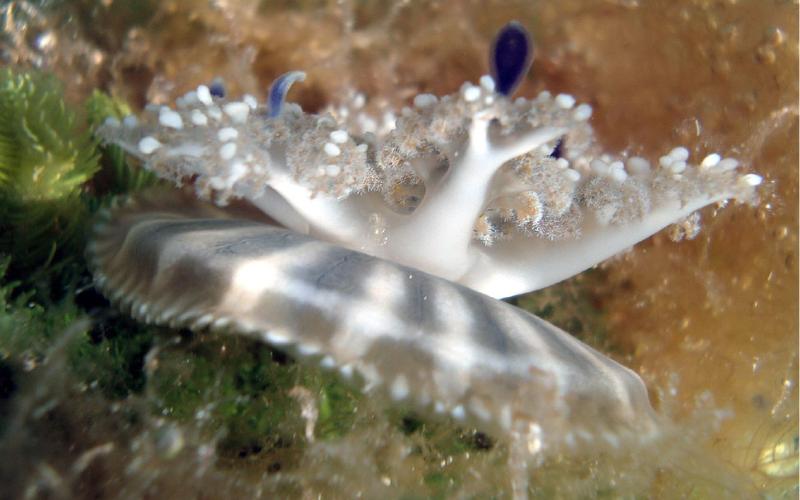
Cover photograph: “Fkeysmacro.jpg” by Chris Hind, licensed under CC BY 3.0.

A motionless animal might be asleep. It might also be awake, waiting for prey or resting quietly. To tell the difference, researchers look beyond stillness: how readily does the animal respond to a stimulus, and what happens if its usual rest is interrupted?
Those questions become especially interesting when the animal does not close its eyes, or has no centralised brain. Experiments with fruit flies, fish, jellyfish and hydra show how scientists investigate sleep in very different bodies. They also help us distinguish sleep from winter torpor, insect diapause and the so-called “sleep” of plants.

Stillness Alone Cannot Identify Sleep
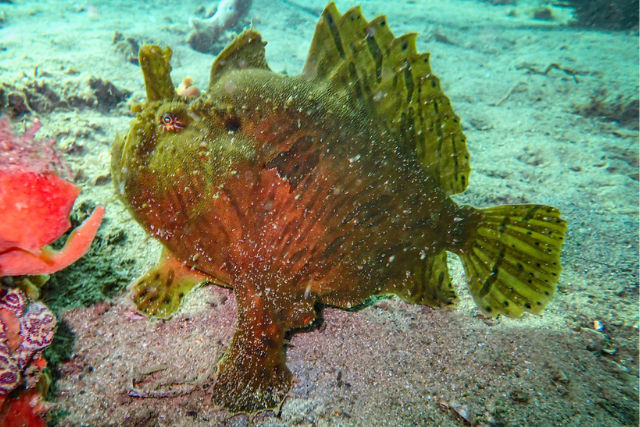
Source: iNaturalist – カエルアンコウ Antennarius striatus(kateahmad)
Imagine a fish motionless in an aquarium at night. Its posture gives you a clue, but cannot tell you by itself whether it is asleep.
Researchers may begin by recording when activity falls and how long the quiet period lasts. Then they can ask whether a resting animal responds less readily to a stimulus than an active one. If stimulated, can it quickly return to activity? This reversibility helps researchers distinguish sleep-like rest from states in which an animal cannot readily be roused, such as coma.
A further question is what happens after rest is disturbed. If the animal subsequently spends more time resting, that may indicate sleep homeostasis: regulation of sleep in response to lost rest. These observations are not a fixed checklist that works identically in every species. Researchers choose tests suited to the animal and, where possible, combine behaviour with measurements of nervous-system activity.
 シロフクロウ職員
So a photograph gives us the first question, not the answer. We need to know how the animal responds, and what happens afterwards.
Flies and Fish: Different Evidence
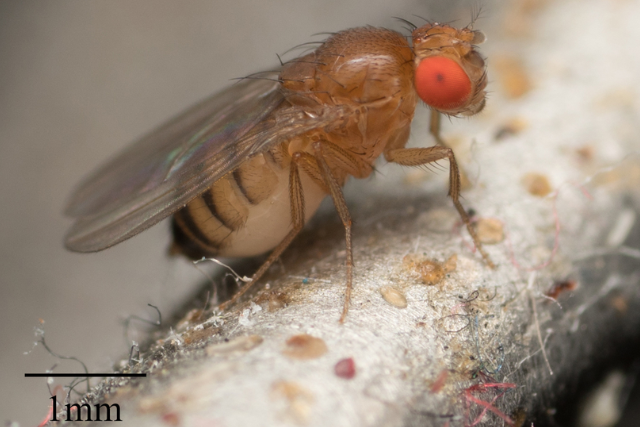
Source: iNaturalist – キイロショウジョウバエ Drosophila melanogaster(glmory)
A fruit fly, Drosophila melanogaster, can be placed in a narrow tube so that its movements are recorded over time. Sustained inactivity provides a practical way to estimate rest, but stillness alone does not establish sleep.
In an early study, resting flies were less responsive to stimulation than active flies. After their rest was disrupted, they showed a compensatory increase in rest. The case for sleep came from these observations together, not simply from finding flies that had stopped walking.
Fish pose a different problem. Eye closure cannot be the deciding test for sleep in an animal without eyelids. In a 2019 study of zebrafish larvae, Danio rerio, researchers recorded activity across the brain using optical methods while also examining eye movements, muscle activity and heart rate.
They identified two neural patterns associated with sleep, named slow bursting sleep and propagating wave sleep. These share features with mammalian slow-wave and REM sleep respectively. Similarities make comparison possible; they do not mean that zebrafish sleep states are exact copies of human ones.
 タヌ山先生
タヌ山先生No eyelids, no sleep? That rule tells us more about humans than fish. Test the fly’s response and record the fish’s neural activity. Then we have evidence to discuss.
Jellyfish and Hydra: Sleep Without a Centralised Brain
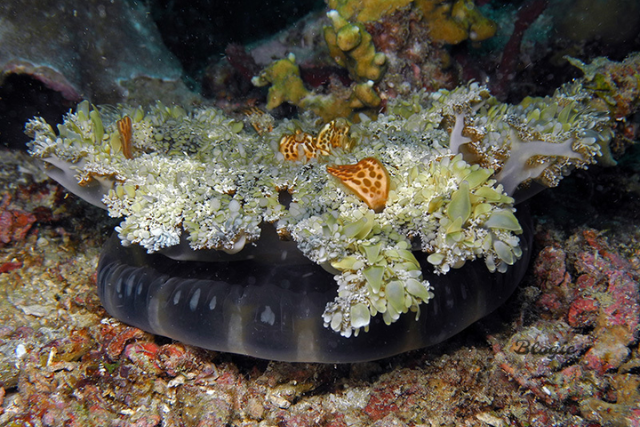
Source: iNaturalist – サカサクラゲ属 Cassiopea(blogie)
Flies and fish have brains. Upside-down jellyfish and hydra have nervous systems too, but neither has a centralised brain like ours. Can researchers still find evidence for a sleep-like state?
A Jellyfish’s Slower Night-Time Pulse
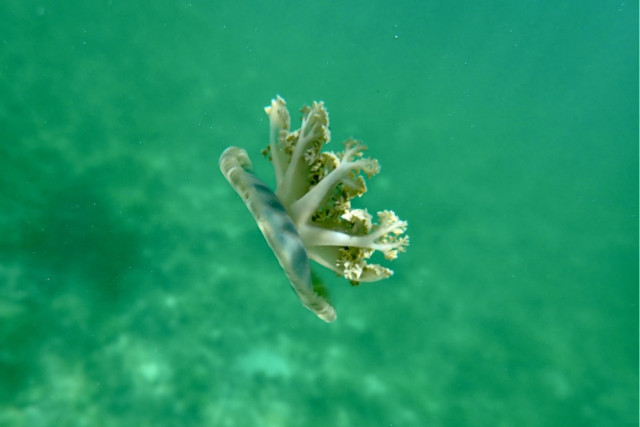
Source: iNaturalist – Cassiopea andromeda(nrosner31)
Jellyfish of the genus Cassiopea usually rest upside down on a surface. Their bells repeatedly contract and relax. In a 2017 study, the jellyfish pulsed about 32% less often at night than during the day. That established a change in activity, but could not, on its own, tell researchers whether the animals were asleep.
The team then placed jellyfish on a screened platform near the water’s surface. After giving them time to settle, the researchers lowered the platform, leaving the animals suspended in the water. How long would each jellyfish take to make its first pulse and return to a surface?
The jellyfish responded more slowly at night. When the test was repeated shortly afterwards, they responded faster: they could be roused from their quiet state. When researchers repeatedly disturbed their night-time rest with brief pulses of water, the animals pulsed less and responded more slowly the following day. The results together supported the conclusion that Cassiopea has a sleep-like state.
The 2017 experiments involved more than one Cassiopea species. The pictured C. andromeda illustrates the genus; the findings should not all be attributed to that species alone.
 メンフクロウ職員
A photograph can show where a jellyfish is resting. To see how its pulses change from day to night, you need a record made over time.
Does Hydra Have a Sleep-Like State?
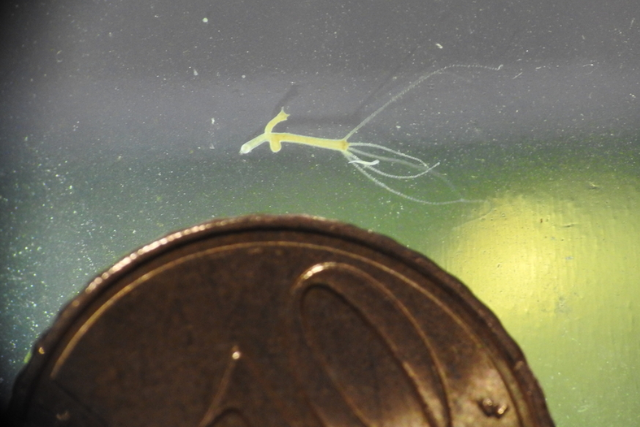
Source: iNaturalist – Hydra vulgaris(jose_rasero)
Hydra vulgaris is a small freshwater animal with a tubular body and tentacles. It has nerve cells distributed through its body, but no centralised brain. Researchers used video to follow its movements and identify extended periods of low activity.
After remaining quiet for more than 20 minutes, hydra responded more slowly to light and to a chemical cue associated with feeding. When researchers disturbed their night-time rest, the animals spent more time in a sleep-like state the following day. These findings provide evidence beyond stillness alone.
The timing was distinctive too. Under constant experimental conditions, the researchers did not detect a freely running approximately 24-hour rhythm in its behaviour. They did observe shorter rhythms of about four hours, particularly in constant darkness. That does not mean every hydra in nature falls asleep once every four hours.
シロフクロウ職員“No brain” and “no nervous system” are different statements. Hydra has nerve cells. What matters here is that its responses change during prolonged rest.
Sleep and Other Quiet States
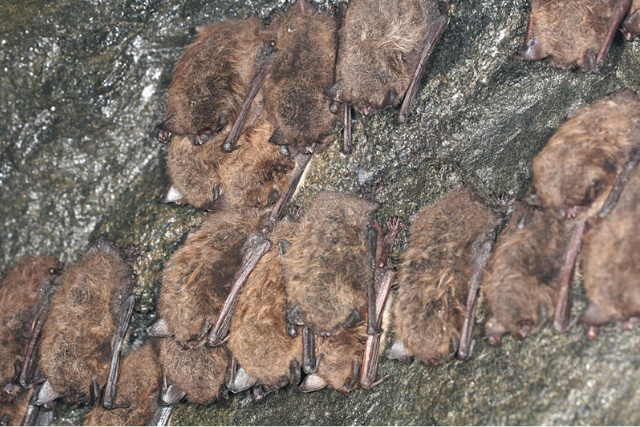
Source: iNaturalist – トビイロホオヒゲコウモリ Myotis lucifugus(tmurray74)
Not every quiet organism is sleeping. To understand other states, researchers may examine metabolism and body temperature, an insect’s development, a plant’s leaf position or a seed’s ability to germinate.
Hibernation and Insect Diapause
Hibernation is not ordinary nightly sleep extended across the winter. Some hibernating mammals enter torpor, when metabolism, activity and often body temperature fall substantially. Torpor bouts may be interrupted by arousal, when the animal warms again. The degree of cooling varies among species. Sleep and torpor can be related, but they are not interchangeable terms.
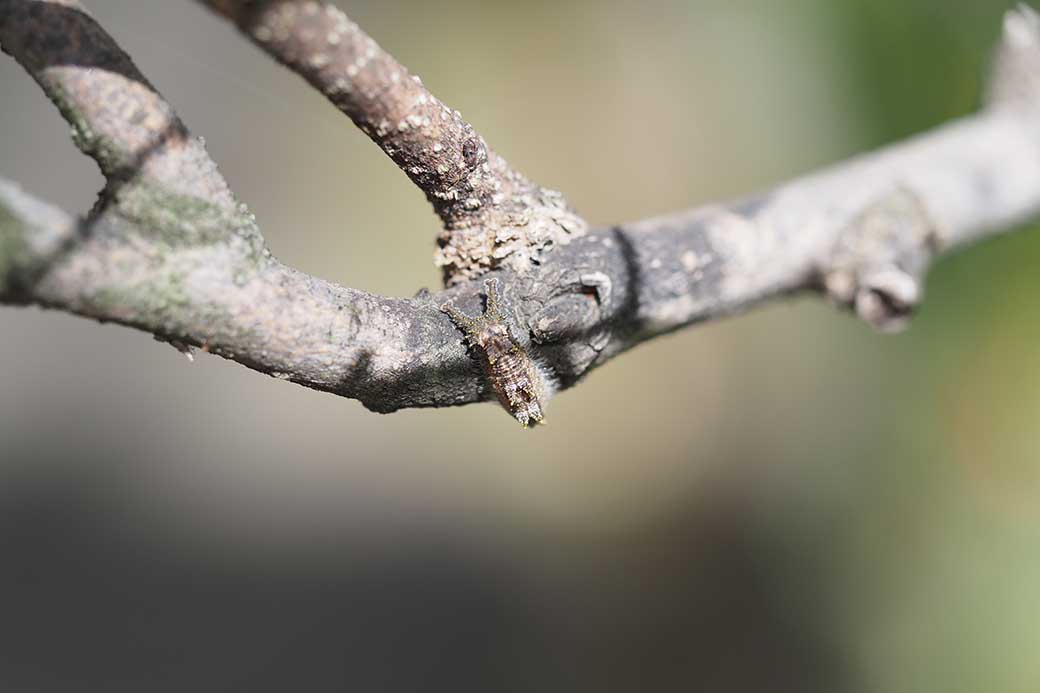
Source: Hokuto City Ōmurasaki Centre – オオムラサキの一生
Diapause is a seasonal strategy in many insects. A changing day length, for example, can signal the approach of unfavourable conditions. Depending on the species, development or reproduction may be suppressed at a particular life stage. In some cases, a brief spell of favourable weather does not immediately end diapause. That is different from losing one night’s sleep and resting more the next day.
Great Purple Emperor larvae, Sasakia charonda, spend the winter among fallen leaves near their food trees. Their seasonal way of life calls for a different question from a fly resting for part of a day: how are development and activity regulated through winter? The photograph illustrates overwintering, not a physiological test for diapause.
When Plants “Sleep”
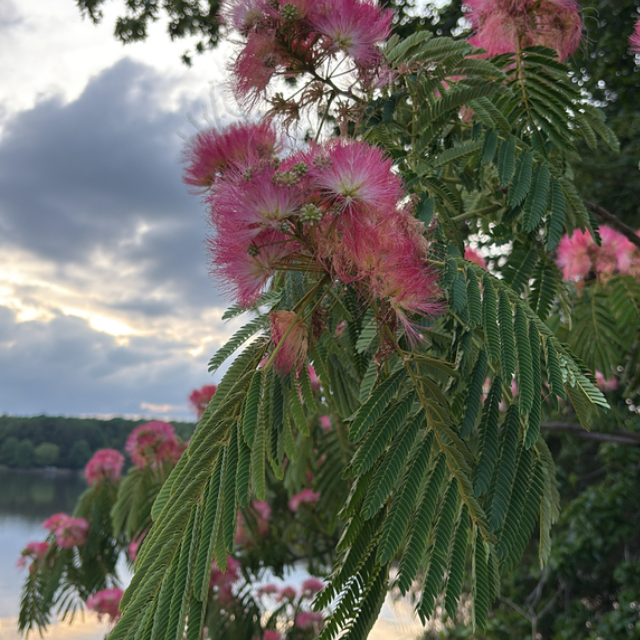
Source: iNaturalist – ネムノキ Albizia julibrissin(jtsutek)
The word “sleep” is also used informally for some plant movements. The leaflets of the Persian silk tree, Albizia julibrissin, spread during the day and fold together at night. This daily movement is called nyctinasty. It is a change in leaf position, not evidence that the tree sleeps as an animal does.
Seed dormancy means something different again: a viable seed does not germinate even when conditions are suitable for germination. It concerns a seed’s readiness to germinate, not the nightly movement of leaves.
| Phenomenon | What researchers examine | Why appearance alone is insufficient |
|---|---|---|
| Animal sleep | Activity, responsiveness and changes after disturbed rest | An awake animal may also remain still |
| Torpor during hibernation | Metabolism, body temperature and periods of arousal | Physiological changes are not visible from posture alone |
| Insect diapause | Seasonal conditions, development and reproduction | An immobile insect is not necessarily in diapause |
| Nyctinasty | Leaf position across day and night | Folded leaves do not establish animal-like sleep |
| Seed dormancy | Whether viable seeds germinate under suitable conditions | Appearance alone cannot show whether a seed is dormant |
If you find a quiet animal outdoors, note the time, place, posture and what it does next. There is no need to disturb wildlife to imitate a sleep experiment. The table describes questions researchers investigate, not a field checklist for deciding that an individual is asleep.
What Remains Unknown?
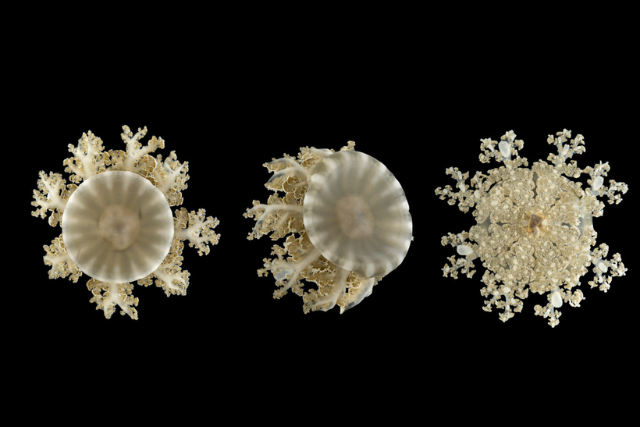
Source: iNaturalist – Cassiopea xamachana(acjci)
Studies of Cassiopea and hydra support sleep-like states in animals without centralised brains. That raises a larger question. How much of the underlying regulation did different animal lineages inherit from a common ancestor, and how much has changed independently over evolutionary time?
Researchers are beginning to investigate mechanisms as well as behaviour. In a 2025 study of Cassiopea xamachana, the activity of a receptor-like gene called chrnal-E changed after disturbed sleep. When researchers reduced that gene’s activity, the jellyfish spent more of the day in a state classified as sleep. The result supports a role for chrnal-E in promoting wakefulness in this species. It cannot, by itself, settle the evolutionary origin of sleep.
The question has moved from “Does the bell pulse more slowly at night?” towards “What regulates the change?” Both questions matter.
To Understand Sleep, Watch the Whole Day
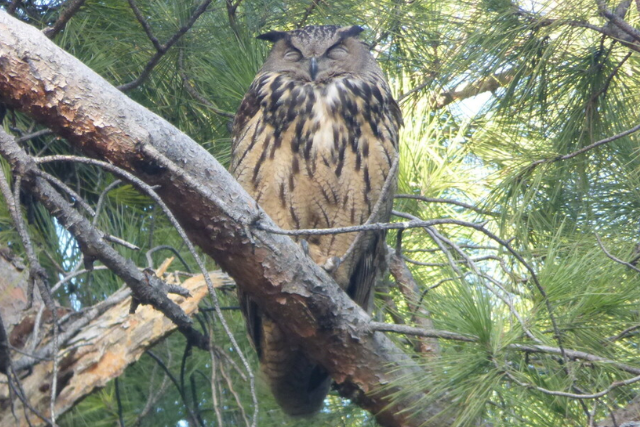
Source: iNaturalist – ワシミミズク Bubo bubo hispanus(marsupiladri)
シロフクロウ職員After three articles, we still have questions about why animals sleep. I thought we might have reached a single answer by now.
 タヌ山先生
タヌ山先生If “the brain needs a rest” explained every animal, we could have stopped before the jellyfish. Fortunately, we kept looking.
The first article in this series explored how orexin helps regulate wakefulness. The second followed animals that fit sleep around feeding, travelling and avoiding danger. Here, experiments with flies, fish, jellyfish and hydra have asked a more basic question: what evidence allows us to say that an animal is asleep?
Across very different animals, researchers have found states involving changes in activity and responsiveness. Similar behaviour, however, does not prove that every species sleeps for the same reason or inherited identical regulatory mechanisms. Comparing behaviour, nervous-system activity and gene function may help us see what is shared and what has changed.
Sleep makes more sense when we follow the rest of an animal’s day: where it feeds, how it stays safe and when it becomes active again. “Why does it sleep?” then becomes part of a larger question: “How does it live?”
メンフクロウ職員There will be more to notice tomorrow. For tonight, I hope you find a comfortable place to rest and enjoy a good night’s sleep.
Explore More from the Museum of the Forest
 ミミズク先生
Please do explore the books from eco-life-planet as well. I hope they will offer you many more rewarding encounters with the living world.
Families of One: The Narrowest Branches of the Tree of Life
Kindle Books Currently Available in Japanese
The Japanese-language Museum of the Forest series includes expanded introductions to taxonomy, nature observation and unusual branches of the tree of life.
- An Introduction to Taxonomy: The Basic Science of Organising the World, Level 1 — Japanese-language edition
- Spring Nature Observation Handbook — Japanese-language edition
- Animals from Families of One: The Narrowest Branches of the Tree of Life — Japanese-language edition


References
- Abrams, M. J., et al. (2025). Sleeping upside-down: Knockdown of a sleep-associated gene induces daytime sleep in the jellyfish Cassiopea. Proceedings of the National Academy of Sciences, 122(29), e2505074122.
- Ambler, M., Hitrec, T., & Pickering, A. (2022). Turn it off and on again: Characteristics and control of torpor. Wellcome Open Research, 6, 313.
- Cambridge University Botanic Garden. (2024). Persian Silk Tree (Albizia julibrissin).
- Kanaya, H. J., et al. (2020). A sleep-like state in Hydra unravels conserved sleep mechanisms during the evolutionary development of the central nervous system. Science Advances, 6(41), eabb9415.
- Lakhiani, R., Shanavas, S., & Melnattur, K. (2023). Comparative biology of sleep in diverse animals. Journal of Experimental Biology, 226(14), jeb245677.
- Leung, L. C., et al. (2019). Neural signatures of sleep in zebrafish. Nature, 571, 198–204.
- Nath, R. D., et al. (2017). The jellyfish Cassiopea exhibits a sleep-like state. Current Biology, 27(19), 2984–2990.e3.
- Shaw, P. J., et al. (2000). Correlates of sleep and waking in Drosophila melanogaster. Science, 287, 1834–1837.
- Soppe, W. J. J., & Bentsink, L. (2020). Seed dormancy back on track: Its definition and regulation by DOG1. New Phytologist, 228(3), 816–819.
- Tougeron, K. (2019). Diapause research in insects: Historical review and recent work perspectives. Entomologia Experimentalis et Applicata, 167, 27–36.
コメント