


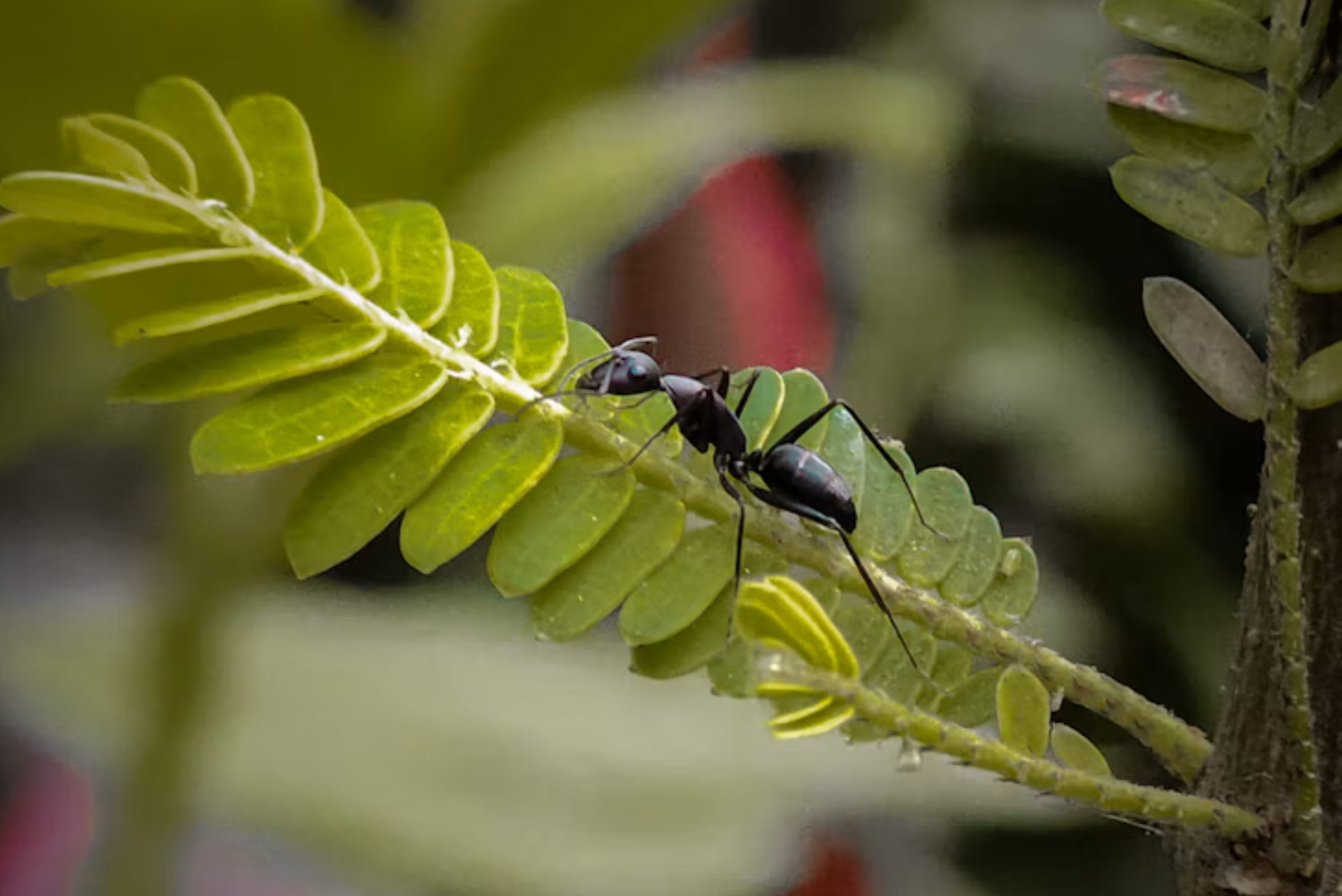
Several kinds of bees visit the same flower. If one becomes scarce, can the others make up for its loss? It is a tempting thought: if several species share a task, one may cover for another.
Some ecological studies have found that measured functions persisted after certain species were reduced. Yet different functions did not necessarily respond in the same way. An experiment with ants and a study of wild bees reveal why counting species is only the beginning. What was measured, where, and for how long matters. Measuring a function is different from deciding why a species should be conserved.

Counting species is not the same as measuring what they do
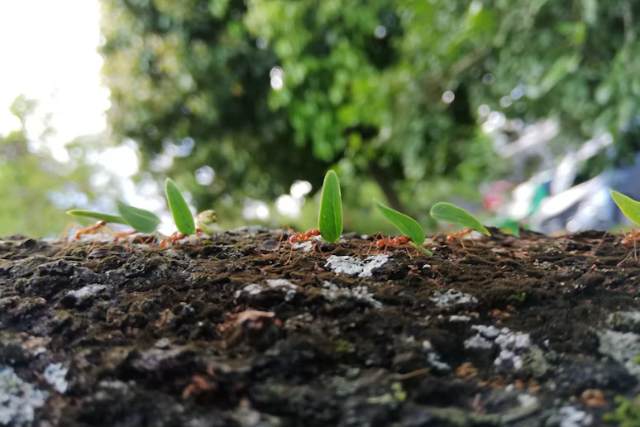
Before asking how many species are needed, we have to specify the process we want to maintain. Removing dead insects, carrying seeds and transferring pollen involve different activities. A measurement of one cannot stand in for all the others.
Species, individuals and functions
Ecosystem functions are processes arising from interactions between organisms and their environment, including production, decomposition and the movement of materials and energy. Ants scavenging dead insects or carrying seeds, and bees transferring pollen, contribute to such processes.
Species richness tells us how many species are present. Abundance tells us how many individuals there are, either of a particular species or in a specified group. How much those individuals contribute to a function is another matter. Counting ants alone does not tell us how many dead insects or seeds they will remove.
 ミミズク先生
To investigate a function, researchers measure an activity or its outcome. They might place dead insects on the ground and record the proportion removed within a set time.
That proportion alone does not identify the species responsible. Researchers can observe the activity directly or analyse how the occurrence or abundance of particular species relates to removal rates. These approaches provide different kinds of evidence about species’ contributions.
Similar roles, different responses
When several species contribute in similar ways to a specified function, their roles overlap. Ecologists call this functional redundancy. The word does not mean that the organisms are unnecessary. Some researchers have proposed using functional similarity instead, partly to avoid that implication. Whichever term is used, the function in question needs to be named.
Response diversity describes something different: species contributing to the same function can respond differently to environmental conditions or change. Bees visiting the same crop may have different relationships with the surrounding vegetation, so their numbers need not vary together across farms.
| What is being considered? | What question does it answer? |
| Species richness | How many species are present? |
| Abundance | How many individuals of each species are present? |
| Functional overlap | How do several species overlap in their contributions to a specified function? |
| Response diversity | How do species differ in their responses to environmental conditions or change? |
These questions also differ from those asked about convergent evolution. Convergence concerns how similar features evolved independently in different lineages. Functional overlap concerns what species in a present-day community do. How similarities evolved and how species contribute to a function today are different questions.
What happened when dominant ants were reduced?
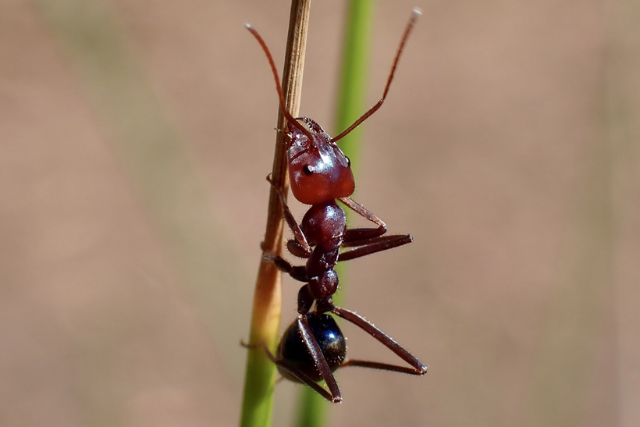
One of the three species targeted in the dominant-ant suppression experiment.
Source: iNaturalist — Iridomyrmex purpureus (cinclosoma)
In an Australian field experiment, reducing dominant ants was followed by increases in other ants and in a combined measure of several functions. The individual functions, however, did not all respond alike. To select the dominant species for this experiment, the researchers identified those recorded most frequently across the site within particular groups defined by physical traits.
Three species suppressed, four functions examined
The experiment described in Yeeles and colleagues’ 2025 paper took place in 2014–2015 at the Ridgefield tree-diversity experimental site in south-western Australia. Researchers grouped ants by physical traits and selected a dominant species from each of three groups that preliminary trials showed could feasibly be manipulated.
They established suppression and control areas within three spatial blocks—larger sections of the experimental site—and monitored the ants for about a year. Ground-active ants were sampled using pitfall traps. Capture rates for the three target species fell by 94–99% relative to their pre-experiment rates in the suppression plots.
Those percentages describe trap captures under the study’s conditions, not equivalent declines in the region’s entire ant population. Nor was this a separate test of each species: all three were suppressed together.
The researchers examined four functions. On the ground, they measured the removal of dead insects and seeds. In trees, they recorded attacks on mealworm larvae after artificial nectar feeders had supplied sugar solution.
| Function investigated | Indicator actually measured |
| Scavenging | Proportion of dead mealworms removed within 30 minutes |
| Ant-mediated seed dispersal | Proportion of seeds bearing elaiosomes removed within 60 minutes |
| Seed predation | Proportion of seeds from two common local weeds removed within 60 minutes |
| Plant defence | Proportion of mealworm larvae attached to leaves that were attacked by ants within 15 minutes |
These were indicators used to investigate the four functions. An elaiosome is a food-bearing appendage on a seed that can attract ants. For the seed trials, the researchers measured removal without following where the seeds went, whether they were eaten or whether they germinated. Likewise, the plant-defence trial measured attacks on larvae in trees supplied with sugar solution; it did not directly measure how much plant damage was prevented.
A higher combined measure did not mean every function improved
In the suppression plots, both the number of non-target ants captured and the number of non-target species increased. A combined measure of the four functions, termed effective multifunctionality in the study, also increased. The statistical analysis indicated that this increase occurred mainly through higher species richness.
For plant defence, however, the model estimated two pathways working in opposite directions. One linked suppression to fewer attacks on larvae. The other linked suppression to increased species richness, which in turn was associated with more attacks.
The researchers used statistical models to estimate these pathways separately. The direct effect describes the estimated effect of suppression after accounting for the modelled pathway through species richness. Its value alone does not describe the treatment’s overall effect. Even when a combined measure rises, the individual functions still need to be examined.
 シロフクロウ職員
One combined figure is easier to record. But I would still like to see the columns it came from.
 タヌ山先生
Right. A handy index—but show me the breakdown. Combining four measurements doesn’t make them the same job.
The community changed, not just the species doing one job
The results cannot be explained simply by saying that ants with the same roles were already waiting to take over. The authors considered both changes in the activities of resident species and the possible arrival of species from surrounding areas.
For several functions, species with more negative associations with functional rates in control plots tended to show larger shifts towards positive associations after suppression. The authors suggested that reduced competition could have changed how resident species used resources. The increase in species richness also suggested arrivals from the surrounding farmland and remnant woodland. These are interpretations of the observed changes, not direct tracking of every species’ behaviour or movements.
This was a change in an ant community, rather than a one-for-one exchange of species. Results for the relationship between diversity and multifunctionality also depended on the assessment method. A combined index and an analysis counting how many functions exceeded a chosen level of performance did not reveal exactly the same patterns. Varying that level allowed the researchers to examine the relationship under different criteria.
The analyses also suggested that the remaining community could be more sensitive to further species loss. This possibility was inferred from the diversity–function relationships, rather than tested by removing additional species.
タヌ山先生The experiment therefore does not establish that further losses would be compensated for in the same way.
Bees can visit the same flowers and respond differently to the landscape
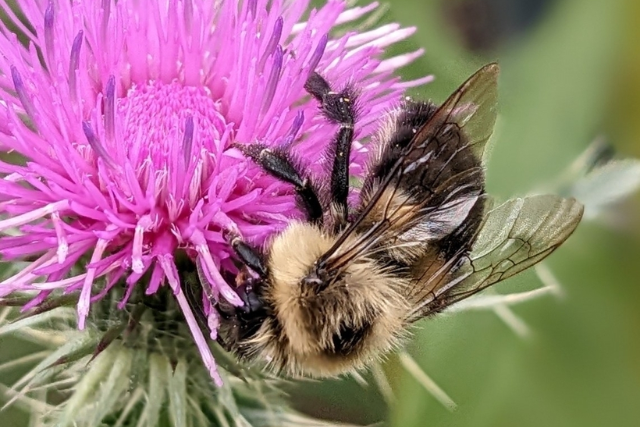
One of the bumblebee species included in the New Jersey–Pennsylvania analysis.
Source: iNaturalist — Bombus impatiens (brandie137)
The ant study deliberately reduced dominant species. The next study compared farms with different amounts of surrounding native vegetation. Even though the wild bees visited the same crop—watermelon—their relationships with the surrounding landscape differed among species or species groups.
Comparing bees across watermelon farms
In Winfree and Kremen’s study, researchers investigated native wild bees visiting watermelon flowers in two regions of the United States. They excluded the non-native European honeybee, which was primarily managed in both study systems, from their analysis.
In New Jersey and Pennsylvania, researchers collected bees from flowers at 21 farms in July–August 2005 and identified the specimens to species. The analysis covered the 11 most abundant species meeting their inclusion criteria. In California, they observed flower visits at 14 farms in June–August 2001 and analysed nine abundant, visually distinguished groups. Some groups combined several similar species.
The proportion of surrounding native vegetation was calculated from land-cover data based on aerial photographs or satellite imagery. Researchers compared bee abundance or visits across farms with different vegetation cover; they did not experimentally remove vegetation. These associations cannot, by themselves, establish that vegetation loss caused the observed differences.
Different responses do not automatically fill a gap
In New Jersey and Pennsylvania, some species were recorded in greater numbers at farms with less native vegetation, while others were recorded in smaller numbers. In California, all the groups analysed showed fewer visits where native vegetation was scarcer, but the strength of that relationship differed. Response diversity can therefore involve differences in direction or differences in degree within the same direction.
Neither region, however, provided evidence of density compensation. The researchers looked for opposing patterns across farms: were lower numbers of one species associated with higher numbers of others? Associations among species’ abundances were weak in New Jersey and Pennsylvania. In California, visits by different groups tended to vary together in the same direction.
The insurance hypothesis offers a related theoretical idea: species responding differently to environmental fluctuations may help maintain community functioning. How well this works depends on factors such as how closely their responses track one another and the range of their responses. It does not guarantee complete compensation.
There is another distinction to make: the number of bees or visits is not the amount of pollen transferred. Winfree and Kremen noted that bumblebees, among the most effective pollinators per visit in these systems, were also among those most negatively associated with native vegetation loss. Responses by less effective species might therefore compensate only partly for the loss of bumblebees.
The study detected differences in response that could help stabilise pollination. Establishing how much those differences maintain actual pollen transfer remained a separate task.
シロフクロウ職員So after recording the different responses, we still need to find out whether they help maintain the function.
 ミミズク先生
That is right. Identifying a difference and testing its consequences are separate stages of the research.
Can present-day functions tell us what will be needed in the future?
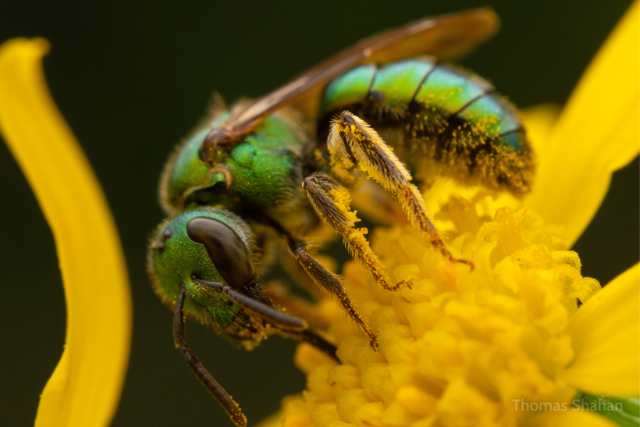
One of the bee species included in the New Jersey–Pennsylvania analysis.
Source: iNaturalist — Augochlora pura (tshahan)
A small contribution under one set of conditions does not establish that a species is unnecessary under every set of conditions. Comparing the studies’ timescales, locations and measurements reveals where their findings apply—and where further investigation is needed.
A year-long experiment and a comparison across farms
Other ant species could enter the experimental site from its surroundings. Compensation need not work in the same way at an isolated site. The bee study, meanwhile, did not follow vegetation loss in the same fields over many years. Differences between places must be distinguished from changes through time.
| Point of comparison | Ant study | Bee study |
| Design | Experiment suppressing three dominant species | Comparison of farms with different amounts of surrounding native vegetation |
| Main measurements | Trap captures, species richness and four functional indicators | Species-level abundance or visits by visually distinguished groups |
| Time and place | Approximately one year at one Australian experimental site, in 2014–2015 | Two US regions, sampled in July–August 2005 and June–August 2001 |
| Not established directly | Long-term compensation or compensation at isolated sites | Changes through time in the same field or complete compensation in pollen transfer |
The table summarises the scope of the two studies, rather than ranking one method above the other. A study’s limits do not make its results useless. They show the range of questions for which those results provide evidence.
Similar in one function, different in another
Ants that use seeds in similar ways need not remove dead insects or attack larvae equally. The contrasting effects on individual functions in the ant experiment show why one process cannot represent everything a community does.
Even for the same combination of species, an assessment of functional overlap can change when the function or environmental conditions change. The useful question is how much the species overlap in a specified function, rather than which species is surplus to requirements.
It is also worth keeping three statements distinct: a function has not yet been measured; a contribution was small under the conditions studied; or an effect was not detected by the analysis. They do not mean the same thing. Nor should every unmeasured function be assumed to be crucial. Using the evidence we have, while identifying what remains unresolved, helps define the next investigation.
Beyond usefulness: what allows organisms to keep living?
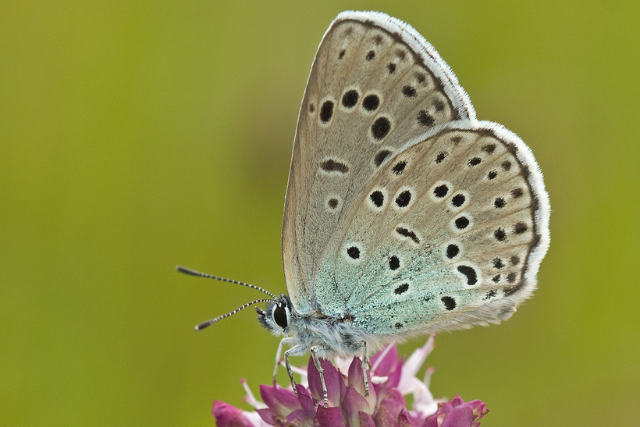
Source: iNaturalist — Phengaris arion (annesorbes)
タヌ山先生So far, the question has been whether measured functions persist when particular species decline. We can now ask a broader question: what do we want conservation to achieve?
A function can persist even while a species disappears from a place. The conservation goal proposed here is for diverse organisms to continue through successive generations. That requires attention to the conditions in which they live, as well as to the functions measured today.
Maintaining a function does not restore a population
Suppose other insects continue carrying pollen and a plant keeps reproducing after one local insect population disappears. Pollination has been maintained, but the missing population has not been restored. Those are different outcomes. Evidence of compensation does not, on its own, establish that losing a particular species or population is acceptable.
The goal needs to be explicit. Supporting crop production, retaining the species of a place and passing on habitats where diverse organisms can live are overlapping aims, but they are not identical.
ミミズク先生One measurement cannot assess them all.
Investigating human benefits from nature is important. Yet conservation can also start from the position that organisms should not have to pass a test of demonstrated usefulness to people, now or in the future, to merit protection. The preamble to the Convention on Biological Diversity recognises biodiversity’s intrinsic value alongside its ecological, scientific, economic and other values. Intrinsic value means value in its own right.
Conserving habitats and relationships alongside species
For a population to persist, individuals need places where they can obtain food, develop and reproduce. Depending on the organism, shelter through difficult seasons or routes between habitats may also matter. Protecting a species therefore involves more than retaining a number of individuals.
In the ant experiment, the authors considered arrivals from surrounding areas as a possible contributor to changes after suppression. Understanding the plots’ functioning required looking beyond their boundaries. Similarly, conserving bees requires attention to nesting and the rest of their life cycle, not only the moments when they visit flowers.
The Convention on Biological Diversity’s ecosystem approach emphasises conserving and restoring interactions among organisms and the processes linking them with their environment. It calls for attention to ecological structures and processes, rather than protection of individual species alone.
This does not mean fixing nature permanently in its present form. Organisms eat one another, compete and respond differently to environmental change. No single outcome benefits every organism equally.
ミミズク先生The aim proposed here is to retain places and relationships that allow diverse organisms to reproduce over generations, rather than simply maximising one measured function.
Basic research connects findings across places and years
Understanding what organisms need depends on basic research. Which species are present? Where do they live? What do they eat, and when do they reproduce? Accumulated answers provide a foundation for identifying habitats to retain, investigating declines and assessing conservation measures.
Taxonomic research, specimen labels recording collection dates and localities, and observations of habitats and behaviour allow studies from different periods and places to be compared.
タヌ山先生Even when a species name remains uncertain, photographs, specimens and records of observation conditions can make it possible to revisit an identification later.
More records alone do not establish the causes of change. Repeated surveys can reveal trends; measurements can investigate behaviour and functions; experiments can help test causes where appropriate. Their findings become more useful when the questions each method can answer are clear.
Japan’s Ministry of the Environment emphasises long-term surveys, many sites and consistent methods in its Monitoring Sites 1000 programme. Its nationwide survey manuals are designed to support consistent observations across years, locations and changes of survey participants.
Research without an immediate conservation application or financial return can still provide evidence for future questions. Stating a study’s limits helps others connect its findings correctly with theirs.
Five questions before deciding what is needed
Before asking whether an organism is necessary, consider five questions:
- Which function or relationship is being evaluated?
- Necessary for whom, and for what purpose?
- In which environment, period and place was it studied?
- Did the researchers measure numbers of individuals, behaviour or an indicator of a function?
- What remains unresolved, and what needs to be investigated next?
These questions clarify the purpose and evidence behind a judgement. They are not a checklist for sorting organisms into those worth keeping and those that can be discarded.
Carrying research and records into the future
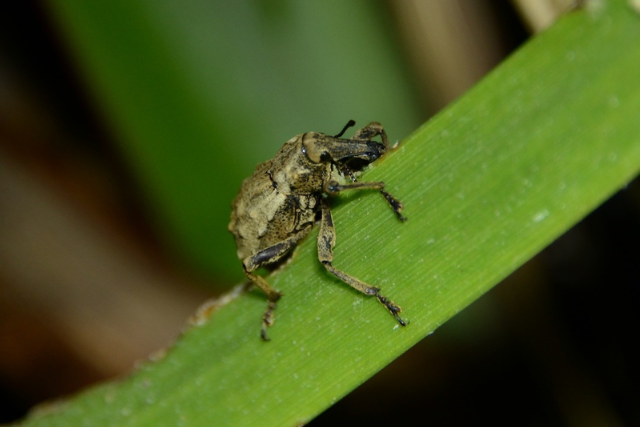
Source: iNaturalist — Hadramphus spinipennis (obscurus)
We can make decisions without either waiting for complete knowledge or treating one finding as an answer to everything. The task is to use current evidence to reduce losses, investigate the results and revise decisions as understanding improves.
The Convention on Biological Diversity states that, where significant reduction or loss of biodiversity is threatened, a lack of full scientific certainty should not be used to postpone measures to avoid or minimise that threat. Investigation and action can proceed together.
An individual observation cannot do all of this. It can, however, provide a starting point for comparison. When watching a flower, record the date, time, plant, location, weather, visiting organisms and their behaviour. If an identification is uncertain, keep that uncertainty in the record. Follow access rules, leave bees untouched, stay away from nests and observe from a distance.
ミミズク先生Such a record does not, by itself, measure pollen transfer or response diversity. But a note of what was seen, where and when can be compared with a later observation.
Asking how much biodiversity we need involves more than finding the minimum number of species required for today’s functions. Humans are among the organisms living on this planet. Conserving habitats and relationships gives other organisms opportunities to feed, reproduce and continue living too.
Finding out what those conditions require—and passing the evidence to the next generation—is part of that work. Protecting the conditions that allow diverse organisms to persist, and continuing the research and records that help us understand those conditions, both support a world in which living things can continue across generations.
Explore More from the Museum of the Forest
 メンフクロウ職員
Please do explore the books from eco-life-planet as well. I hope they will offer you many more rewarding encounters with the living world.
Families of One: The Narrowest Branches of the Tree of Life
Kindle Books Currently Available in Japanese
The Japanese-language Museum of the Forest series includes expanded introductions to taxonomy, nature observation and unusual branches of the tree of life.
- An Introduction to Taxonomy: The Basic Science of Organising the World, Level 1 — Japanese-language edition
- Spring Nature Observation Handbook — Japanese-language edition
- Animals from Families of One: The Narrowest Branches of the Tree of Life — Japanese-language edition

References
Counting species is not the same as measuring what they do
- npj Biodiversity — Reconsidering functional redundancy in biodiversity research (27 April 2023)
- Nature Ecology & Evolution — Functional redundancy compensates for decline of dominant ant species (22 April 2025)
What happened when dominant ants were reduced?
Bees can visit the same flowers and respond differently to the landscape
- Proceedings of the Royal Society B — Are ecosystem services stabilized by differences among species? A test using crop pollination (published online 16 September 2008)
- Proceedings of the National Academy of Sciences — Biodiversity and ecosystem productivity in a fluctuating environment: The insurance hypothesis (16 February 1999)
Can present-day functions tell us what will be needed in the future?
- Nature Ecology & Evolution — Functional redundancy compensates for decline of dominant ant species (22 April 2025)
- Proceedings of the Royal Society B — Are ecosystem services stabilized by differences among species? A test using crop pollination (published online 16 September 2008)
- npj Biodiversity — Reconsidering functional redundancy in biodiversity research (27 April 2023)
Beyond usefulness: what allows organisms to keep living?
- Secretariat of the Convention on Biological Diversity — Convention on Biological Diversity: Preamble (Convention adopted in 1992)
- Secretariat of the Convention on Biological Diversity — The Ecosystem Approach Advanced User Guide: Task 5 — Conserving ecosystem structure and functioning
- Biodiversity Center of Japan, Ministry of the Environment — モニタリングサイト1000「目的と特徴」 [Monitoring Sites 1000: aims and features; translated title] (no update date stated). In Japanese.
- Nature Ecology & Evolution — Functional redundancy compensates for decline of dominant ant species (22 April 2025)
コメント