


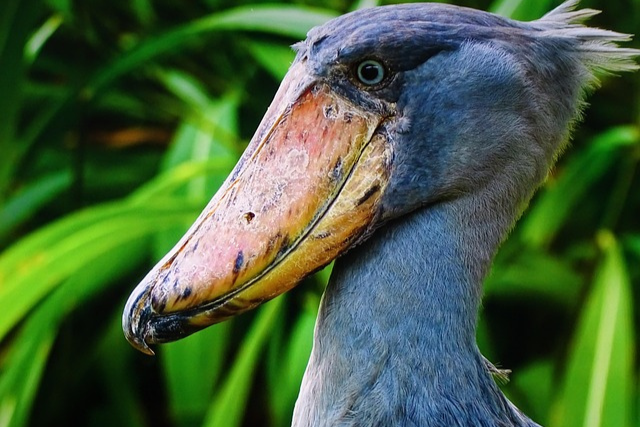
Among living birds, some occupy a particularly narrow place within a chosen classification system: their family contains only one living genus, and that genus contains only one living species.
In this article, I will call this arrangement “one family, one genus, one species”. It is a descriptive phrase used for clarity, not a formal taxonomic rank.
The phrase does not indicate rarity, population size, genetic diversity, or extinction risk. The Kagu, which walks through the forests of New Caledonia, and the Oilbird, which leaves South American caves to feed in the night forest, both meet this taxonomic condition. Yet their appearance, habitats, and ways of life could hardly be more different.
Classification is a map of relationships. Using IOC World Bird List v15.2 as our guide, let us follow that map through forests, grasslands, wetlands, riversides, and caves.

What Does “One Family, One Genus, One Species” Mean?

Source: Wikimedia Commons — Eurypyga helias Garza del sol Sunbittern
Family, genus, and species are taxonomic ranks used to organise living things. Once we understand how they fit together, the list of 38 species — and the reasons why that number may change — becomes much easier to follow.
Family, Genus, and Species: Finding a Bird on the Map

Take the Eurasian Tree Sparrow. It belongs to the order Passeriformes, the family Passeridae, and the genus Passer. Its scientific name, Passer montanus, combines a genus name with a specific epithet.
Moving from order to family, genus, and species is rather like zooming in on a map:
Order→Family→Genus→Species
A bird’s place on that map depends on more than outward resemblance. Researchers compare museum specimens, behaviour, vocalisations, geographical ranges, and evidence from DNA. New specimens and improved methods can change where a bird is placed — and may even lead researchers to reconsider the boundary between species.
Classification records what we have learnt so far. It is designed to be tested, discussed, and revised when better evidence appears.
 シロフクロウ職員
A classification is not simply a label. It is a record of the evidence that currently supports a bird’s place among its relatives.
A Description, Not a Conservation Category
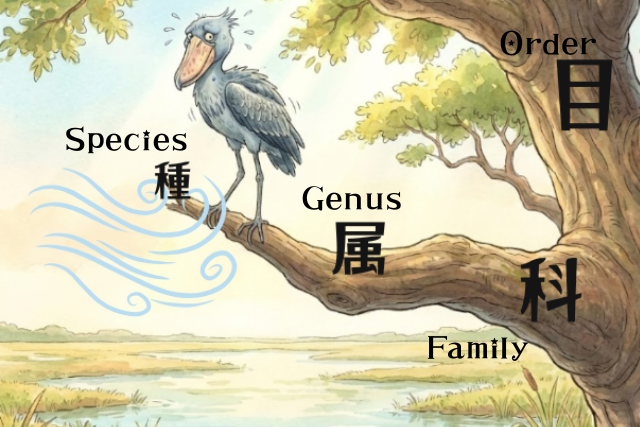
“One family, one genus, one species” means that a family contains only one living genus, and that genus contains only one living species. It is an explanatory phrase used in this article, rather than a formal scientific term.
For this article, the classification follows IOC World Bird List v15.2. The scope is living species, and the list was checked on 22 September 2026. Under those conditions, the total is 38 species.
A different classification system could produce a different result. A subspecies may be recognised as a full species, two species may be combined, or a family boundary may be revised. The list can therefore change as research advances.
Nor does this taxonomic position directly tell us whether a species is widespread, scarce, genetically diverse, or threatened with extinction. Some species on the list are assessed as Least Concern, while others are Endangered. Classification and conservation assessment answer different questions and must be checked using different sources.
 ミミズク先生
A narrow branch on the tree of life does not necessarily mean that its living representative is close to disappearing. Evolutionary history and present-day conservation are different questions.


Eight Birds, Eight Ways of Living
Source: iNaturalist – Secretarybird Sagittarius serpentarius(magdastlucia)
A shared place in classification does not mean a shared way of life. A bird on a forest floor, one among flowering branches, and another in a dark cave face very different challenges. They find food in different ways, rely on different senses, and raise their young in different places.
The following eight species show how much variation can be hidden behind one taxonomic pattern.
Birds of Island Forests and Mountain Woodlands
A forest contains several worlds at once: leaf litter on the ground, flowers high among branches, and dense undergrowth beneath ferns and shrubs. The Kagu searches on foot in New Caledonia. New Zealand’s Stitchbird moves through the forest’s upper layers, taking nectar and fruit. The Spotted Elachura keeps to the undergrowth of mountain forests from the eastern Himalaya to South-East Asia.
All three are forest birds. Yet their diets, movements, sensory worlds, and taxonomic histories are strikingly different.
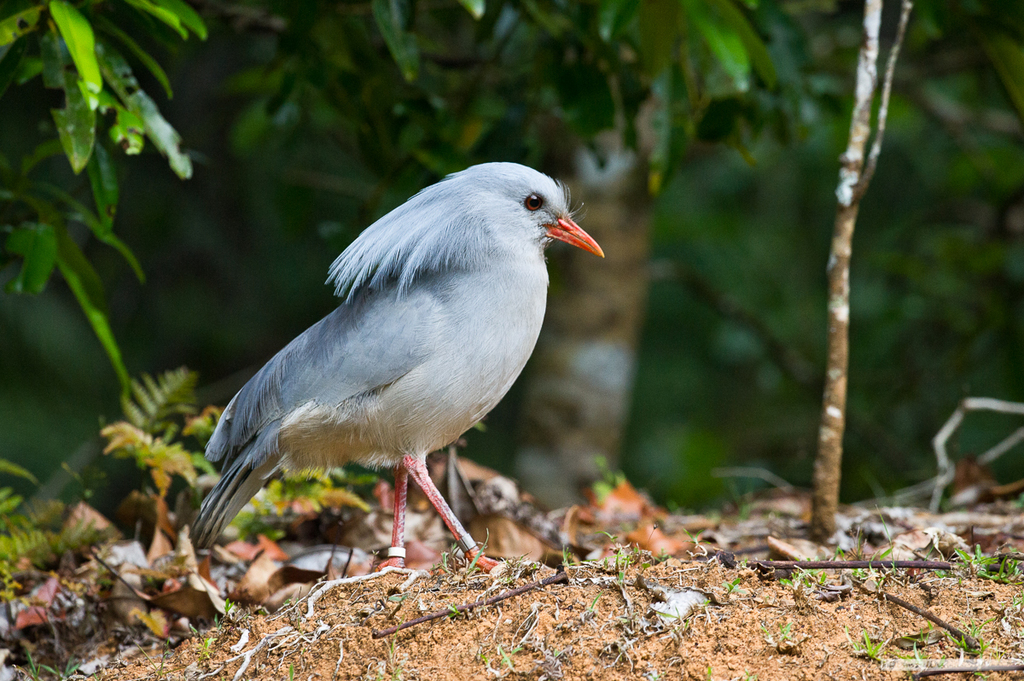
Kagu: Searching for Food on Foot
Source: iNaturalist – Kagu Rhynochetos jubatus(freddesmoulins)
- Common name: Kagu
- Scientific name: Rhynochetos jubatus
- Classification: Order Eurypygiformes; Family Rhynochetidae; Genus Rhynochetos
- Distribution: New Caledonia
- Conservation status: IUCN Endangered, assessed in 2019
The Kagu walks slowly through the forests of New Caledonia, probing leaf litter and gaps between stones for earthworms, snails, insects, and small lizards. Its bluish-grey plumage, red legs, and crest give it an elegant appearance, but it is also a patient hunter of the forest floor.
Damp soil, fallen leaves, and decaying wood support many of the small animals on which it feeds. Its grey body can blend into the shifting light and shadow beneath the trees, while its red legs may suddenly catch the eye.
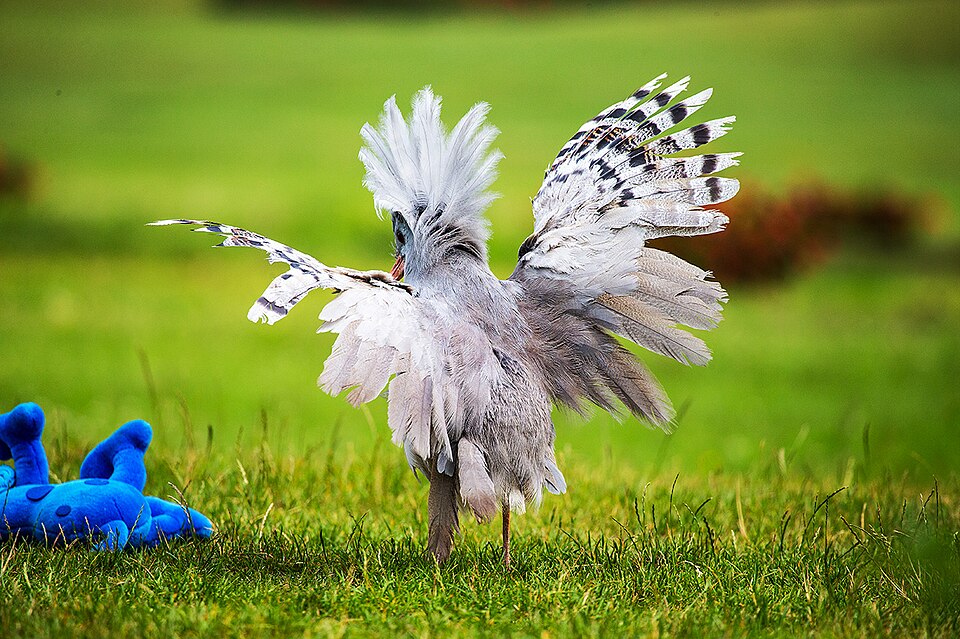
Source: Wikipedia — “Kagu”
BirdLife International identifies predation by dogs as an important threat. The Kagu’s Endangered status reflects particular circumstances, including its restricted range, habitat condition, and introduced mammals. It does not follow from its position as the only living species in its genus and family.
IOC places the Kagu in Eurypygiformes, alongside the Sunbittern, Eurypyga helias. The two birds look and live very differently, yet the classification places them on neighbouring branches of the same order.
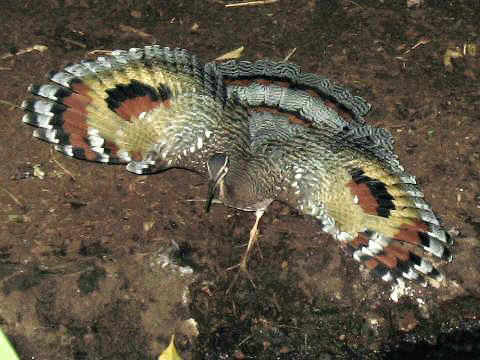
Source: Wikipedia — Sunbittern
ミミズク先生Birds that look quite unlike one another may still stand close together on the evolutionary map. That is why appearances are only the beginning.
Stitchbird: A Small Bird with Two Stories
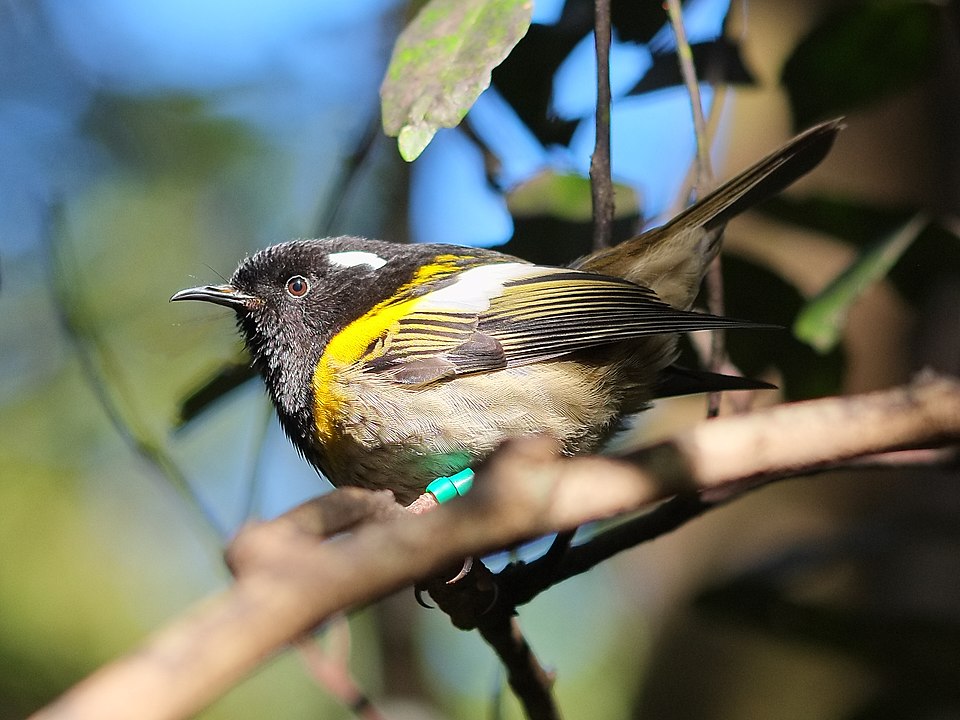
Source: Wikimedia Commons — Male hihi or Stitchbird
- Common name: Stitchbird, or Hihi
- Scientific name: Notiomystis cincta
- Classification: Order Passeriformes; Family Notiomystidae; Genus Notiomystis
- Distribution: New Zealand
- Conservation status: IUCN Vulnerable, assessed in 2022
The Stitchbird is a small forest bird of New Zealand. It feeds on nectar, fruit, and arthropods. The male has a black head, a pale patch near the neck, and a bright yellow breast, making it surprisingly conspicuous among leaves and flowers.
It nests in natural tree cavities, and nest boxes have become important breeding sites in managed reserves. Predator control, translocations, and reintroductions to islands and protected mainland areas have helped establish populations beyond the few places where the species once survived.
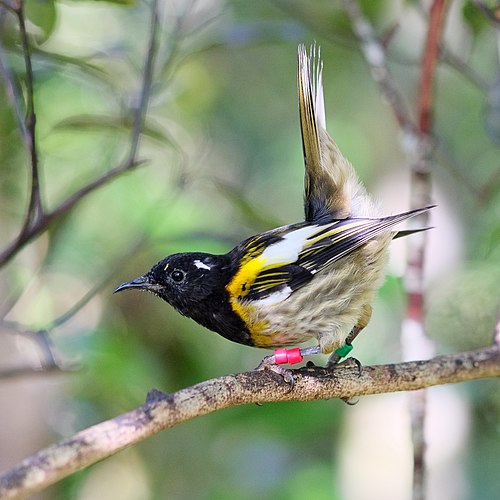
Source: Wikimedia Commons — “Male hihi (stitchbird) flicking up its tail feathers”
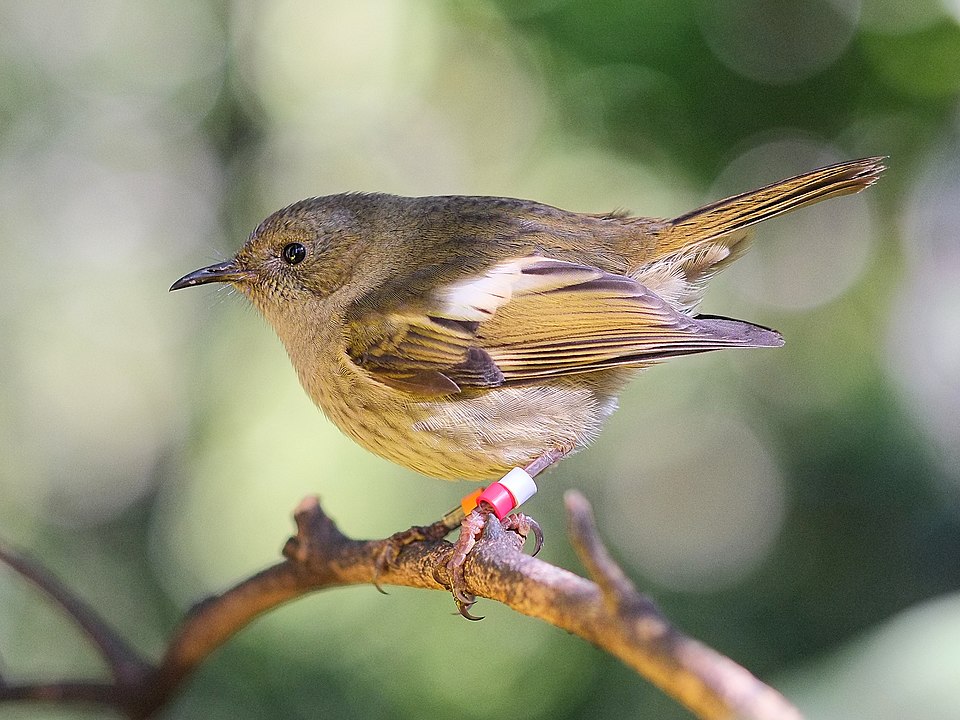
Source: Wikimedia Commons — “Female hihi (stitchbird) perched on a twig”
The Stitchbird also has a taxonomic story. It was once thought to be closely related to New Zealand honeyeaters, but genetic studies indicated that it represents a distinct lineage. In 2007, researchers proposed recognising the separate family Notiomystidae.
シロフクロウ職員Nest boxes and predator control answer one question: how can the bird survive today? DNA studies answer another: where does it belong among other birds?
Spotted Elachura: Heard Before It Is Seen
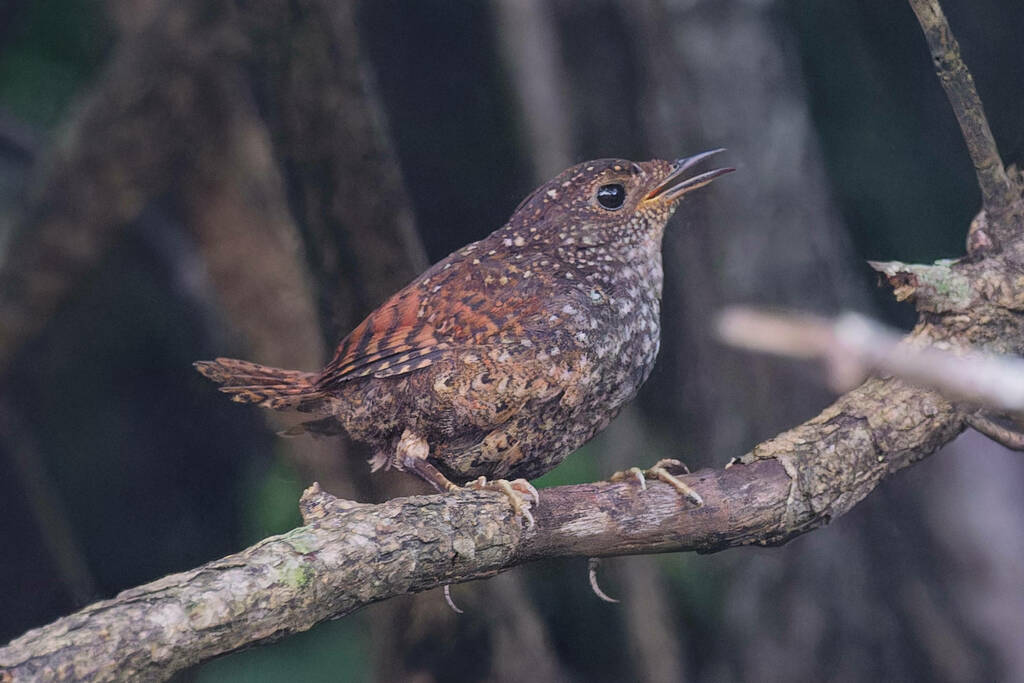
Source: iNaturalist – Spotted Elachura Elachura formosa(naturalist74450)
- Common name: Spotted Elachura
- Scientific name: Elachura formosa
- Classification: Order Passeriformes; Family Elachuridae; Genus Elachura
- Distribution: Eastern Himalaya to southern China and South-East Asia
- Conservation status: IUCN Least Concern, assessed in 2024
The Spotted Elachura is easy to overlook. In damp mountain forests, its brown body and pale spots blend into ferns, low shrubs, and shadowy undergrowth. A high, carrying song may reveal its presence before the bird itself comes into view.
Source: Wikipedia — “Spotted Elachura”
It was once placed with similar-looking wren-babblers. Later comparisons of DNA, vocalisations, and physical characters showed that it belonged to a separate lineage. Research published in 2014 supported recognition of the genus Elachura and the family Elachuridae.
The species reminds us that an observation can begin with sound. A bird’s voice may be the first clue to a life hidden among leaves.
Grasslands, Wetlands, and Watersides
Open landscapes also contain many different bird lives. One hunter walks through grass. Another waits almost motionless for fish. A third eats leaves among waterside branches. A fourth builds a vast roofed nest from sticks and mud.
Long legs, broad bills, specialised digestive systems, and careful building behaviour are not decorations. They are tools for finding food and raising young in particular places.
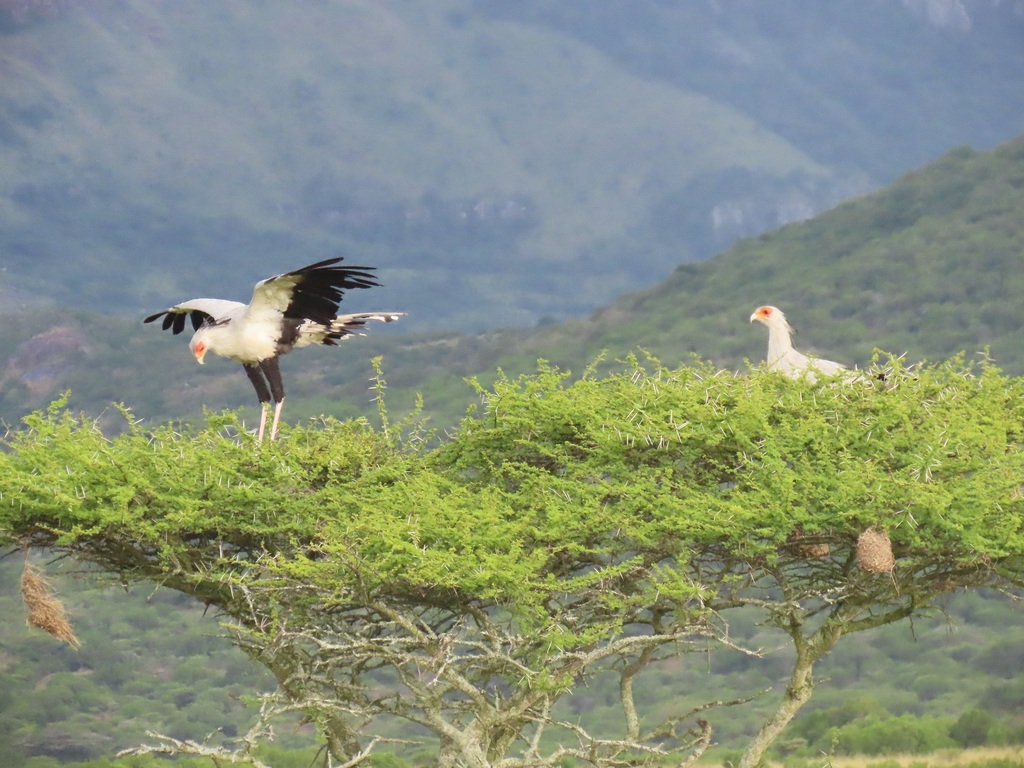
Secretarybird: A Raptor That Hunts on Foot
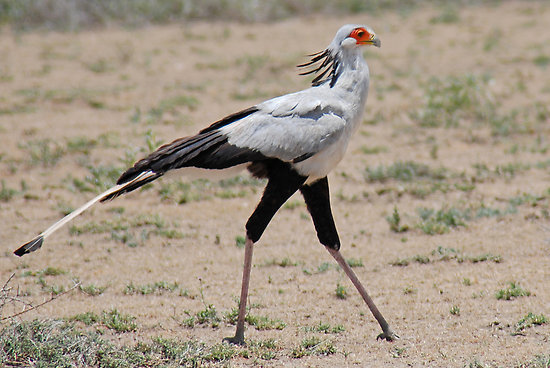
Source:iNaturalist – ヘビクイワシ Sagittarius serpentarius(baldcoot)
- Common name: Secretarybird
- Scientific name: Sagittarius serpentarius
- Classification: Order Accipitriformes; Family Sagittariidae; Genus Sagittarius
- Distribution: Sub-Saharan Africa
- Conservation status: IUCN Endangered, assessed in 2020
The Secretarybird is a raptor that spends much of its hunting time walking across African grasslands and savannas. It eats snakes, but it also takes insects, lizards, and small mammals. Rather than searching mainly from the air, it patrols the ground among the grasses.
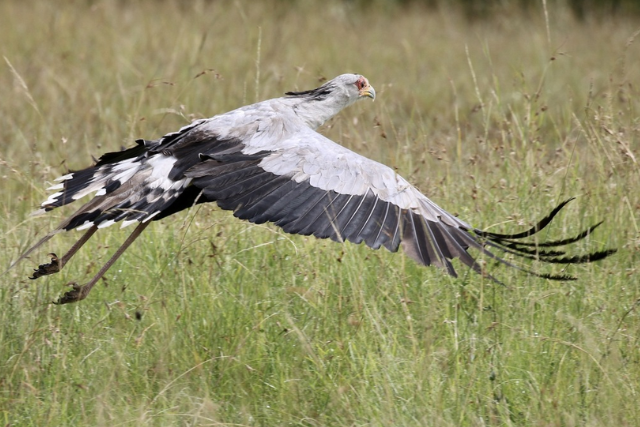
Source:iNaturalist – ヘビクイワシ Sagittarius serpentarius(johnbruin)
When it finds prey, its long legs become striking tools. In a study of one captive Secretarybird, a kicking strike averaged about 195 newtons — roughly five times the bird’s body weight — and the foot remained in contact with the target for only about 15 milliseconds.
 タヌ山先生
タヌ山先生Start with the legs. They are not simply long; they are the centre of the hunting method. Once you have seen the strike, the whole bird makes sense.
Grasslands provide both hunting grounds and places to breed. Agriculture, development, collisions with power lines and fences, and disturbance near nest sites can all reduce suitable habitat. These pressures, rather than its taxonomic position, explain its Endangered status.
Shoebill: Waiting, Then Striking
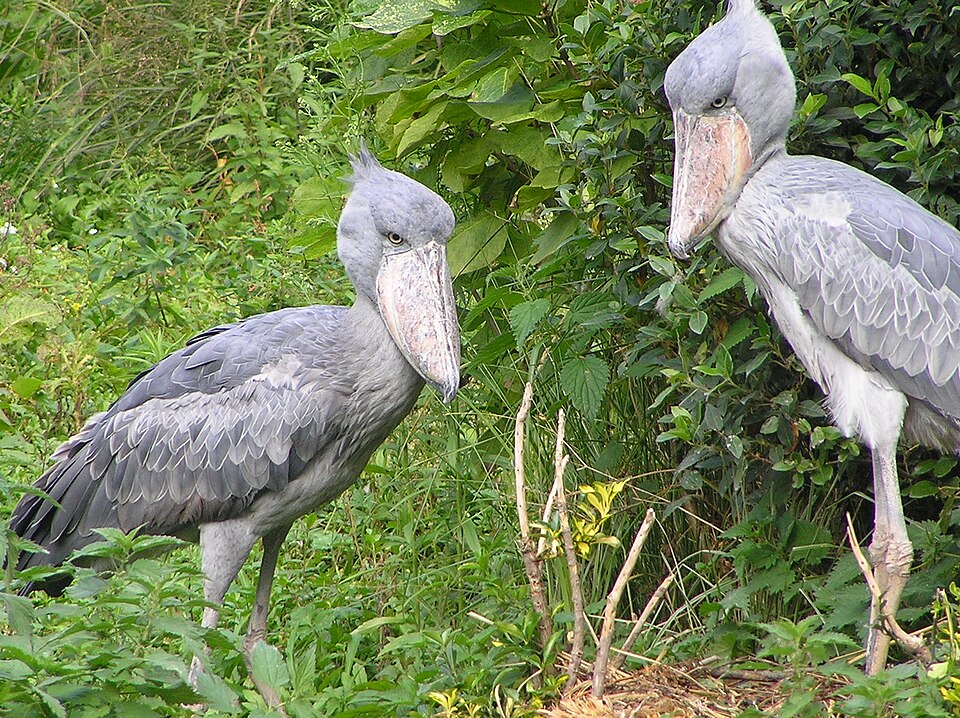
Source: Wikimedia Commons — Shoebill
- Common name: Shoebill
- Scientific name: Balaeniceps rex
- Classification: Order Pelecaniformes; Family Balaenicipitidae; Genus Balaeniceps
- Distribution: Freshwater wetlands of eastern and central Africa
- Conservation status: IUCN Vulnerable, assessed in 2018
The Shoebill is a large wetland bird with a broad, powerful bill. It may stand still for long periods in freshwater marshes, waiting for fish — especially large lungfish — to appear among water and vegetation.
When prey comes within reach, the head and neck thrust forwards and the bill closes with startling speed. This stillness is part of its hunting strategy.
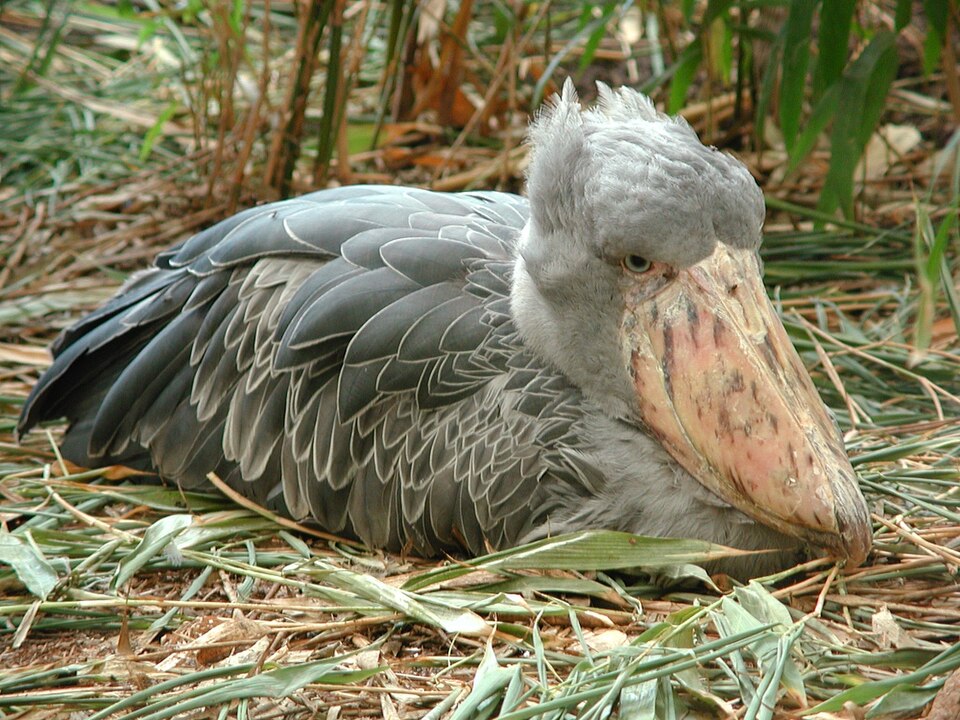
Source: Wikimedia Commons — “Schuhschnabel fg02”
Water levels change through the year, and suitable feeding places change with them. Shoebills use shallow water and floating vegetation where fish are likely to gather. During the breeding season, they build large nests from wetland plants on floating vegetation or small islands. A nest may reach around three metres across.
Hoatzin: Using Leaves Through Fermentation
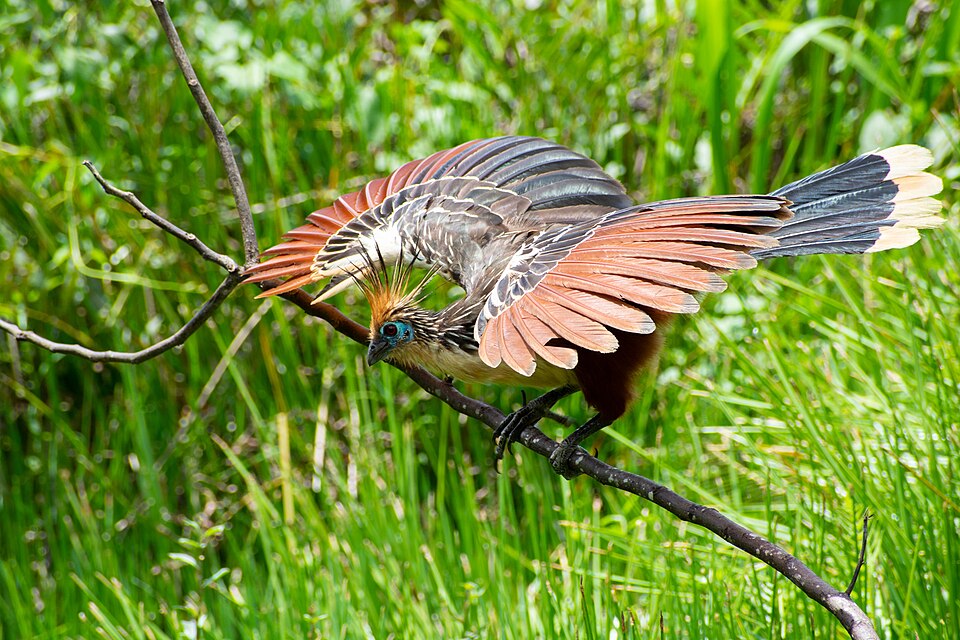
Source: Wikimedia Commons — Hoatzin
- Common name: Hoatzin
- Scientific name: Opisthocomus hoazin
- Classification: Order Opisthocomiformes; Family Opisthocomidae; Genus Opisthocomus
- Distribution: Amazon and Orinoco basins
- Conservation status: IUCN Least Concern, assessed in 2024
The Hoatzin lives in riverside woodland, swamps, and lake margins in northern South America. Overhanging branches and tangled vines provide places to feed, rest, and nest.
It eats large quantities of leaves. In its enlarged crop and lower oesophagus, microbes help break down plant material before it reaches the stomach.
Foregut fermentation is the process by which microbes in the front part of the digestive tract help an animal make use of plant food.
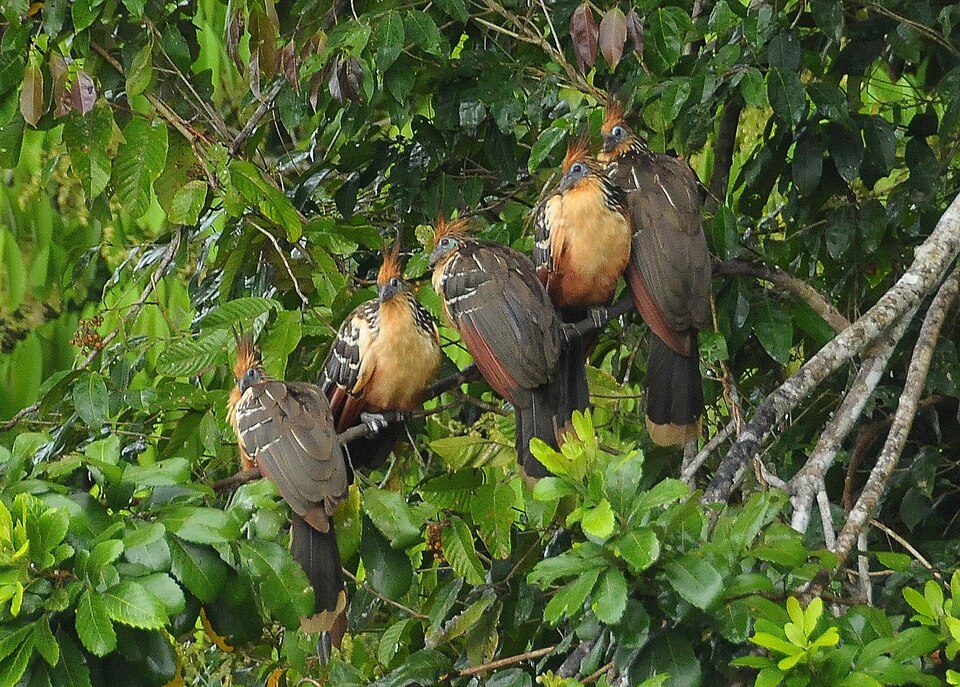
Source: Wikimedia Commons — “Hoatzins”

Hoatzin chicks have small claws on their wing digits. When threatened, they may drop into the water, then use their feet and wing claws to climb back through bankside vegetation.
The Hoatzin is also known for a distinctive odour, often associated with fermentation in its enlarged foregut. This has led to the informal name “stinkbird” in some places.
Hamerkop: A Vast Roofed Nest
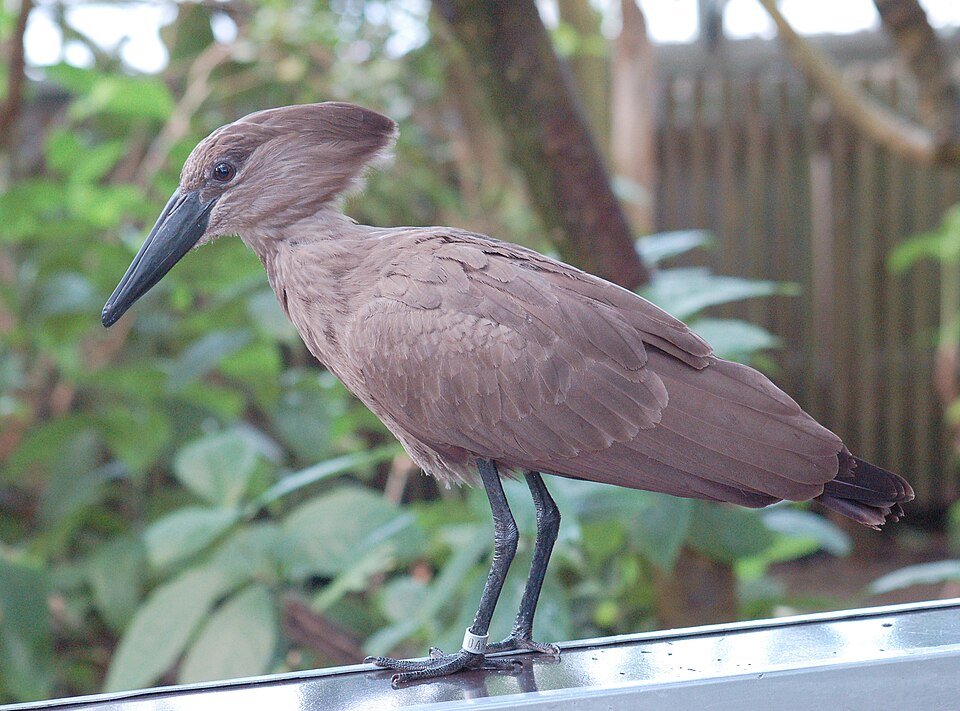
Source: Wikimedia Commons — “Hammerkop Scopus umbretta Fluff Two 2700px”
- Common name: Hamerkop
- Scientific name: Scopus umbretta
- Classification: Order Pelecaniformes; Family Scopidae; Genus Scopus
- Distribution: Sub-Saharan Africa, Madagascar, and south-western Arabia
- Conservation status: IUCN Least Concern, assessed in 2025
The Hamerkop lives beside shallow water, including rivers, lakes, marshes, and wetlands. It catches frogs, tadpoles, small fish, insects, and crustaceans while walking at the water’s edge or through shallow water.
Its bill projects forwards and its crest extends backwards, giving the head a hammer-like outline in profile. Its name comes from Afrikaans and means “hammer head”.

Source: Wikimedia Commons — “Hamerkop (Scopus umbretta umbretta) Collecting for Nest”
A pair gathers sticks, grasses, and mud to build a huge domed nest with a roof and a small side entrance. Some nests reach around two metres in both width and height.
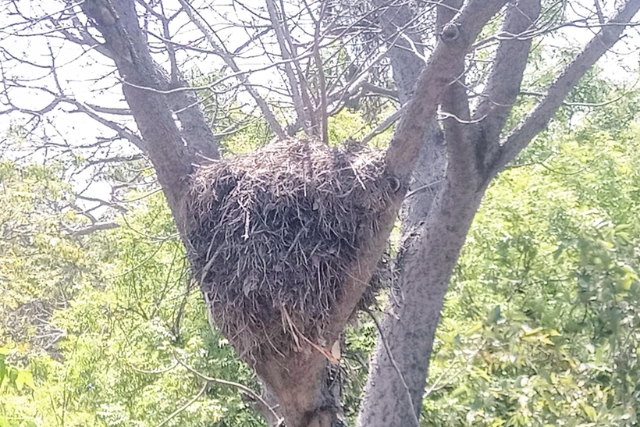
Source: iNaturalist – Hamerkop Scopus umbretta(luckyatabo)
 メンフクロウ職員
It is a proper construction project: a base, walls, a roof, and a side entrance. Ecco — the finished nest is only the last stage of a long piece of work.
Oilbird: From Cave to Night Forest
Our final setting takes us away from the daylight wetlands into dark caves and the night forest. The Oilbird brings together an unusual combination of fruit-eating, nocturnal activity, cave-dwelling, and echolocation in a single way of life.
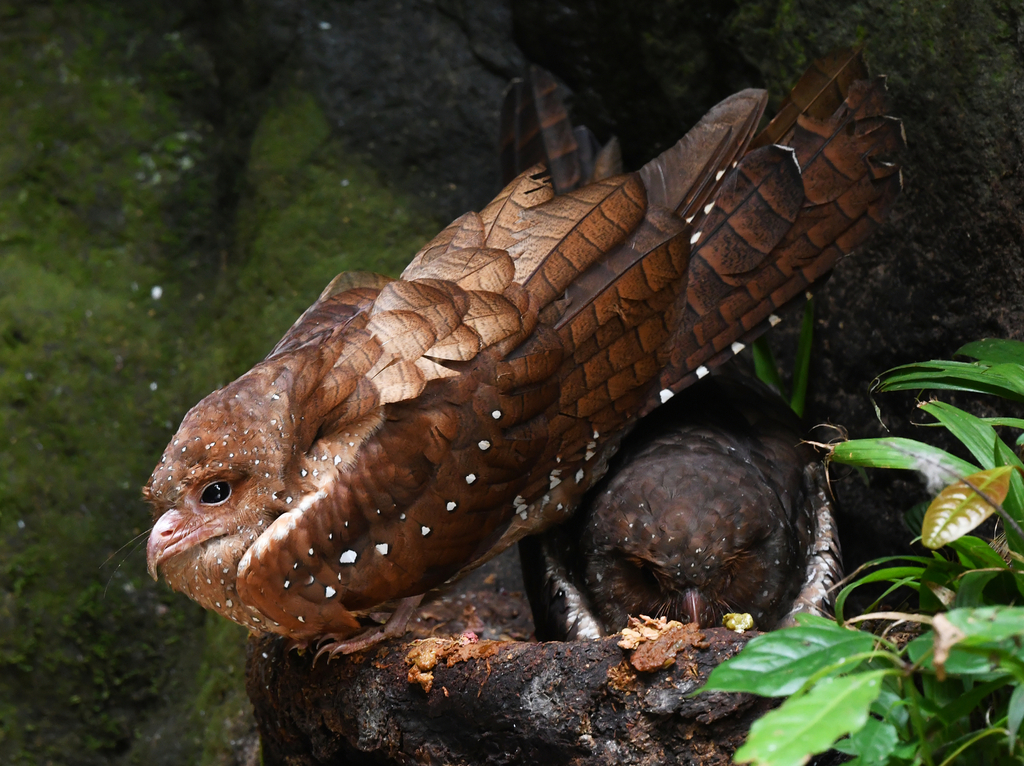
Source: iNaturalist – Oilbird Steatornis caripensis(josh_vandermeulen)
- Common name: Oilbird
- Scientific name: Steatornis caripensis
- Classification: Order Steatornithiformes; Family Steatornithidae; Genus Steatornis
- Distribution: Trinidad and northern to western South America
- Conservation status: IUCN Least Concern, assessed in 2021
The Oilbird spends the day resting in groups deep within caves. During the breeding season, it nests on ledges inside them. At night, it leaves the cave to seek fat-rich fruit in tropical forest, including fruit from palms and laurels.
It swallows fruit whole, digests the pulp, and regurgitates the seeds. A nocturnal bird that relies largely on fruit is unusual.
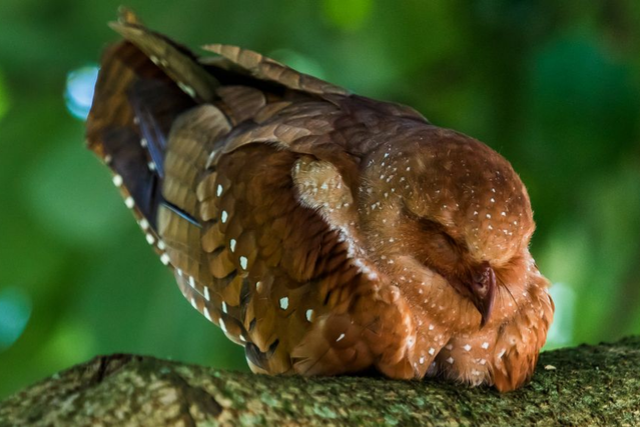
Source: iNaturalist – Oilbird Steatornis caripensis(monroyfotografo)
In the cave, Oilbirds make short clicks that humans can hear. By listening to returning echoes, they judge the distance to walls and obstacles. This echolocation helps them navigate through the cave and return to resting and nesting places.
Outside, when searching for fruit in low light, they also use vision and smell. Although its nocturnal habits may suggest a nightjar, IOC places the Oilbird in its own order, Steatornithiformes.

Looking Across the List of 38 Species
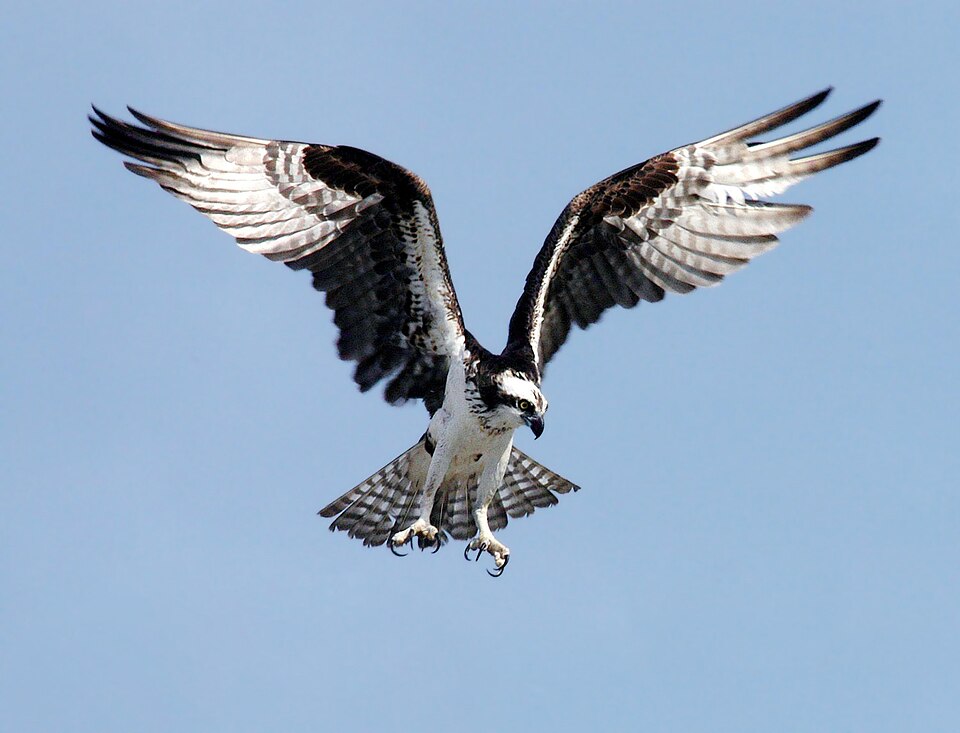
Source: Wikimedia Commons — OspreyNASA
The eight birds above are only a starting point. The remaining species take us to coasts, shingle rivers, mountain cliffs, reedbeds, dry scrub, and tropical forests.
Under the classification used here, each bird in the following table is the only living species in its genus, and its genus is the only living genus in its family. Their habitats, diets, body structures, and ways of raising young are nevertheless remarkably varied.
IUCN categories are abbreviated as follows: LC, Least Concern; NT, Near Threatened; VU, Vulnerable; and EN, Endangered.
| Featured | Common name and scientific name | Order | Family / genus | Main range and habitat | IUCN (assessment year) |
|---|---|---|---|---|---|
| Magpie Goose Anseranas semipalmata | Anseriformes | Anseranatidae / Anseranas | Northern Australia and southern New Guinea; wetlands | LC (2024) | |
| Limpkin Aramus guarauna | Gruiformes | Aramidae / Aramus | Southeastern North America to Central and South America; freshwater wetlands | LC (2025) | |
| ● | Shoebill Balaeniceps rex | Pelecaniformes | Balaenicipitidae / Balaeniceps | Eastern and central Africa; extensive freshwater wetlands | VU (2018) |
| Black-capped Donacobius Donacobius atricapilla | Passeriformes | Donacobiidae / Donacobius | South America; wetland shrubs and grass | LC (2020) | |
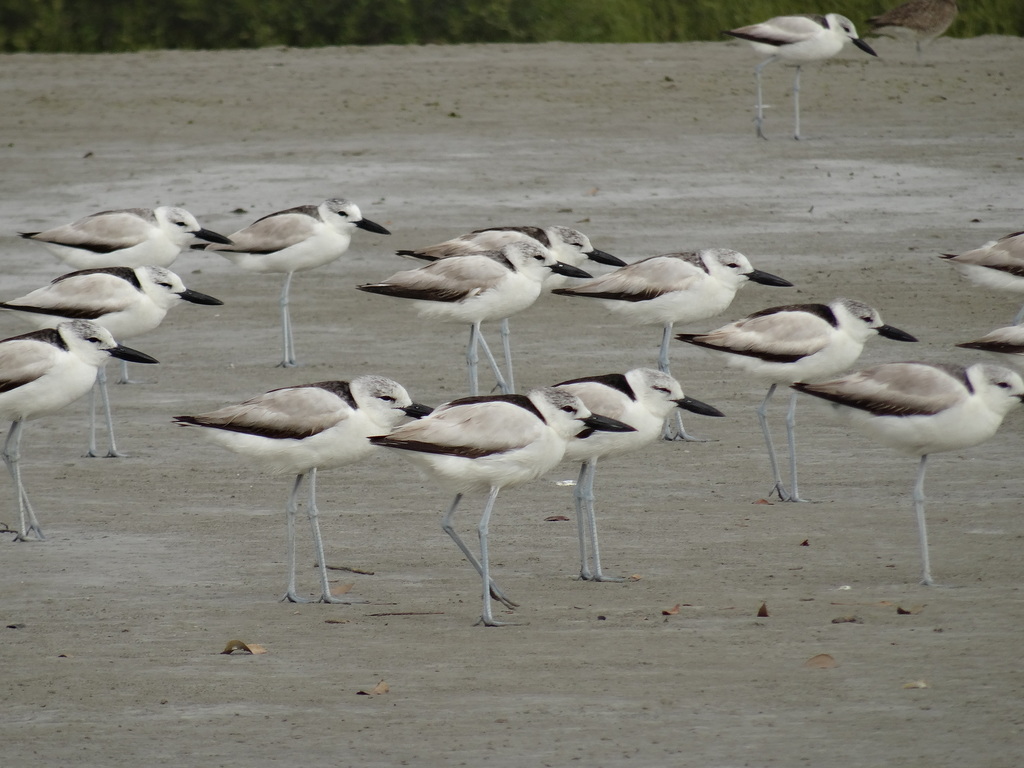
| Crab-plover Dromas ardeola | Charadriiformes | Dromadidae / Dromas | Red Sea and Indian Ocean coasts; mudflats and beaches | LC (2024) | |
| Palmchat Dulus dominicus | Passeriformes | Dulidae / Dulus | Hispaniola; open woodland and palm-rich habitats | LC (2024) | |
| ● | Spotted Elachura Elachura formosa | Passeriformes | Elachuridae / Elachura | Eastern Himalayas to southern China and Southeast Asia; mountain undergrowth | LC (2024) |
| Wattled Ploughbill Eulacestoma nigropectus | Passeriformes | Eulacestomatidae / Eulacestoma | New Guinea; mountain forest | LC (2024) | |
| Rail-babbler Eupetes macrocerus | Passeriformes | Eupetidae / Eupetes | Malay Peninsula, Sumatra and Borneo; lowland forest | NT (2022) | |
| Sunbittern Eurypyga helias | Eurypygiformes | Eurypygidae / Eurypyga | Central and South America; forest streams and wetlands | LC (2020) | |
| Hylocitrea Hylocitrea bonensis | Passeriformes | Hylocitreidae / Hylocitrea | Sulawesi; mountain forest | — (different species limits; see note) | |
| Grey Hypocolius Hypocolius ampelinus | Passeriformes | Hypocoliidae / Hypocolius | Western and southern Asia; dry country and scrub | LC (2018) | |
| Ibisbill Ibidorhyncha struthersii | Charadriiformes | Ibidorhynchidae / Ibidorhyncha | Central Asia and Himalayas; stony rivers | LC (2025) | |
| Yellow-breasted Chat Icteria virens | Passeriformes | Icteriidae / Icteria | Breeds in North America, winters in Mexico and Central America; dense scrub and woodland edges | LC (2021) | |
| Blue-capped Ifrit Ifrita kowaldi | Passeriformes | Ifritidae / Ifrita | New Guinea; mountain forest | LC (2024) | |
| Cuckoo-roller Leptosomus discolor | Leptosomiformes | Leptosomidae / Leptosomus | Madagascar and the Comoros; forest | LC (2025) | |
| Puerto Rican Tanager Nesospingus speculiferus | Passeriformes | Nesospingidae / Nesospingus | Puerto Rico; moist mountain forest | VU (2022) | |
| ● | Hihi (Stitchbird) Notiomystis cincta | Passeriformes | Notiomystidae / Notiomystis | New Zealand; forest | VU (2022) |
| ● | Hoatzin Opisthocomus hoazin | Opisthocomiformes | Opisthocomidae / Opisthocomus | Amazon and Orinoco basins; waterside woodland | LC (2024) |
| Osprey Pandion haliaetus | Accipitriformes | Pandionidae / Pandion | Widespread; coasts, lakes and rivers | LC (2021) | |
| Bearded Reedling Panurus biarmicus | Passeriformes | Panuridae / Panurus | Europe to Central Asia; reedbeds | LC (2024) | |
| Plains-wanderer Pedionomus torquatus | Charadriiformes | Pedionomidae / Pedionomus | Southeastern Australia; grassland | EN (2022) | |
| Olive Warbler Peucedramus taeniatus | Passeriformes | Peucedramidae / Peucedramus | Southwestern USA to Central America; mountain forest | LC (2020) | |
| Bornean Bristlehead Pityriasis gymnocephala | Passeriformes | Pityriasidae / Pityriasis | Borneo; lowland forest | VU (2022) | |
| Crested Jay Platylophus galericulatus | Passeriformes | Platylophidae / Platylophus | Malay Peninsula, Sumatra and Borneo; forest | NT (2019) | |
| Magellanic Plover Pluvianellus socialis | Charadriiformes | Pluvianellidae / Pluvianellus | Southern South America; lakeshores, riversides and coasts | VU (2023) | |
| Egyptian Plover Pluvianus aegyptius | Charadriiformes | Pluvianidae / Pluvianus | Sub-Saharan Africa; river sandbanks | LC (2024) | |
| Mottled Berryhunter Rhagologus leucostigma | Passeriformes | Rhagologidae / Rhagologus | New Guinea; mountain forest | LC (2024) | |
| Rosy Thrush-tanager Rhodinocichla rosea | Passeriformes | Rhodinocichlidae / Rhodinocichla | Mexico to north-western South America; scrub and woodland edges | LC (2021) | |
| ● | Kagu Rhynochetos jubatus | Eurypygiformes | Rhynochetidae / Rhynochetos | New Caledonia; forest | EN (2019) |
| ● | Secretarybird Sagittarius serpentarius | Accipitriformes | Sagittariidae / Sagittarius | Sub-Saharan Africa; grassland and savannah | EN (2020) |
| Sapayoa Sapayoa aenigma | Passeriformes | Sapayoidae / Sapayoa | Panama to north-western South America; lowland forest | LC (2018) | |
| ● | Hamerkop Scopus umbretta | Pelecaniformes | Scopidae / Scopus | Sub-Saharan Africa and elsewhere; watersides | LC (2025) |
| Streaked Scrub Warbler Scotocerca inquieta | Passeriformes | Scotocercidae / Scotocerca | North Africa to western and Central Asia; dry scrub | LC (2018) | |
| ● | Oilbird Steatornis caripensis | Steatornithiformes | Steatornithidae / Steatornis | Northern South America and Trinidad; forest and caves | LC (2021) |
| Wallcreeper Tichodroma muraria | Passeriformes | Tichodromidae / Tichodroma | Mountains from Europe to Asia; cliffs and rock faces | LC (2018) | |
| Przevalski’s Finch Urocynchramus pylzowi | Passeriformes | Urocynchramidae / Urocynchramus | Central-western China; high-altitude scrub and grassland | LC (2024) | |
| Wrenthrush Zeledonia coronata | Passeriformes | Zeledoniidae / Zeledonia | Costa Rica and Panama; highland forest | LC (2022) |
Note on Hylocitrea
IOC v15.2 treats Hylocitrea bonensis as one species. BirdLife and the IUCN framework treat Northern Hylocitrea, H. bonensis, and Southern Hylocitrea, H. bonthaina, as separate species. A single IUCN category should therefore not be assigned automatically to the broader IOC species.

Taxonomic Maps Are Redrawn by Observation and Research
Source: iNaturalist – Crab Plover Dromas ardeola(nicolascatassi)
The more closely we watch birds, the more often a question appears: which other birds are they related to?
Two species may live in similar ways yet occupy distant positions on the evolutionary tree. Others may look very different, but turn out to be close relatives when researchers compare their skeletons, vocalisations, DNA, and other evidence.
The birds in this article each occupy a narrow taxonomic position under the classification used here. That does not mean that they have no living relatives elsewhere on the tree. Instead, it gives us a reason to look closely at each bird’s particular features: a broad bill, claws on a chick’s wings, a digestive system that makes use of leaves, or clicks that guide a bird through a cave.
When you meet a bird in a field guide, a museum, or the outdoors, look beyond its photograph and common name. Notice its scientific name, family name, and the date of the guide. A newer edition may place the same bird in a different genus or family.
That does not mean that the information is unreliable. It is often a record of better evidence: new specimens, improved recordings of bird calls, DNA studies, and more careful comparisons. IOC World Bird List is updated twice a year, with notes explaining classification changes.
Classification is not a rigid list to memorise. It is a map for asking better questions: why does this bird have that shape of bill or wing? What does its habitat require it to notice? Which other birds share part of its deeper history?
 ミミズク先生
Knowing a name is useful, but noticing the bird comes first. A careful observation made today may help answer a question many years from now.”


Continue Your Journey
 メンフクロウ職員
If you have enjoyed this visit to the Forest Museum, please take a look at the books from eco-life-planet as well.
 ミミズク先生
A good book can keep a small question company for a very long time.

Reference
What Does “One Family, One Genus, One Species” Mean?
- IOC World Bird List — Master Lists, Version 15.2(2026年4月13日更新)
- IOC World Bird List — DOI and dataset information(更新日記載なし)
- International Commission on Zoological Nomenclature — The Code Online(更新日記載なし)
Eight Birds, Eight Ways of Living
- BirdLife International — Kagu Rhynochetos jubatus Species Factsheet(更新日記載なし、2026年9月22日確認)
- BirdLife International — Secretarybird Sagittarius serpentarius Species Factsheet(更新日記載なし、2026年9月22日確認)
- BirdLife International — Shoebill Balaeniceps rex Species Factsheet(更新日記載なし、2026年9月22日確認)
- BirdLife International — Hoatzin Opisthocomus hoazin Species Factsheet(更新日記載なし、2026年9月22日確認)
- BirdLife International — Stitchbird Notiomystis cincta Species Factsheet(更新日記載なし、2026年9月22日確認)
- BirdLife International — Spotted Elachura Elachura formosa Species Factsheet(更新日記載なし、2026年9月22日確認)
- BirdLife International — Hamerkop Scopus umbretta Species Factsheet(更新日記載なし、2026年9月22日確認)
- BirdLife International — Oilbird Steatornis caripensis Species Factsheet(更新日記載なし、2026年9月22日確認)
- Portugal et al. — The fast and forceful kicking strike of the secretary bird(Current Biology、2016年1月)
- Mullers & Amar — Shoebill Balaeniceps rex foraging behaviour in the Bangweulu Wetlands, Zambia(Ostrich、2015年)
- Grajal et al. — Foregut fermentation in the hoatzin, a Neotropical leaf-eating bird(Science、1989年9月)
- Grajal — Structure and Function of the Digestive Tract of the Hoatzin: A Folivorous Bird with Foregut Fermentation(The Auk、1995年1月)
- Driskell et al. — A new endemic family of New Zealand passerine birds: adding heat to a biodiversity hotspot(Australian Journal of Zoology、2007年5月)
- Alström et al. — Discovery of a relict lineage and monotypic family of passerine birds(Biology Letters、2014年3月)
- Wilson & Wilson — Nest building by the Hamerkop Scopus umbretta(Ostrich、1986年12月)
- Brinkløv et al. — Echolocation in Oilbirds and swiftlets(Frontiers in Physiology、2013年5月)
- Brinkløv et al. — Oilbirds produce echolocation signals beyond their best hearing range and adjust signal design to natural echo levels(Royal Society Open Science、2017年5月)
Looking Across the List of 38 Species
- IOC World Bird List — Master Lists, Version 15.2(2026年4月13日更新)
- BirdLife International — The IUCN Red List(更新日記載なし、2026年9月22日確認)
- BirdLife International — DataZone Species Search(更新日記載なし、2026年9月22日確認)
- BirdLife International — Taxonomy(更新日記載なし、2026年9月22日確認)
- IOC World Bird List — Family Index, Version 15.2(更新日記載なし、2026年9月23日確認)
- BirdLife International — Yellow-breasted Chat Icteria virens Species Factsheet(更新日記載なし、2026年9月23日確認)
- Cornell Lab of Ornithology — Yellow-breasted Chat Life History(更新日記載なし、2026年9月23日確認)
コメント