


One Family. One Genus. One Species.
Imagine a branch of the mammal family tree reduced to a single living twig. Most mammal families include many species, but a few are represented today by just one genus—and that genus by one living species.
In this Families of One series, we explore these taxonomically unusual mammals. From species facing serious conservation pressures to others with comparatively stable populations, each offers a different window into evolution, biodiversity, and the changing work of biological classification.
Meet Your Museum Guides
 ミミズク先生
Good day. I am Prof. Horned. I will help place these mammals within the wider story of evolution and the tree of life. A small branch may still carry a long and remarkable history.
 タヌ山先生
タヌ山先生Hi, I’m Dr Tanuyama. I’ll guide you through current mammal classification and explain how new evidence, including genetic research, can change our understanding of relationships.
 シロフクロウ職員
Bonjour.I am Registrar Snowy. I will show how specimens, collection records, and carefully checked data help us understand names, distributions, and conservation information.
 メンフクロウ職員
Buon giorno! I am Curator Barn. I will stay close to the questions that may arise and help make unfamiliar terms easier to understand. Let us begin.
What Is a “Family of One”?
photographed by julioctello. Source: iNaturalist observation no. 175257614.
Some branches of the mammal family tree contain many genera and species. Others are represented today by only one living genus—and that genus by only one living species.
In this series, we call the latter Families of One. This is not a formal taxonomic rank. It is a simple label for a striking pattern in living classification: one family, one genus, and one living species.
These mammals are not automatically rare, endangered, or without close relatives. Their special feature is more specific: in the classification followed here, they occupy an unusually narrow place in the living tree of life.
メンフクロウ職員That may sound a little technical, but do not worry. We only need a few basic ideas before we begin our tour.
A Brief Guide to Classification
Biological classification, often called taxonomy, is a way of organising living things into nested groups. Scientists compare evidence from anatomy, fossils, behaviour, genetics, and other sources to describe how organisms are related.
For beginners, the familiar main ranks are:
kingdom → phylum → class → order → family → genus → species
Each step usually narrows the group. A family can include several genera, and a genus can include several species. Think of the ranks as a biological address: they help us locate a species on the larger map of life.
Humans offer a familiar example:
| Rank | Human classification |
|---|---|
| Kingdom | Animalia |
| Phylum | Chordata |
| Class | Mammalia |
| Order | Primates |
| Family | Hominidae |
| Genus | Homo |
| Species | Homo sapiens |
Humans are the only living species in the genus Homo. However, Homo is only one of four living genera in Hominidae; the family also includes Pan, Gorilla, and Pongo. Humans are therefore not a Family of One.
ミミズク先生A classification is rather like a map. It helps us see both the close neighbours of a species and the long route by which its lineage has travelled.
Classification Is Not Fixed
The familiar ranks are useful, but they are not the whole system. Taxonomists may add intermediate ranks such as subfamily, suborder, or infraclass when these help describe relationships more clearly.
The exact ranks used can differ among groups, and classifications may be revised when new evidence becomes available. The Mammal Diversity Database, for example, places humans and dugongs within additional groupings above order and below class. Such detail is useful for specialists, but the main ranks above are enough for our journey today.
タヌ山先生New fossils and genetic research can change how scientists understand relationships. A classification is not a dusty label that never moves—it is a carefully tested working map.
One Family, One Genus, One Species
For this series, a Family of One meets three conditions:
- One family
- One living genus in that family
- One living species in that genus
The dugong, Dugong dugon, is a clear example. Today, Dugong is the only living genus in the family Dugongidae, and Dugong dugon is the only living species in that genus.
Order Sirenia
└── Family Dugongidae
    └── Genus Dugong
        └── Species Dugong dugon
It may help to imagine a large house with just one current resident. The family is the house, the genus is its only room, and the species is the single occupant.
シロフクロウ職員“Living” is the key word here. A family represented by one living species today may still have a much fuller fossil history. The dugong family, for example, includes extinct members as well as the living dugong.
A related term, monotypic family, is sometimes used for a family containing one genus. But it does not automatically tell us whether that genus contains one species or several. That is why this article states the full condition: one living family, one living genus, and one living species.
Why Does This Happen?
There is no single route to becoming a Family of One. The pattern can result from a combination of history, evolution, and classification.
- Extinction: A lineage may once have included more species or genera, but only one remains alive today.
- Geographical history: Isolation can shape how a lineage spreads and diversifies, although it does not by itself produce a Family of One.
- Evolutionary history: Some lineages remain distinct while related branches diversify, merge into other recognised groups, or disappear.
- Taxonomic revision: New research can change the boundaries of families and genera, changing whether a species fits this definition.
A Family of One is therefore not necessarily an “evolutionary dead end”, nor does it automatically face a high risk of extinction. Conservation status must be considered separately, using evidence about population size, distribution, threats, and trends.
メンフクロウ職員Classification tells us where an animal sits on the tree of life. Conservation asks a different question: how safely is it living in the world today?
A Helpful Comparison: Ginkgo
Although this article focuses on mammals, the maidenhair tree, Ginkgo biloba, offers a memorable comparison. It is the only living species in its genus, Ginkgo, and Ginkgo is the only living genus in the family Ginkgoaceae. Kew also recognises it as the only family in the order Ginkgoales and the only order in the subclass Ginkgoidae. [117]
Fossils show that the ginkgo lineage has a much deeper history than the single living species suggests. It is an excellent reminder that “one living species” describes the present, not the whole past.
ミミズク先生A single living twig may look slight, but beneath it lies a history of branching, change, and loss.

Threatened Families of One
photographed by James Bailey. Source: iNaturalist observation no. 337482140.
This section introduces living mammals that meet the definition used in this series: each family is represented today by one living genus, and that genus by one living species.
Fossil species and extinct genera are not counted for this purpose. A Family of One may therefore have a rich fossil history, even though it has only one living representative today.
Taxonomic distinctiveness does not automatically mean that a species is threatened. Conservation status is assessed separately, using evidence about population trends, range, habitat, and threats. The mammals below are included because they are both Families of One and globally listed as Endangered or Vulnerable.
シロフクロウ職員A classification tells us how a species is grouped; a Red List assessment tells us how secure it is in the wild. Both matter, but they answer different questions.
Aye-aye

Photograph by Tom Junek, via Wikimedia Commons, CC BY-SA 3.0.
_1.jpg)
- Scientific name: Daubentonia madagascariensis
- Classification: Order Primates · Family Daubentoniidae · Genus Daubentonia
- Range: Madagascar
- Global status: Endangered
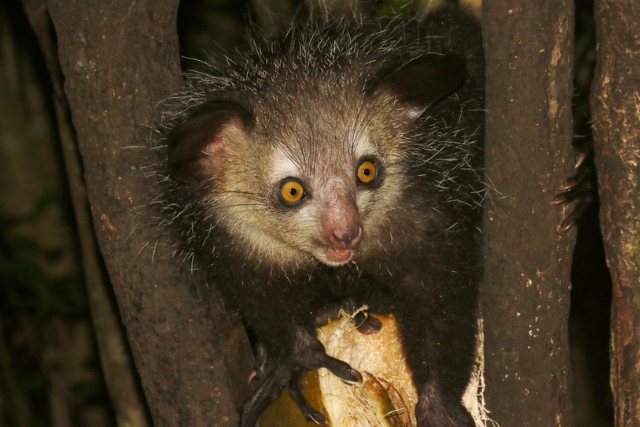
The aye-aye is a nocturnal primate found only in Madagascar. It is the only living species in both the family Daubentoniidae and the genus Daubentonia.
Its best-known feature is its unusually long, slender middle finger. The aye-aye taps on wood, listens for hollow spaces that may contain insect larvae, opens the wood with its strong incisors, and removes prey with that specialised finger. The technique is often compared with woodpecker feeding, although the aye-aye is a primate.
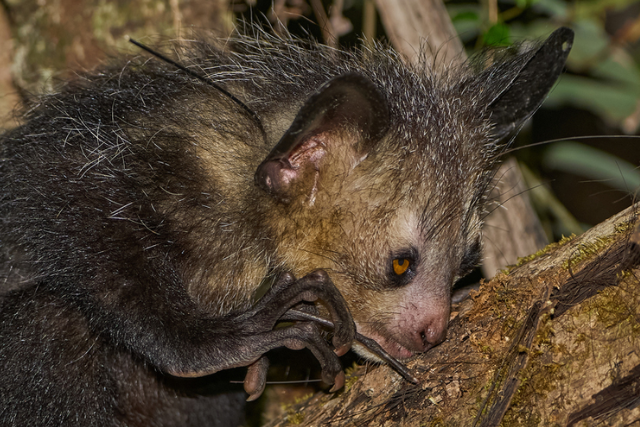
photographed by gauvain_saucy. Source: iNaturalist observation no. 262453439.
Habitat loss and fragmentation are major pressures. In some places, the animal is also killed because of local beliefs or conflict with people. It is globally listed as Endangered.
メンフクロウ職員The aye-aye’s long finger is not a strange extra. It is a precise feeding tool, shaped for finding food hidden inside wood.
Dugong
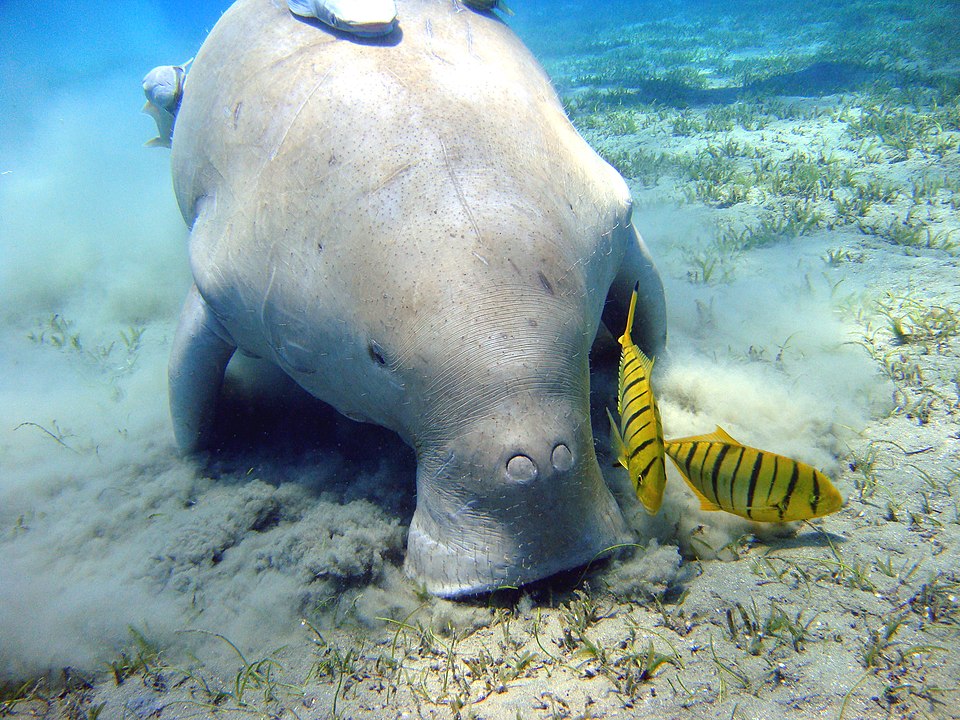
Source: Wikipedia: “Dugong”.
- Scientific name: Dugong dugon
- Classification: Order Sirenia · Family Dugongidae · Genus Dugong
- Range: Tropical and subtropical coasts of the Indian and western Pacific Oceans
- Global status: Vulnerable
The dugong is the only living species in the genus Dugong and the family Dugongidae. It is a large marine mammal that feeds mainly on seagrasses in shallow coastal waters.
This does not mean that Dugongidae has always contained only one species. The family includes extinct members in the fossil record, including Steller’s sea cow, Hydrodamalis gigas. In this series, the dugong qualifies as a Family of One because it is the family’s only living genus and species today.
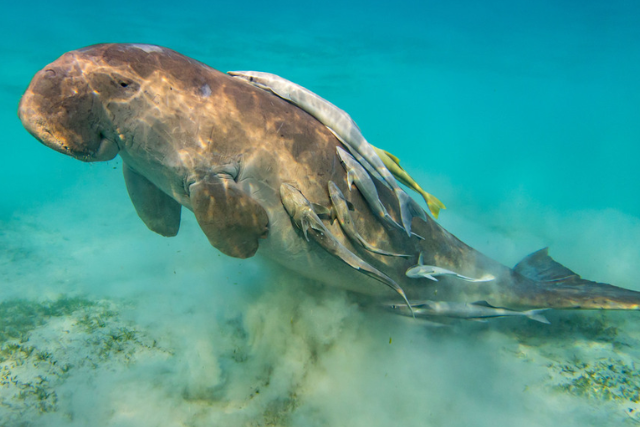
photographed by martin_the_mako_kostal. Source: iNaturalist observation no. 160620130.
Dugongs reproduce slowly, so populations can take a long time to recover from losses. Their principal threats include accidental capture in fishing gear, destruction or degradation of seagrass habitat, coastal development, pollution, hunting in some areas, and climate-related damage to seagrass ecosystems. The species is globally listed as Vulnerable; some local populations face still greater risks.
ミミズク先生A dugong is not merely a rare branch of classification. It is also a grazer of seagrass meadows, and its future is tied to the health of coastal waters.
Franciscana
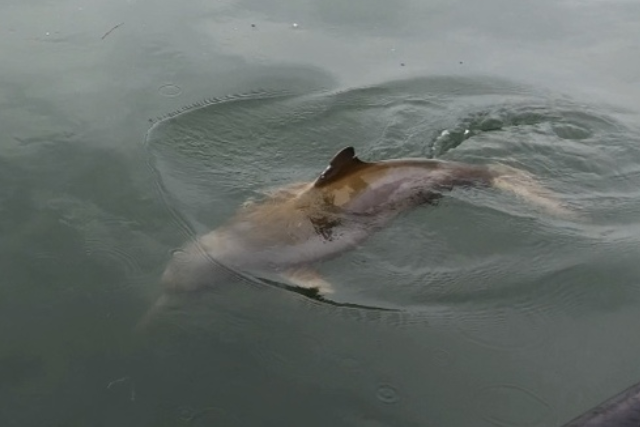
photographed by victoriaulman. Source: iNaturalist observation no. 207003328.
- Also known as: La Plata dolphin; toninha
- Scientific name: Pontoporia blainvillei
- Classification: Order Artiodactyla · Suborder Cetacea · Family Pontoporiidae · Genus Pontoporia
- Range: Coastal and estuarine waters from south-eastern Brazil to northern Argentina
- Global status: Vulnerable
The franciscana is a small dolphin of the south-western Atlantic. It is the only living species in the genus Pontoporia and the family Pontoporiidae.
Despite the older English name “La Plata dolphin”, it lives mainly in shallow coastal and estuarine waters, rather than in the Amazon River. Its long, narrow rostrum helps it find fish, squid, and crustaceans in often turbid water.
Accidental capture in gillnets is one of its most serious threats. Coastal habitat degradation, pollution, and disturbance can add to the pressure. The species is globally listed as Vulnerable, although risk can be greater for some local populations.
 メンフクロウ職員
Good photographs of franciscanas in the wild can be surprisingly difficult to find, so here is a reference illustration to help you notice its long, slender rostrum and quiet coastal-dolphin shape.
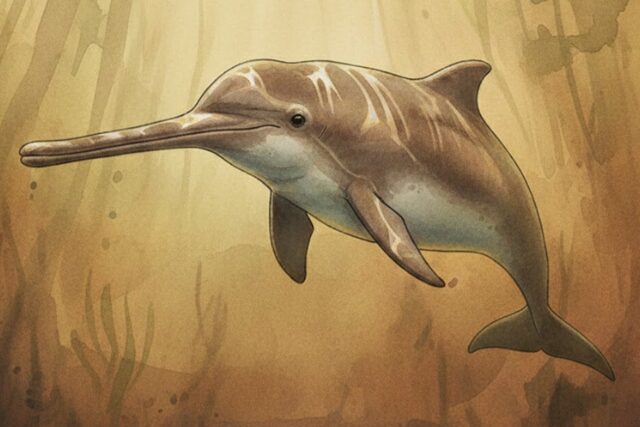
AI-generated reference illustration created with Google Gemini.
タヌ山先生A global assessment is essential, but it is not the whole picture. A small local population can be in serious trouble even when the species is assessed across its entire range.
Other Remarkable Families of One
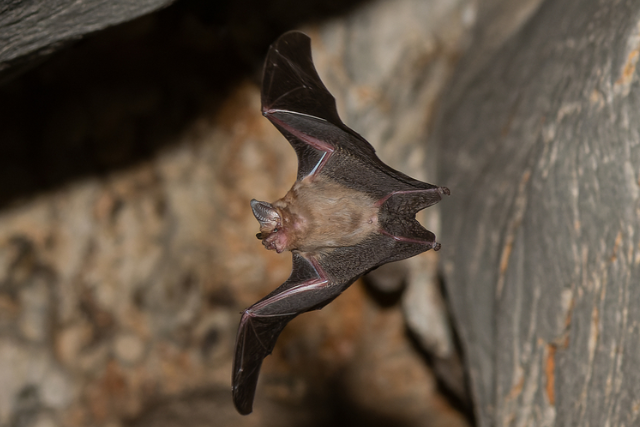
photographed by Andaman Kaosung. Source: iNaturalist observation no. 140080750.
Not every Family of One is globally threatened. A family represented today by one living genus and one living species may be endangered, closely monitored, or comparatively secure.
The mammals in this section still meet the definition used in this series. However, their current global assessments differ from those in the previous section. Kitti’s hog-nosed bat and the numbat are listed as Near Threatened, while the pacarana is listed as Least Concern.
メンフクロウ職員Being the only living member of a family is not a conservation category. Every species needs to be understood on its own evidence.
Kitti’s Hog-nosed Bat
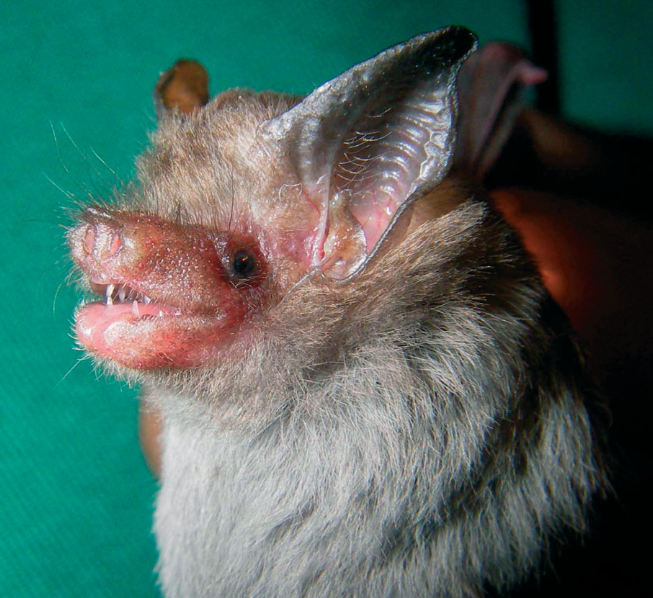
Image from Puechmaille et al., via Wikimedia Commons. Please see the original paper and the file page for full attribution and licence details.

- Also known as: Bumblebee bat
- Scientific name: Craseonycteris thonglongyai
- Classification: Order Chiroptera · Family Craseonycteridae · Genus Craseonycteris
- Range: Western Thailand and south-eastern Myanmar
- Global status: Near Threatened
Kitti’s hog-nosed bat is the only living species in both the family Craseonycteridae and the genus Craseonycteris. It is one of the world’s smallest mammals, with adults weighing only about two grams.
Its English name refers to its small, pig-like nose. During the day, it rests in limestone caves; around dusk and dawn, it flies out to catch small insects in nearby woodland.
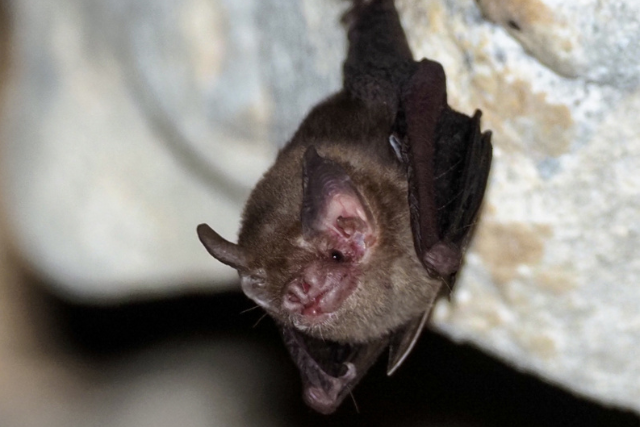
photographed by arthur_ensis. Source: iNaturalist observation no. 222402102.
The species has a restricted distribution and depends on a limited number of suitable caves and surrounding forest habitats. Disturbance at roost sites, limestone quarrying, and habitat change remain important concerns. It is currently listed as Near Threatened rather than Vulnerable, but that does not mean its small colonies are safe from local disturbance.
シロフクロウ職員A species may be widespread on a map, or it may depend on only a few places. For cave-dwelling animals, careful records of roost sites can be as important as records of the animals themselves.
Numbat
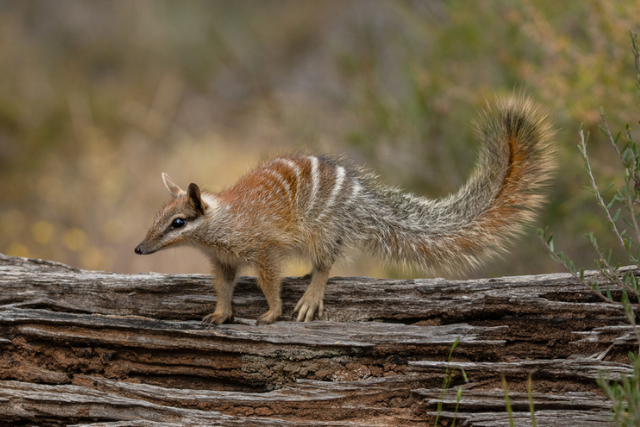
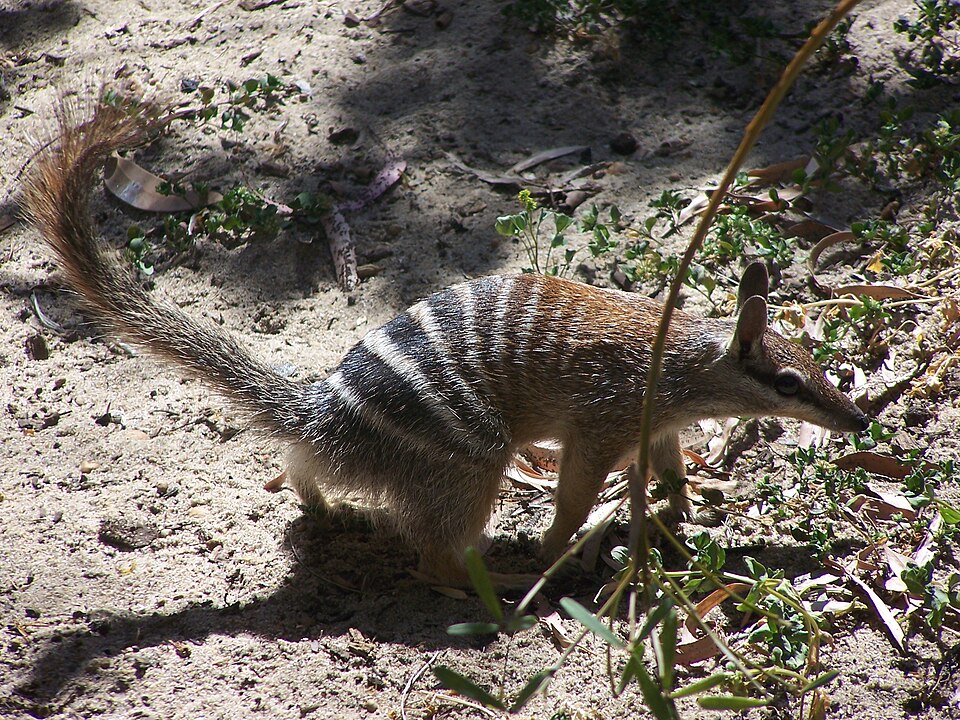
photographed by james_nic. Source: iNaturalist observation no. 147878140.
- Also known as: Banded anteater
- Scientific name: Myrmecobius fasciatus
- Classification: Order Dasyuromorphia · Family Myrmecobiidae · Genus Myrmecobius
- Range: Western Australia, with reintroduced populations in parts of South Australia and New South Wales
- Global status: Near Threatened
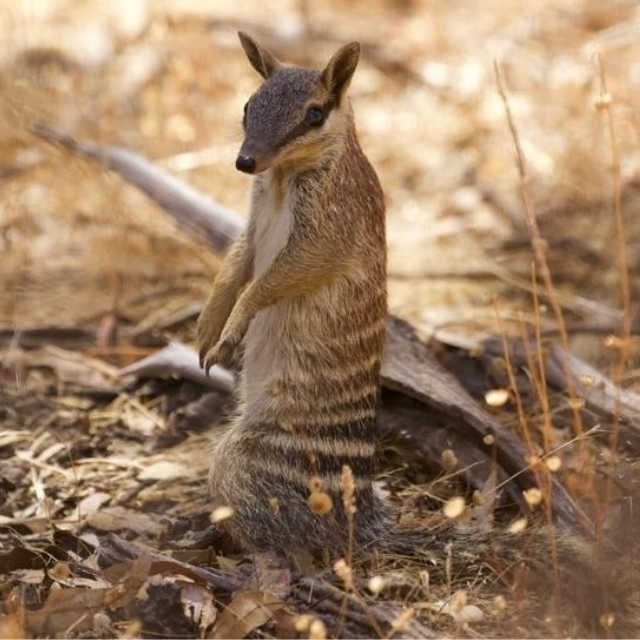
The numbat is the only living species in the family Myrmecobiidae and the genus Myrmecobius. This small Australian marsupial is easy to recognise by its reddish-brown coat, white bands across the back, and bushy tail.
Unlike most marsupials, numbats are active mainly by day. They feed chiefly on termites, using a long, sticky tongue to collect them from shallow tunnels and loose soil.
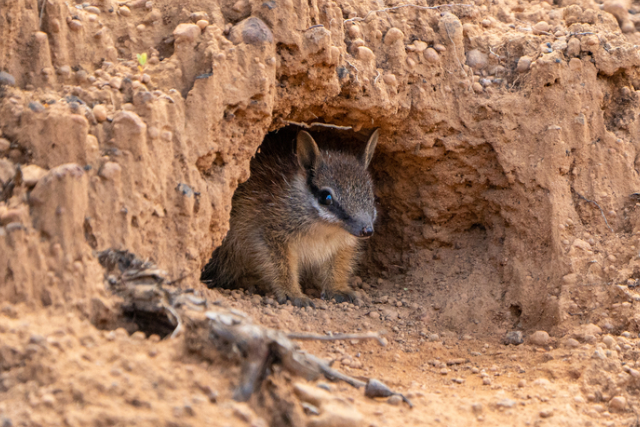
photographed by jakeh2022 . Source: iNaturalist observation no. 145318358.
The numbat was once widespread across southern Australia, but introduced red foxes and feral cats, together with habitat loss and fragmentation, caused a severe decline. Its IUCN status was changed from Endangered to Near Threatened in 2026 after decades of conservation work. The improvement is encouraging, but continued predator control, habitat protection, and population monitoring remain essential.
タヌ山先生This is an important conservation lesson. A better Red List category can show that protection is working, but it does not mean the work is finished. And this little mammal—with looks that almost rival my own undeniable charm—is certainly worth continuing to protect.
 メンフクロウ職員
Accidenti! I shall say nothing—except that the numbat is indeed rather charming.
シロフクロウ職員Oh, Dr Tanuyama—always so modest, aren’t you?
Pacarana
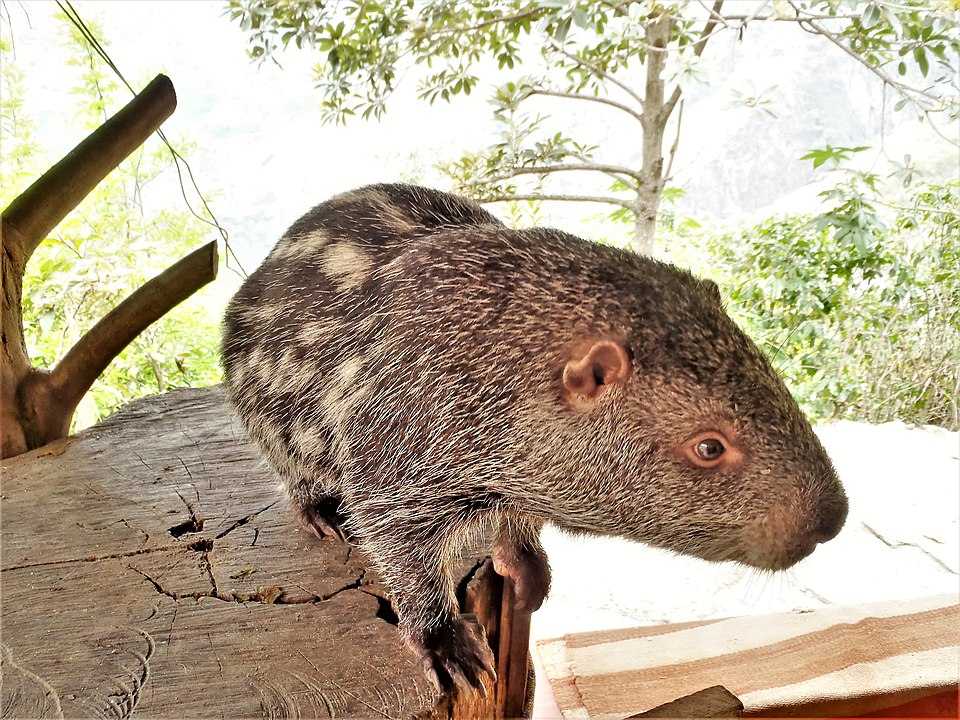
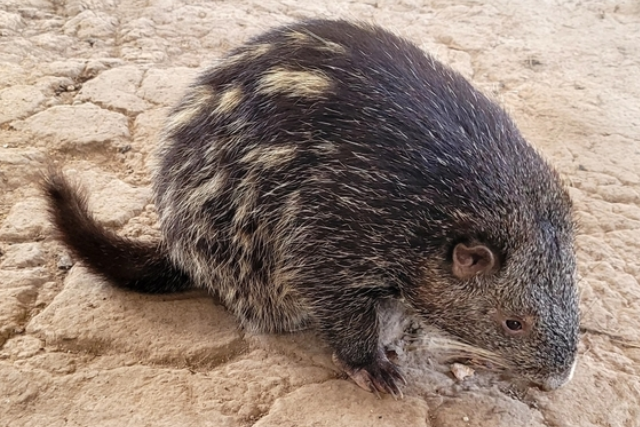
Photographed by Benjamin Frable near Santa Maria, Peru. Source: Wikimedia Commons. CC0 1.0 Universal.

- Scientific name: Dinomys branickii
- Classification: Order Rodentia · Family Dinomyidae · Genus Dinomys
- Range: The Andes and adjacent lowlands of Colombia, Ecuador, Peru, Bolivia, Brazil, and Venezuela
- Global status: Least Concern
The pacarana is the only living species in the family Dinomyidae and the genus Dinomys. It is a large, slow-moving South American rodent, usually active at night and often found in rocky or forested habitats.
Its dark, coarse fur is marked with pale spots and stripes along the body. The name pacarana means “false paca”, referring to its resemblance to the paca, although the two belong to different families.
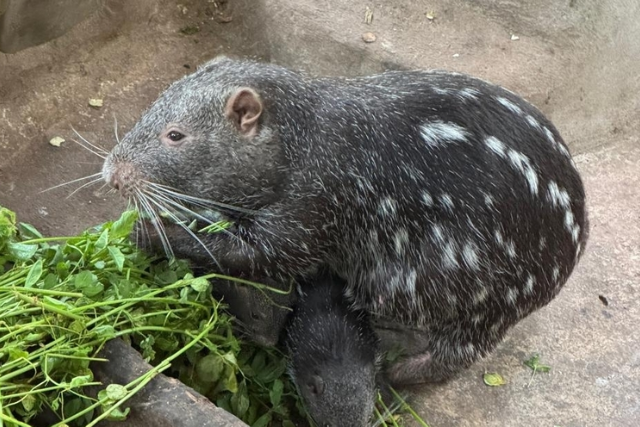
photographed by felipe13388. Source: iNaturalist observation no. 262265714.
Pacaranas feed mainly on plant material, including leaves, stems, and fruit. Although they may be difficult to encounter in the wild, the species is currently listed as Least Concern globally. That assessment should not be confused with a claim that every local population is secure: habitat loss and hunting can still affect populations in particular areas.
ミミズク先生Rarity of encounter and risk of extinction are not quite the same thing. A creature may be seldom seen, yet remain widespread enough to be secure at a global scale.
A Different Kind of Rarity
Although all three are Families of One, they each face a different situation in the wild.
- The Kitti’s hog-nosed bat is restricted to a specialised cave-and-forest environment.
- The numbat shows that sustained conservation can improve a species’ outlook.
- The pacarana demonstrates that a Family of One is not automatically threatened.
Each is distinctive in classification, but each faces a different conservation reality.
Families of One Not Currently Listed as Threatened
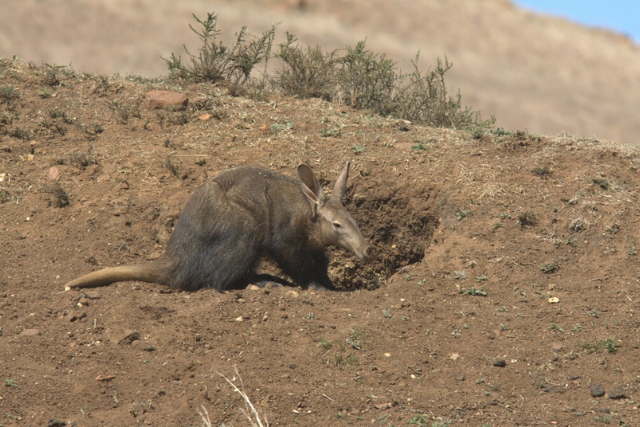
Photograph: iNaturalist observation no. 263626082.(justin_p )
Not every Family of One is globally threatened. Some are assessed as Near Threatened, while others are currently listed as Least Concern on the IUCN Red List.
These labels need a little care. Near Threatened does not mean “safe”: it means that a species is not currently in one of the three threatened categories—Vulnerable, Endangered, or Critically Endangered—but may be close to qualifying. Least Concern means that the available evidence does not currently place a species in a higher-risk category.
As throughout this article, “Families of One” refers to living diversity: one living family, one living genus, and one living species. Fossil species and extinct genera are not counted here.
シロフクロウ職員Classification tells us how a species is grouped. A Red List category tells us about its risk of extinction. They are both useful, but they are not the same thing.
Platypus
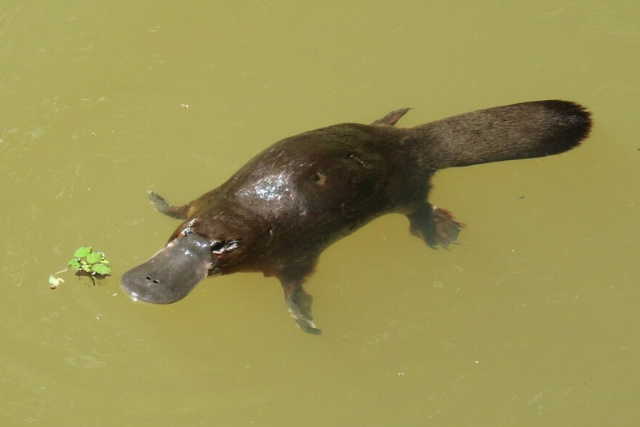
photographed by crisolimat. Source: iNaturalist observation no. 206931413.
- Scientific name: Ornithorhynchus anatinus
- Classification: Order Monotremata · Family Ornithorhynchidae · Genus Ornithorhynchus
- Range: Eastern Australia, Tasmania, and King Island
- Global status: Near Threatened
The platypus is the only living species in the family Ornithorhynchidae and the genus Ornithorhynchus. It is a monotreme: a mammal that lays eggs.
Its broad bill is a highly sensitive feeding tool. While foraging underwater, a platypus closes its eyes, ears, and nostrils. Receptors in the bill detect movements in the water and weak electrical signals produced by prey, helping the animal find aquatic invertebrates such as insect larvae and crustaceans.
Adult males also have venomous spurs on their hind legs. The venom is not normally fatal to people, but it can cause severe and long-lasting pain. The spurs are thought to be important in competition between males during the breeding season.
The platypus is globally listed as Near Threatened. Changes to freshwater habitats—including altered river flows, drought, flooding, pollution, entanglement in nets or traps, and loss of streamside vegetation—can place local populations under pressure.
メンフクロウ職員An egg-laying mammal that can detect electricity and has venomous spurs—every feature has a purpose, though it does make the platypus rather hard to forget.
Aardvark
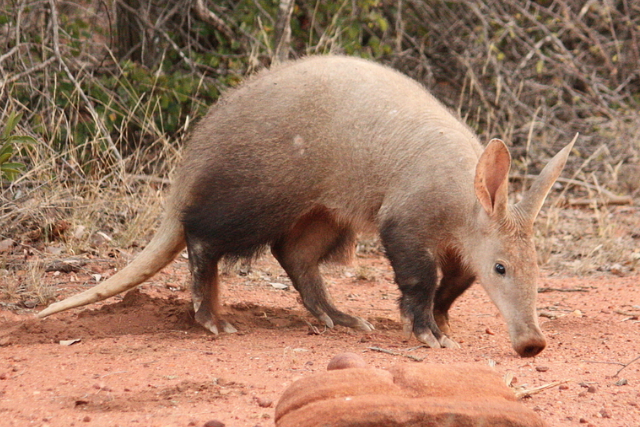
photographed by kellyabram. Source: iNaturalist observation no. 104628643.
- Scientific name: Orycteropus afer
- Classification: Order Tubulidentata · Family Orycteropodidae · Genus Orycteropus
- Range: Sub-Saharan Africa
- Global status: Least Concern
The aardvark takes the idea of a Family of One one step further. It is the only living species in its genus and family—and in the entire order Tubulidentata.
Its Afrikaans name means “earth pig”, but the aardvark is not a pig. Modern evidence places it within Afrotheria, a larger mammal group that includes elephants, hyraxes, tenrecs, golden moles, elephant shrews, and sea cows.
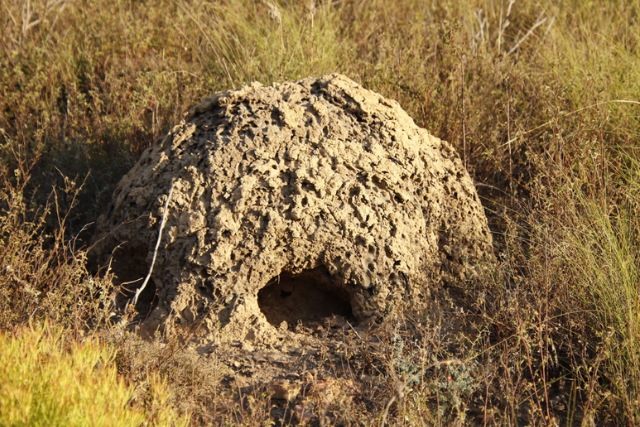
photographed by tonyrebelo. Source: iNaturalist observation no. 112720755.
Aardvarks are mainly nocturnal. They use strong forelimbs and heavy claws to open ant and termite nests, then collect prey with a long, sticky tongue. Their unusual teeth are made of many small tubes of dentine, which is the origin of the name Tubulidentata, meaning “tube teeth”.
Their burrows also serve as shelter for other animals. By digging into the soil, an animal that seems to live alone can still shape a small community around it.
ミミズク先生A solitary branch in classification may be far from solitary in its ecological importance. An aardvark’s burrow can offer refuge to many neighbours.
Pronghorn
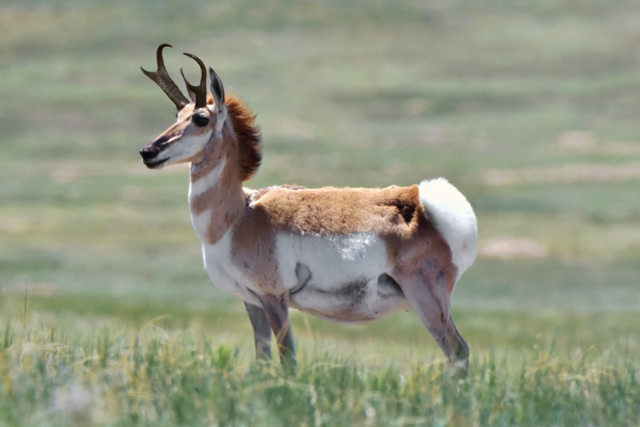
photographed by ossifrage94. Source: iNaturalist observation no. 51024796.
- Scientific name: Antilocapra americana
- Classification: Order Artiodactyla · Family Antilocapridae · Genus Antilocapra
- Range: Western North America, from southern Canada to northern Mexico
- Global status: Least Concern
The pronghorn is the only living species in the family Antilocapridae and the genus Antilocapra. Although it is often called an “antelope”, it is not a true antelope. True antelopes belong to the family Bovidae, whereas the pronghorn belongs to its own North American family.
Its horns are unlike those of any other living hoofed mammal. Each horn has a permanent bony core, covered by a keratin sheath. The sheath is branched, giving the pronghorn its name, and it is shed and regrown every year.
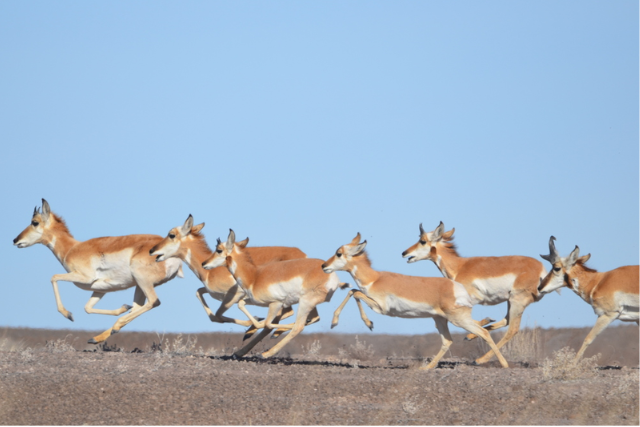
photographed by jeffschively. Source: iNaturalist observation no. 205585738.
Pronghorns are North America’s fastest land mammals. They can reach about 60 miles per hour over short distances, and can travel at 30–40 miles per hour for longer distances. Their large eyes also provide a wide field of view across open country.
Scientists have proposed that this remarkable speed may reflect selection from fast, now-extinct Pleistocene predators, including the cheetah-like Miracinonyx. It is an interesting hypothesis, but not a complete explanation for every aspect of pronghorn speed.
タヌ山先生The pronghorn may not be a true antelope, but it has certainly written its own rulebook. Horns that shed, a serious turn of speed—honestly, it is showing off a little.
Three Different Stories
These mammals illustrate three different conservation situations:
- The platypus is Near Threatened and depends on healthy freshwater systems.
- The aardvark is globally listed as Least Concern, while playing an important role as a burrow-maker.
- The pronghorn is also Least Concern globally, though barriers such as roads and fences can affect local movements and populations.
A Family of One is a fact about living classification, not a forecast of extinction. To understand each species properly, we need to look at both its taxonomic position and the evidence for its conservation status.
Almost Families of One: Mammals That Just Miss the Definition
Photograph by almansa. Source: iNaturalist observation no. 243893264.
Some mammals seem as though they ought to belong in this series. They may be the only living species in their genus, the only living genus in their family, or part of a lineage with a particularly unusual evolutionary history.
But a Family of One has a strict definition in this article: one living family, one living genus, and one living species. The mammals below each miss one part of that pattern.
メンフクロウ職員Welcome to our “almost” gallery. These are not lesser examples. They show why a small detail in a classification table can matter so much.
A Quick Check
A monotypic genus has one living species, but its family may contain several other genera.
A Family of One, as used in this series, has one living genus in the family—and that genus has one living species.
タヌ山先生A species can look completely alone and still have a cousin hiding one rank higher. Taxonomy loves that sort of plot twist.
Red Panda
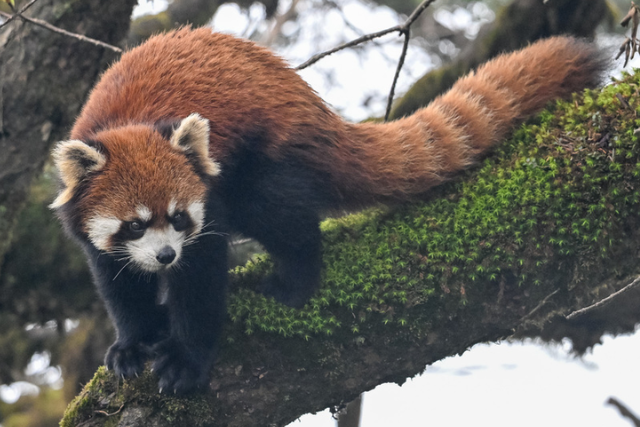
photographed by joy_wangmq. Source: iNaturalist observation no. 380605369.
- Classification: Order Carnivora · Family Ailuridae · Genus Ailurus
- Range: The eastern Himalayas and south-western China
- Global status: Endangered
The red panda is the only living genus in the family Ailuridae. At first, it seems to be an ideal Family of One candidate.
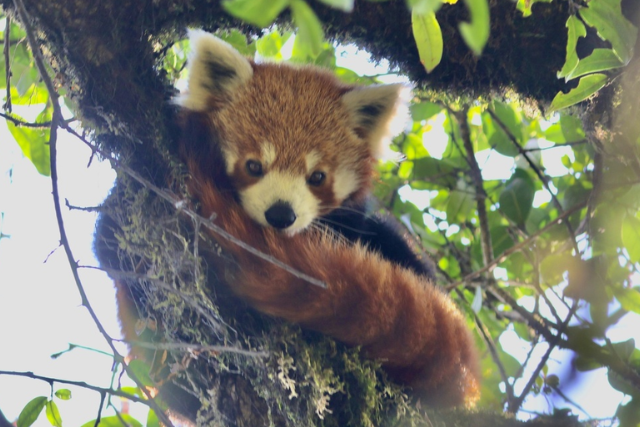
photographed by anthonpm1. Source: iNaturalist observation no. 154781516.
The complication is the number of living species in the genus Ailurus. The current Mammal Diversity Database recognises two: the western red panda, Ailurus fulgens, and the eastern red panda, Ailurus styani. However, the database also notes that this split remains under discussion, and recent research has argued for treating them as one species.
For this article, we follow the current database and treat the red panda as an almost case: one living family, one living genus, but two recognised living species.
シロフクロウ職員A single extra species is enough to change the classification answer.
Giraffes and Okapi
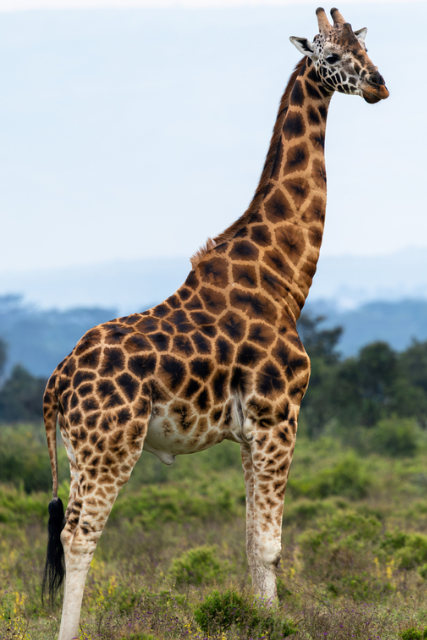
Photograph: iNaturalist observation no. 333053996.(mikeambrose)
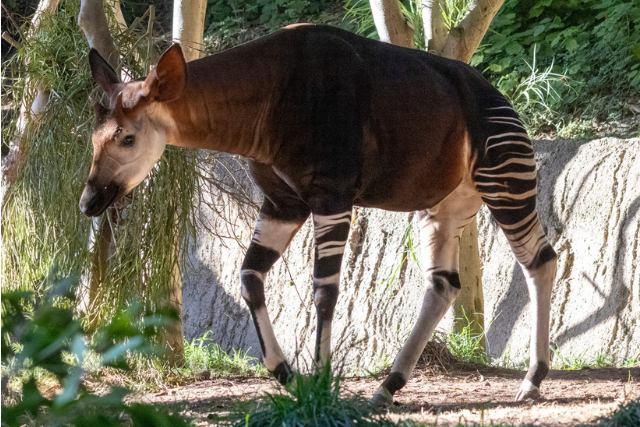
Photograph: iNaturalist observation no. 245461776.(artzerphotog)
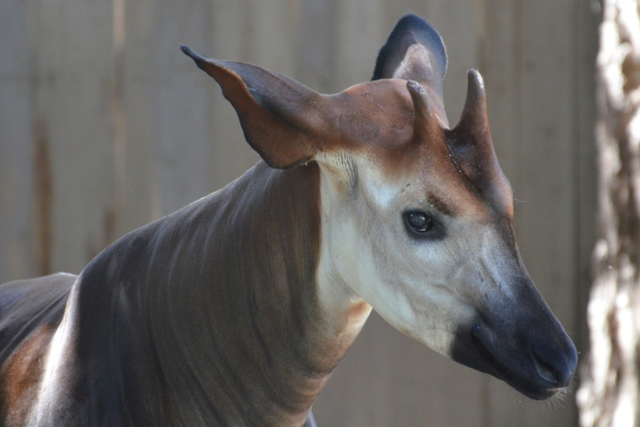
- Living genera: Giraffa and Okapia
- Examples: Northern giraffe (Giraffa camelopardalis), reticulated giraffe (G. reticulata), Masai giraffe (G. tippelskirchi), southern giraffe (G. giraffa), and the okapi (Okapia johnstoni)
- Range: Sub-Saharan Africa
Giraffidae has only two living genera: Giraffa and Okapia. That alone prevents either giraffes or the okapi from qualifying as a Family of One.
The okapi is the only living species in its genus, Okapia. Giraffe classification, however, has changed substantially. For much of the twentieth century, giraffes were commonly treated as one species, Giraffa camelopardalis, divided into several subspecies.
On 21 August 2025, the IUCN Species Survival Commission’s Giraffe and Okapi Specialist Group recognised four giraffe species: the northern giraffe (G. camelopardalis), reticulated giraffe (G. reticulata), Masai giraffe (G. tippelskirchi), and southern giraffe (G. giraffa). The assessment also recognises seven subspecies across three of those species.
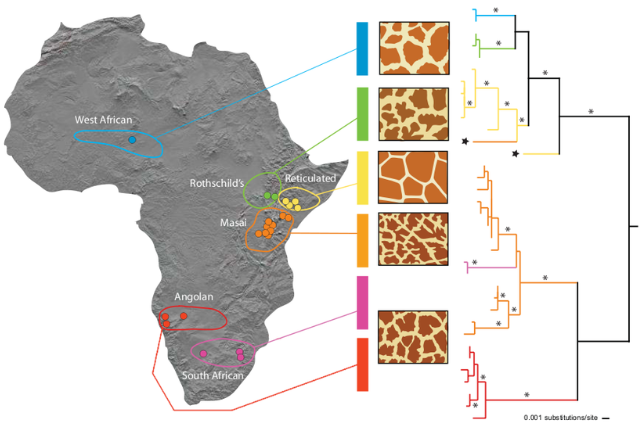
Map showing approximate geographic ranges, coat patterns, and phylogenetic relationships among giraffe subspecies inferred from mitochondrial DNA sequences. Adapted from a figure in the original CC BY-licensed research article. Source: Wikimedia Commons, “Genetic subdivision in the giraffe based on mitochondrial DNA sequences”. Created by OldakQuill, 2007.

This update does not change the conclusion for this article: Giraffidae still has two living genera. It does, however, show why a current taxonomy source matters. The number of species within a familiar group can change as evidence is reassessed.
Giraffes are associated mainly with open habitats, whereas the okapi lives in the forests of the Democratic Republic of the Congo. Neither is a “primitive” version of the other; both are modern species with their own long evolutionary histories.
ミミズク先生Close relatives need not resemble one another closely. The family tree often holds more variety than first appearances suggest.
Amami Rabbit
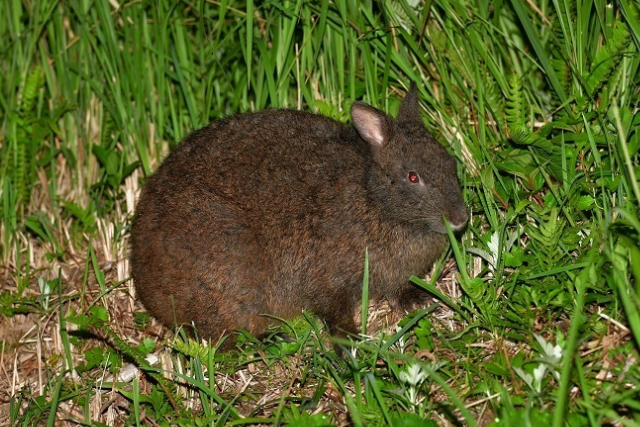
Photograph: iNaturalist observation no. 213613673.(shige-kanao)
- Scientific name: Pentalagus furnessi
- Classification: Order Lagomorpha · Family Leporidae · Genus Pentalagus
- Range: Amami Ōshima and Tokunoshima, Japan
- Global status: Endangered
The Amami rabbit is the only living species in the genus Pentalagus. Yet the rabbit and hare family, Leporidae, includes many other genera, including Lepus and Oryctolagus.
It is therefore a monotypic genus, but not a Family of One. That does not make it ordinary. The Amami rabbit is a highly distinctive Japanese endemic with a very restricted island range.
A recent study suggests that skeletal growth can continue until around five years of age. This is not the same as proving that every part of maturity takes five years, so the English article should avoid calling it “five years to mature”.
メンフクロウ職員The rule is strict, but the animal is still remarkable.
Cape Hyrax
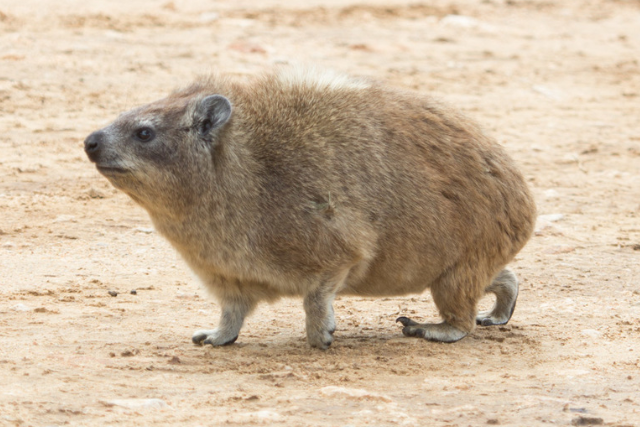
Photograph: iNaturalist observation no. 14003896.(avocat)
- Scientific name: Procavia capensis
- Classification: Order Hyracoidea · Family Procaviidae · Genus Procavia
- Range: Africa and the Middle East
- Global status: Least Concern
The Cape hyrax is the only living species in the genus Procavia. However, its family, Procaviidae, also contains the tree hyraxes in Dendrohyrax and the bush hyraxes in Heterohyrax.
That makes the Cape hyrax another monotypic-genus example rather than a Family of One. Its rodent-like appearance is misleading: hyraxes belong to Afrotheria, a broader mammal group that includes elephants, sea cows, tenrecs, golden moles, and elephant shrews.
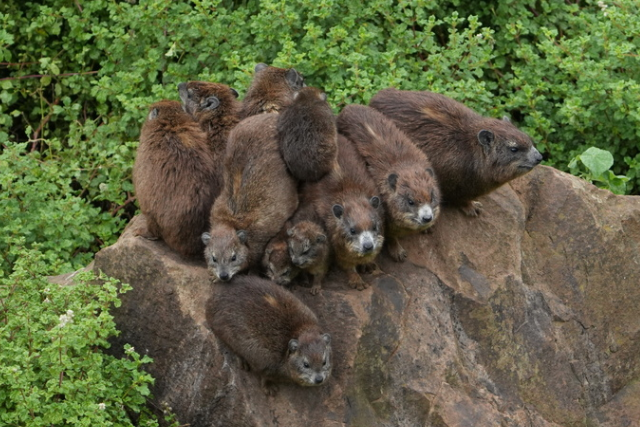
Photograph: iNaturalist observation no. 340143179.(liu666666)
シロフクロウ職員In Japan, the Cape hyrax is sometimes called iwadānuki—literally, “rock raccoon dog”.
タヌ山先生An excellent attempt at family resemblance, but they are not my relatives either. Hyraxes are more closely related to elephants, manatees, and dugongs than to raccoon dogs. They belong to an ancient African mammal lineage—rather remarkable for an animal that looks so comfortably pocket-sized.
Solenodons
Photograph: iNaturalist observation no. 171539839.(roylesafaris)
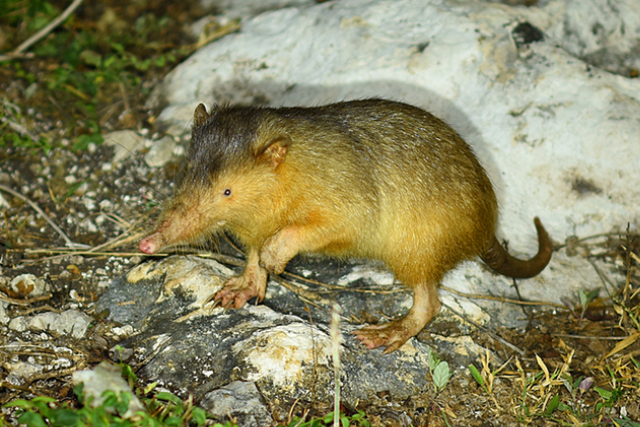
- Family: Solenodontidae
- Living genera: Solenodon and Atopogale
- Living species: Hispaniolan solenodon (Solenodon paradoxus) and Cuban solenodon (Atopogale cubana)
- Range: Hispaniola and Cuba
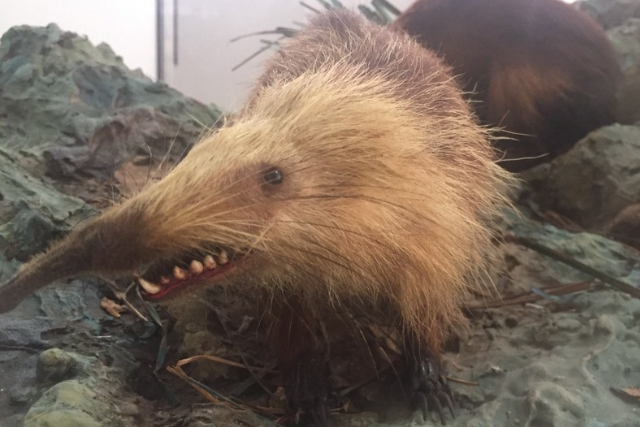
Solenodons are nocturnal Caribbean mammals that feed mainly on invertebrates and small animals. They are among the few living mammals known to deliver venomous saliva through grooves in their lower incisors.
Older sources often placed both living species in the genus Solenodon. In the current Mammal Diversity Database, however, the Cuban solenodon is Atopogale cubana. The family Solenodontidae therefore contains two living genera and two living species.
Photograph: iNaturalist observation no. 155797333.(porlanaturaleza)
Their lineage is ancient, but it is misleading to say that solenodons have remained unchanged since the age of dinosaurs. Every living species has continued to evolve.
メンフクロウ職員“Ancient lineage” is a description of ancestry, not a claim that an animal has stood still in time.
 ミミズク先生
Quite so. One might say that its lineage arrived at a successful body plan relatively early in its evolutionary history. But that does not mean the animal itself has remained unchanged.
Japanese Dormouse
Photograph: iNaturalist observation no. 365430771.(syoshinsyalv35)
- Japanese name: Nihon-yamane
- English name: Japanese dormouse
- Scientific name: Glirulus japonicus
- Classification: Family Gliridae, genus Glirulus
- Range: Honshu, Shikoku, Kyushu, and Dōgo Island in the Oki Islands; endemic to Japan
- Conservation status: Least Concern (LC)
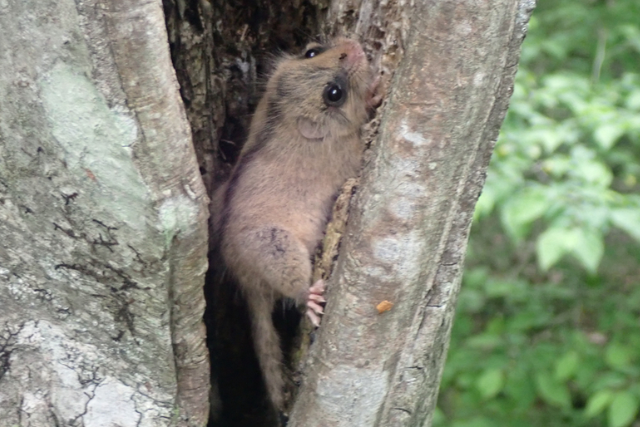
The Japanese dormouse (Glirulus japonicus) is a small mammal found nowhere else in the world. It is the only living species in the genus Glirulus.
Its family, Gliridae, includes several other living genera, such as Glis and Dryomys. It is therefore not a Family of One at family level. It is, however, a fine example of a genus represented by a single living species.
This nocturnal rodent lives mainly in trees. It is an agile climber, able to move along the undersides of branches as well as across their upper surfaces. Its diet includes insects, fruits, flowers, and nectar.
A small expert in winter survival
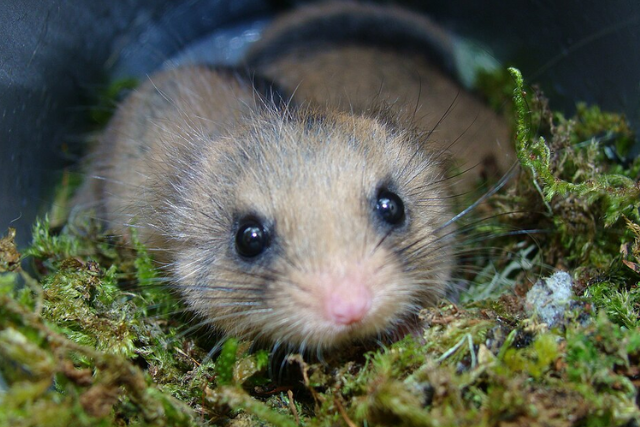
Photograph: Wikimedia Commons, “ヤマネのアップ”.

In colder parts of Japan, the Japanese dormouse may hibernate for about six months. Its hibernation period varies with altitude, local climate, and the weather in a particular year.
 シロフクロウ職員
Six months? That is an impressively long nap.
ミミズク先生Not quite a nap. During hibernation, the dormouse lowers its body temperature and metabolism to save energy when food is scarce.
メンフクロウ職員In especially cold regions, its body temperature can fall close to the temperature inside its nest. But it must still wake from time to time—and each awakening costs valuable energy.
 シロフクロウ職員
So a mild winter is not automatically good news?
ミミズク先生Precisely. Less stable winter conditions may disturb hibernation and make the animal use its energy stores too soon. For a creature this small, winter survival is very carefully balanced.
The Japanese dormouse can also shed part of its tail if caught by a predator. Unlike a lizard’s tail, however, it does not grow back. It is an effective escape, but an expensive one.
Monito del Monte: The Last Living Lineage of Microbiotheria
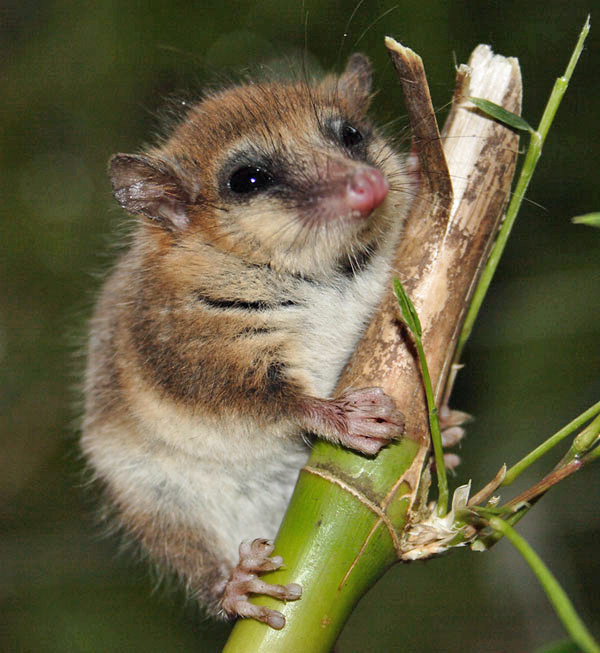
Photograph by José Luis Bartheld, Valdivia, Chile, 5 April 2008. Source: Wikimedia Commons, “Monito del Monte ps6.jpg”.

- English name: Southern monito del monte
- Also known as: Chilean opossum; colocolo opossum
- Scientific names: Dromiciops gliroides and Dromiciops bozinovici
- Classification: Order Microbiotheria, family Microbiotheriidae, genus Dromiciops
- Range: Cool-temperate forests of southern Chile and adjacent Argentina
- Conservation status: Near Threatened (NT), under the two-species treatment used here
The monito del monte is a tiny, nocturnal marsupial of the temperate forests of southern South America. Its widely used name comes from Spanish and means roughly “little mountain monkey”, although it is neither a monkey nor a typical American opossum. Its partly prehensile tail can store fat, helping it survive the cold season.
For many years, Dromiciops was treated as a genus with one living species. Recent genetic and morphological research supports two: Pancho’s monito del monte (Dromiciops bozinovici) in the north, and the southern monito del monte (D. gliroides) farther south. Earlier studies proposed one or three species, so details of the classification are still under review.
メンフクロウ職員So it no longer belongs in our “one family, one genus, one species” collection?
タヌ山先生Not at species level. But its order is still a remarkable Family Tree of One.
One genus, one living order
Dromiciops is the only living genus in the order Microbiotheria, which contains only one living family, Microbiotheriidae. In other words, this one small genus represents the entire surviving branch of a marsupial order.
Although it lives in South America, Microbiotheria is more closely related to the Australasian marsupials than to the living American opossums. It is not a “missing link” or an animal frozen in time, but a modern survivor of an old lineage that helps explain the shared evolutionary history of South America, Antarctica, and Australasia.
ミミズク先生“Ancient lineage” describes ancestry, not an animal that has stopped evolving.
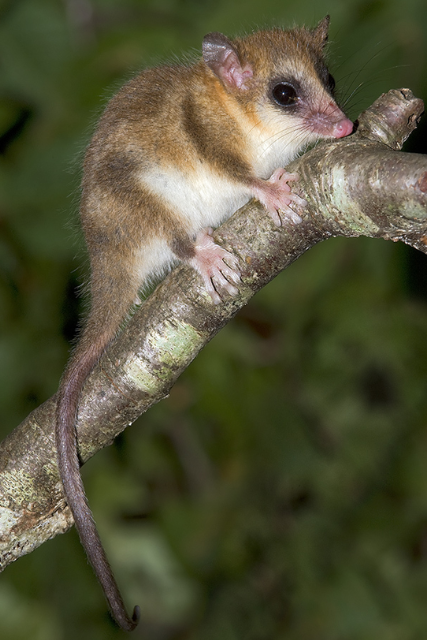
出典:iNaturalist – チロエオポッサム Dromiciops gliroides(markc666)
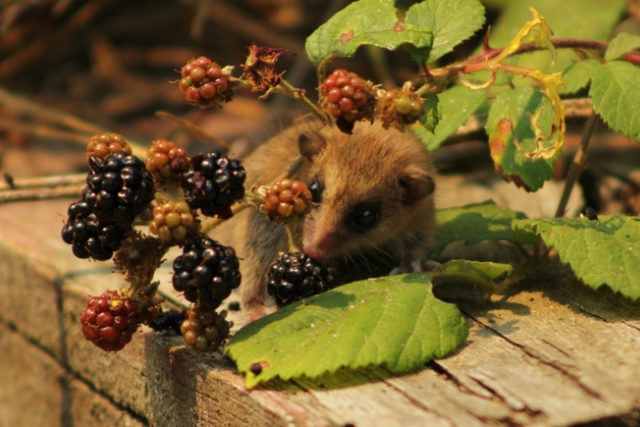
出典:iNaturalist – Dromiciops bozinovici(deynnuz)
A forest helper
Monitos del monte are tree-dwelling and mainly active at night. They eat insects and fruit, build round nests from bamboo leaves and moss, and can enter deep torpor or hibernation during colder months.
They also disperse seeds. In temperate Patagonian forests, Dromiciops is the only known effective seed disperser of the mistletoe Tristerix corymbosus. A very small marsupial therefore helps carry the next generation of a forest from place to place.
メンフクロウ職員Mamma mia!—one small animal, carrying part of the forest’s future.
シロフクロウ職員A fitting reminder that evolutionary distinctiveness and ecological importance often travel together.
Why Families of One Matter
Photograph: iNaturalist observation no. 197655289.(corentindep)
Mammals with one living family, one living genus, and one living species are rare. Each represents a distinctive surviving branch of the mammal family tree, often with few or no close living relatives.
That does not mean such animals are “primitive”, nor does it mean that they have stopped evolving. They are modern species with their own continuing evolutionary histories.
ミミズク先生A small family is not an unfinished one. It is simply a branch with very few living twigs.
It is also important not to confuse taxonomic rarity with extinction risk. A Family of One is not automatically endangered. Taxonomy describes an animal’s place on the tree of life; conservation assessment asks how secure its future is in the wild.
シロフクロウ職員Related questions, certainly—but not the same question.
Some of these mammals face serious threats, while others are currently more secure. What they share is not one conservation status, but an extraordinary place in the story of mammalian evolution.
メンフクロウ職員One quiet animal may carry a remarkable part of natural history with it.
This article will be reviewed and improved as reliable new research updates names, species boundaries, conservation assessments, and our understanding of these remarkable lineages.
 ミミズク先生
Please do explore the books from eco-life-planet as well. I hope they will offer you many more rewarding encounters with the living world.

References and Further Reading
福井県立恐竜博物館『福井県大野市から発見された日本最古級の哺乳類化石と哺乳類型爬虫類の新たな化石について』
Wikipedia『Names for the human species』
Spaceship Earth『絶滅危惧種とは?日本の有名な動物とレベル別レッドリスト一覧を紹介!絶滅の原因と対策についても解説』(2025年6月)
NATIONAL GEOGRAPHIC『絶滅した巨大カイギュウの骨格を発見、ロシア』(2017年11月)
National Marine Mammal Foundation ‐ Franciscana Dolphin(更新日:2024–2025年)
Mammal Diversity Database ‐ Pontoporia blainvillei
コメント